
Are you considering building a website but feeling overwhelmed by the choices out there? If you’ve been searching for the right platform, you’ve probably come across WordPress and Joomla.
These two powerful tools are favorites among web developers, but what makes them different? Understanding these differences can help you make the best decision for your needs, whether you’re starting a blog, an e-commerce site, or a business portfolio. By the end of this article, you’ll have a clear picture of which platform aligns with your goals and technical skills.
Get ready to dive into a comparison that will empower you to create the website of your dreams with confidence.
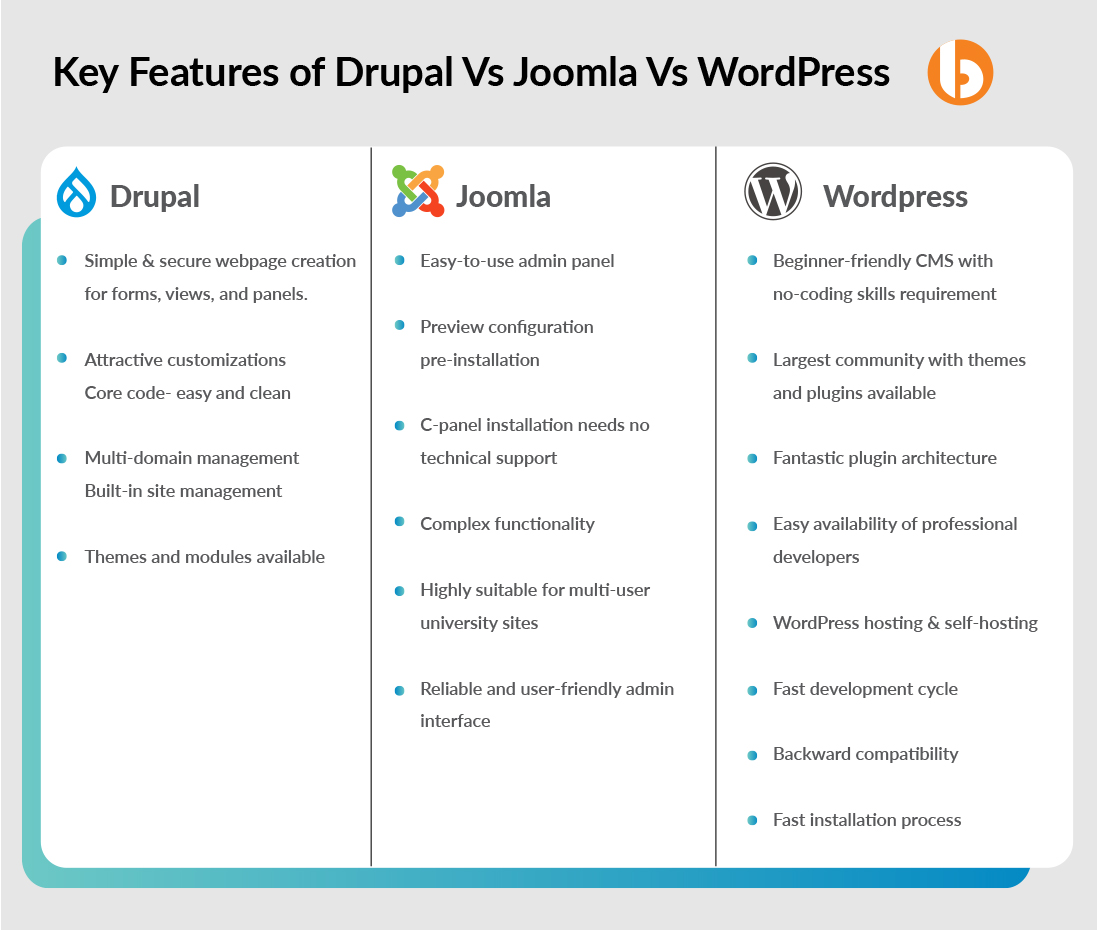
Credit: www.bacancytechnology.com
Platform Overview
WordPress is a popular content management system. People use it to create websites. It started as a blogging tool. Now, it powers many sites. WordPress is known for its user-friendly interface. Many people love its themes and plugins. These tools help change the look and feel of sites easily. Customization is simple with WordPress. Even beginners find it easy to use. A large community supports WordPress. They provide help and tutorials. Updates are frequent and keep the platform secure.
Joomla is another content management system. It helps build complex websites. Joomla offers more flexibility than WordPress. It is great for websites with many features. Joomla’s interface is a bit harder to learn. Beginners might need more time to understand it. There are many extensions to expand Joomla’s capabilities. Joomla’s community is strong too. They offer support and resources. Security updates are regular. Joomla is ideal for advanced users who need more features.
Ease Of Use
WordPress feels simple. The dashboard is clean and easy. Users see clear options. Setting up a blog is quick. Many themes to choose from.
Joomla is more complex. More features in the dashboard. It can confuse new users. Offers more control. Suitable for advanced users.
Installing WordPress is swift. Few steps and you are done. Hosting services often have one-click installs.
Joomla takes more steps. Requires understanding of settings. Not hard but takes longer. Some hosts offer easy installs.
Customization Options
WordPress offers a wide range of themes. Many are free while others are premium. Users can change the look easily. Just pick a theme and install it. Joomla uses templates for design. The choice is less than WordPress. But it is still flexible. Templates can be customized with coding. Both platforms allow design changes. WordPress is easier for beginners. Joomla is better for users who know coding.
WordPress has over 50,000 plugins. They add features like SEO and social media. Plugins are easy to install. Joomla has extensions for added functions. They are fewer than WordPress plugins. Extensions offer powerful options. Both platforms enhance site functions. WordPress is more user-friendly. Joomla requires some technical skills. Both options make sites better.
Credit: www.easywp.com
Content Management
WordPress is known for its simple blogging tools. You can create posts quickly. Easy to use even for beginners. Joomla has blogging features too. But, it’s a bit more complex. You might need more time to learn. Some users find it less intuitive.
Joomla offers advanced article management. You can organize articles in categories. It helps in managing large content. WordPress also manages articles well. But, it’s more straightforward. Great for smaller sites with fewer articles.
Seo Features
WordPress offers user-friendly plugins for SEO customization, making it simple to optimize your site. Joomla provides advanced SEO settings, catering to users seeking more control and flexibility. Both platforms have unique strengths in enhancing website visibility.
Built-in Tools
WordPress has many built-in SEO tools. You can use these tools to make your site better for search engines. It makes SEO simple for users. Joomla also has built-in SEO tools. It lets you change meta descriptions and keywords. Users can also change URLs easily. Both platforms offer good SEO support.
Third-party Support
WordPress has many third-party SEO plugins. You can find plugins like Yoast SEO and All in One SEO. These plugins help improve SEO features. Joomla also has third-party extensions. You can use extensions like sh404SEF. This helps users with extra SEO options. Both platforms offer strong third-party support.
Security Measures
WordPress and Joomla differ in security measures offered to users. WordPress relies on plugins for added security features. Joomla provides built-in security options, offering more control over site protection.
Core Security Features
WordPress and Joomla offer strong security features. WordPress has a team that watches for security threats. They update the core software often. Joomla also provides regular updates. It has in-built two-factor authentication for extra safety.
Additional Security Plugins
Many plugins are available for both platforms. WordPress users can choose Wordfence or Sucuri for added protection. These plugins scan for malware and block attacks. Joomla users can use JHackGuard or RSFirewall. These help secure the site and prevent hacking. Both platforms let users decide what extra security they need.
Community And Support
WordPress has a large community. Many people use it. Users ask questions in forums. Others help with answers. Joomla also has forums. They are smaller than WordPress. Both have friendly communities. People share tips and tricks. Users learn from each other. Forums are great for help. They are free to use. Both platforms have them.
WordPress offers many tutorials. Videos and guides help users. Joomla has less but good documentation. Both have guides for beginners. Easy to follow steps. Learn how to build sites. Tutorials are helpful. They make learning fun. Users find answers quickly. Documentation is easy to read. It helps users learn fast.

Credit: www.facebook.com
Cost Considerations
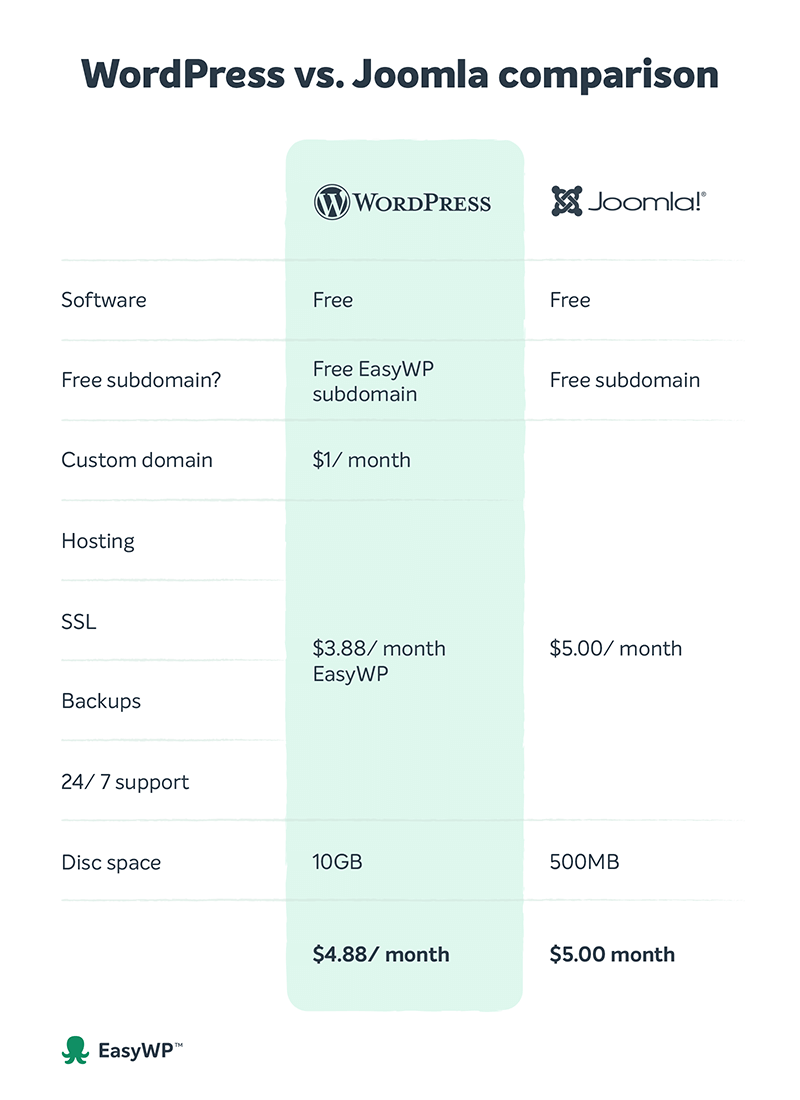
WordPress offers many free themes and plugins. Some plugins have a paid version for extra features. Joomla also has free options, but often needs more paid extensions. Many developers create paid plugins for Joomla. This can make Joomla costlier over time. Sometimes, free options are enough. It depends on the site needs.
Both WordPress and Joomla need hosting services. WordPress is more popular, so many hosts offer special plans. These plans make it easy to set up WordPress. Joomla also needs hosting, but choices are fewer. Some hosts provide Joomla support. It’s important to check if the host supports Joomla before buying. Always read hosting reviews. They help in choosing the right host.
Ideal Use Cases
WordPress excels in ease of use, ideal for bloggers and small businesses. Joomla offers advanced customization, perfect for complex sites. Each platform caters to different needs, making choice crucial.
Personal Blogs
WordPress is perfect for personal blogs. It is easy to set up. Many themes are available for free. Bloggers love its user-friendly interface. You can customize it without coding. Plugins add extra features. WordPress is ideal for beginners. It supports multimedia content well. You can share photos and videos easily.
Joomla is more complex. It offers more control. Suitable for those with tech skills. Its flexibility is a plus. You might need more time to learn it. Joomla also supports blogging. But it is less straightforward than WordPress.
Business Websites
WordPress can handle business sites. It supports e-commerce plugins. WooCommerce is popular for online stores. WordPress themes suit many industries. It is cost-effective for small businesses. Maintenance is simple and quick.
Joomla fits larger business websites. It has strong security features. Businesses with custom needs choose Joomla. It offers advanced user permissions. Developers find it flexible. Joomla can manage complex content structures well.
Frequently Asked Questions
What Are The Main Differences Between WordPress And Joomla?
WordPress is known for its simplicity and user-friendly interface, ideal for beginners. Joomla offers more flexibility and is favored by developers for complex sites. Both have strong communities, but WordPress boasts a larger number of themes and plugins. Joomla provides more advanced user management options.
Is WordPress Easier To Use Than Joomla?
Yes, WordPress is generally easier to use due to its intuitive dashboard and simple setup. It is perfect for users with little technical expertise. Joomla, while user-friendly, requires more technical knowledge to leverage its advanced features. Beginners often find WordPress more accessible.
Which Platform Is Better For Seo, WordPress Or Joomla?
WordPress is often considered better for SEO due to its wide range of SEO plugins and features. It offers easy optimization for search engines. Joomla also provides strong SEO capabilities but may require more manual adjustments. WordPress’s SEO plugins are more user-friendly for beginners.
Can I Migrate From Joomla To WordPress Easily?
Yes, migrating from Joomla to WordPress is possible with the right tools and guidance. Several plugins and services can facilitate the migration process. However, some technical knowledge is beneficial to ensure a smooth transition. It’s advisable to back up data before starting the migration.
Conclusion
Choosing between WordPress and Joomla depends on your needs. WordPress offers simplicity. Great for beginners. Joomla provides flexibility. Perfect for complex sites. WordPress excels in ease of use. It has a large support community. Joomla shines in customization. Ideal for advanced users.
Both have strengths. Both have weaknesses. Consider your goals. Understand your skills. Evaluate your resources. Decide based on these factors. Make an informed choice. Build a site that suits you best. Embrace the platform that fits your vision. Happy website building!


