

If you want your sales team to close more deals and connect better with customers, understanding what a sales enablement solution is can be a game-changer. Imagine having all the right tools, content, and training at your fingertips exactly when you need them—helping you work smarter, not harder.
You’ll discover how a sales enablement solution can boost your sales effectiveness, streamline your process, and give you the edge over your competition. Keep reading to unlock the secret to turning potential into consistent sales success.

Credit: www.nextiva.com
Sales Enablement Basics
Sales enablement is a key strategy that helps sales teams perform better. It provides the right tools, resources, and training to improve sales results. Understanding the basics of sales enablement is important for any business looking to boost its sales efforts.
This section explains the core purpose, key components, and the three pillars of a sales enablement solution. These fundamentals make it easier to grasp how sales enablement works and why it matters.
Core Purpose
The main goal of sales enablement is to equip salespeople with what they need to close deals. It removes obstacles by providing easy access to useful content and training. This support helps sales reps sell more efficiently and confidently.
Key Components
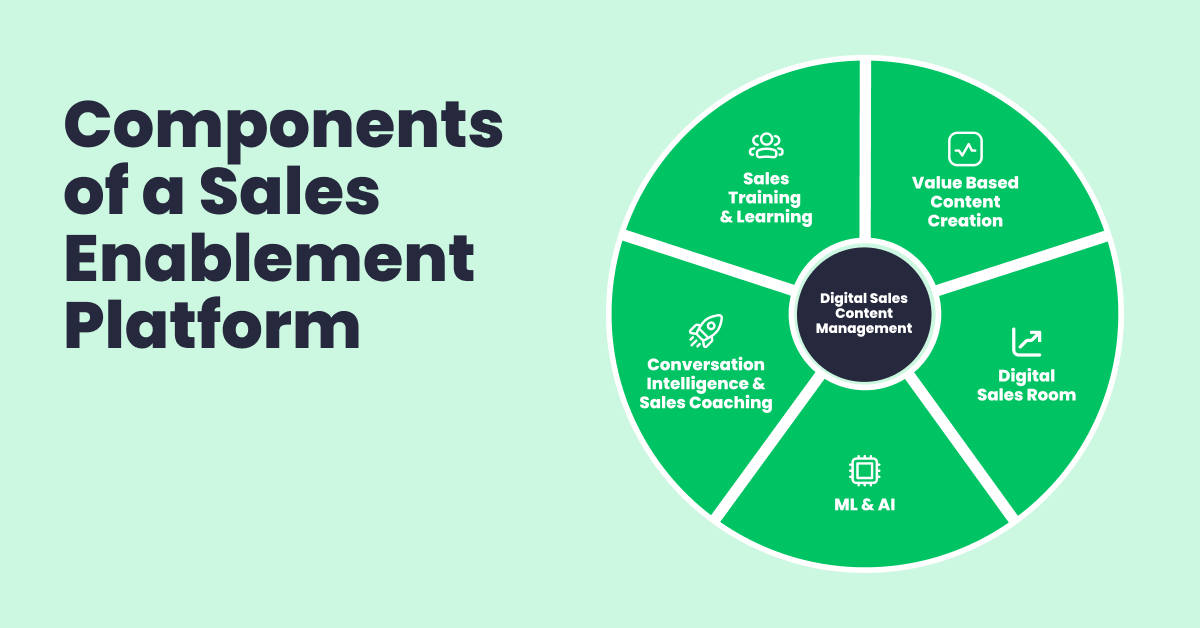
Sales enablement solutions include several important parts. Content management keeps sales materials organized and accessible. Training tools help improve skills and product knowledge. Analytics track performance to identify areas for improvement. Together, these components create a strong support system for sales teams.
Three Pillars
The three pillars of sales enablement are people, process, and technology. People means the sales team and their skills. Process involves the steps and methods used to guide sales activities. Technology refers to the tools and platforms that deliver resources and information. Balancing these three pillars is essential for effective sales enablement.
Credit: www.mediafly.com
Types Of Enablement Solutions
Sales enablement solutions come in various forms. Each type serves a unique role in helping sales teams perform better. Understanding these types can guide businesses to pick the right tools for their needs.
Content Management Tools
These tools store and organize sales materials in one place. Sales reps find brochures, presentations, and case studies quickly. Easy access to updated content helps close deals faster. It also ensures consistent messaging across the team.
Training And Coaching Platforms
Training platforms provide learning modules for sales skills and product knowledge. Coaching tools offer feedback and track progress over time. These solutions help reps improve performance and stay confident. Regular training keeps teams sharp and ready for challenges.
Buyer Engagement Systems
Buyer engagement tools help sales reps interact with customers effectively. They include email tracking, chatbots, and personalized content delivery. These systems create better buyer experiences and speed up decision-making. Strong engagement leads to higher conversion rates.
Performance Analytics
Performance analytics tools measure sales activities and outcomes. They show which strategies work and where reps need support. Data-driven insights help managers make informed decisions. Analytics also motivate reps by highlighting their strengths and progress.
Benefits For Sales Teams
Sales enablement solutions bring clear benefits to sales teams. These tools help teams work smarter, not harder. They provide the right resources at the right time. This support leads to better results and a smoother sales process.
Sales teams gain from improved efficiency and sharper focus. They spend less time searching for information and more time selling. The solution also helps tailor approaches to match buyer needs. This focus increases the chance of closing deals faster.
Increased Productivity
Sales enablement solutions reduce time spent on repetitive tasks. Teams get quick access to sales materials and training. This saves hours each week. Sales reps can focus on selling instead of searching for resources. The tools also automate follow-ups and reminders. These features keep the sales process moving smoothly.
Better Buyer Targeting
These solutions help identify the right buyers faster. Sales teams receive insights on buyer behavior and preferences. They can personalize messages to meet specific needs. This relevance makes buyers more interested and engaged. Targeting improves the quality of leads and reduces wasted effort.
Faster Revenue Growth
With better tools and data, sales teams close deals quicker. The process becomes more efficient and less error-prone. Teams spend more time selling and less time on admin tasks. This leads to increased sales volume and faster revenue growth. Businesses can reach their sales goals sooner with these solutions.
Credit: www.paperflite.com
Choosing The Right Solution
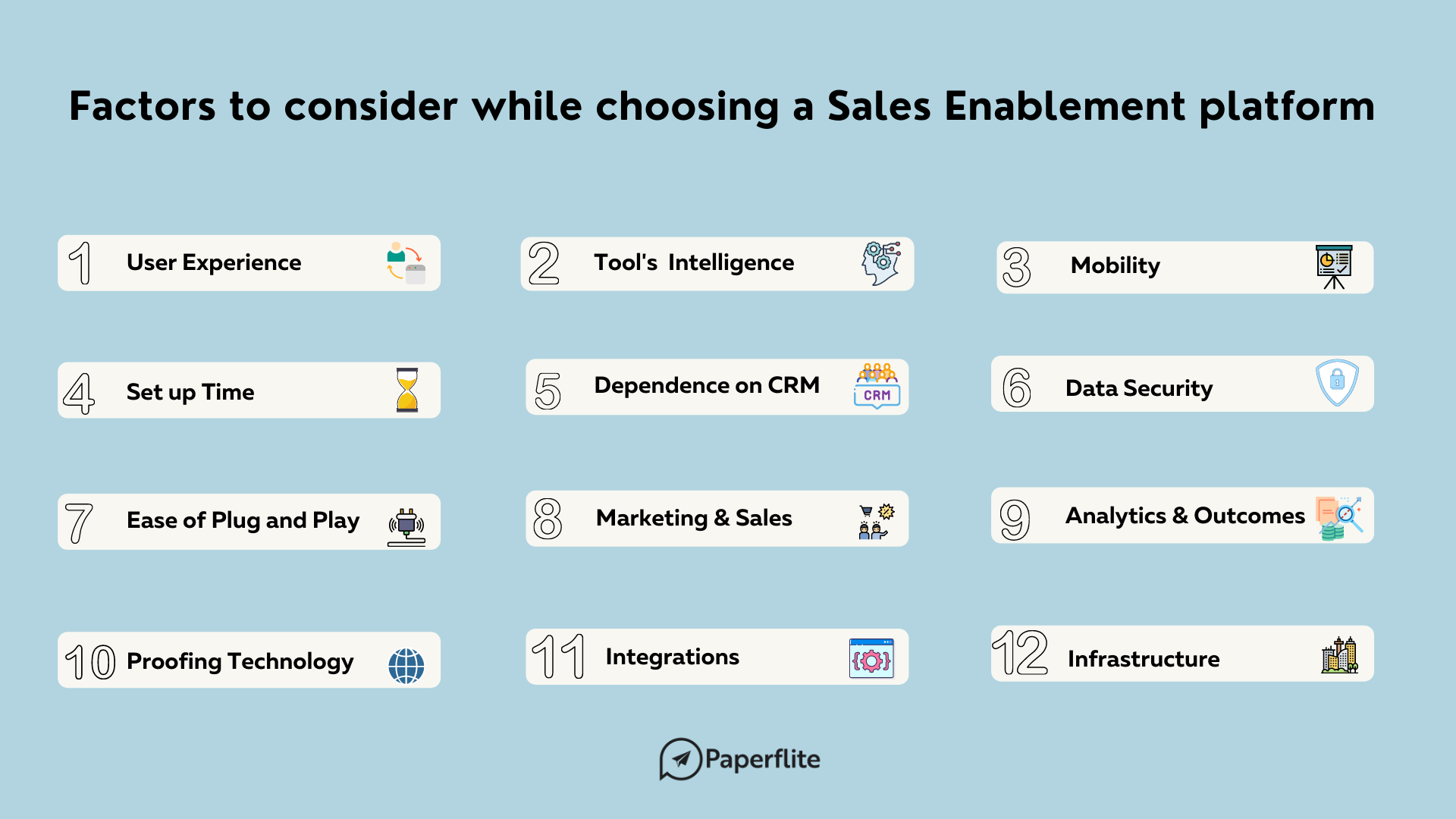
Choosing the right sales enablement solution shapes your team’s success. The right tool fits your company’s unique needs. It supports your sales process and boosts productivity. Consider key factors to find the best match for your team and goals.
Assessing Team Needs
Start by understanding what your sales team requires most. Identify gaps in skills, content, or tools. Determine if training, content management, or analytics matter most. Focus on features that solve current challenges and improve daily workflows. Tailor the solution to match your team’s experience level and goals.
Integration With Existing Tools
Check how well the solution works with your current software. Seamless integration saves time and reduces errors. Ensure it connects with your CRM, email, and communication platforms. A well-integrated system keeps data consistent and easy to access. Avoid solutions that require complex manual work or disrupt workflows.
Scalability And Flexibility
Choose a solution that grows with your business. It should handle more users, data, and features as needed. Flexible tools allow customization to fit changing sales strategies. Avoid rigid solutions that limit your team or require full replacements later. Scalability ensures long-term value and supports evolving sales goals.
Implementing Enablement Solutions
Implementing a sales enablement solution transforms how your sales team works. It helps them access the right tools and knowledge quickly. This leads to better sales results and improved team confidence.
Successful implementation focuses on three main areas. Each area supports the sales team at different stages of their journey. These are onboarding and training, content creation and management, and ongoing coaching.
Onboarding And Training
New sales reps learn faster with structured onboarding programs. Enablement solutions provide clear steps and resources for training. Interactive modules and videos make learning easy and engaging. This approach reduces time to productivity. It also ensures all team members start with the same knowledge base.
Content Creation And Management
Sales teams need up-to-date content to share with customers. Enablement solutions offer tools to create, organize, and manage this content. Easy access saves time and avoids confusion. Sales reps find the right materials quickly. Centralized content ensures consistency across the team.
Ongoing Coaching
Continuous coaching improves skills and keeps reps motivated. Enablement solutions track performance and highlight areas for growth. Managers can provide targeted feedback and support. Regular coaching sessions boost confidence and close more deals. This cycle of learning drives long-term success.
Measuring Impact
Measuring the impact of a sales enablement solution is essential for understanding its true value. It helps identify what works and what needs improvement. Tracking the right data allows businesses to enhance sales strategies and boost performance over time.
Key Performance Indicators
Key performance indicators (KPIs) show how well the sales enablement tools support the team. Common KPIs include sales growth, conversion rates, and average deal size. These indicators give clear insights into the effectiveness of sales efforts.
Sales Metrics To Track
Tracking sales metrics is vital for assessing progress. Important metrics include time to close, lead response time, and quota attainment. Monitoring these numbers helps spot trends and areas that require attention.
Feedback Loops
Feedback loops involve collecting input from sales reps and customers. Regular feedback helps refine the sales enablement process. It ensures that tools and content stay relevant and useful for the team.
Examples Of Sales Enablement
Examples of sales enablement show how companies support their sales teams. These examples help teams work smarter and close deals faster. They include real cases, common features of software, and uses in specific industries. Understanding these examples makes sales enablement clearer and easier to apply.
Real-world Case Studies
Many companies use sales enablement tools to improve results. For example, a software firm increased sales by 30% after adopting a content management system. Another case shows a retail chain training its staff with online modules, raising customer satisfaction. These stories prove how sales enablement helps in real business settings.
Popular Platform Features
Sales enablement platforms often include content libraries, training modules, and analytics dashboards. Content libraries help reps find the right materials quickly. Training modules provide ongoing learning and coaching. Analytics dashboards track performance and identify areas to improve. These features support sales teams every day.
Industry-specific Uses
Different industries use sales enablement in unique ways. In healthcare, reps get detailed product info to answer questions confidently. In manufacturing, teams access technical specs and case studies to explain products clearly. In finance, sales enablement includes compliance training and customer data tools. Tailoring enablement to each industry boosts sales success.
Frequently Asked Questions
What Is An Example Of Sales Enablement?
An example of sales enablement is providing sales teams with training, content, and tools to improve buyer engagement and close deals faster.
What Is An Enablement Solution?
An enablement solution equips teams with tools, content, and training to improve skills and boost sales performance efficiently.
What Are The Three Pillars Of Sales Enablement?
The three pillars of sales enablement are content, training, and coaching. These ensure sales teams have the right resources and skills.
What Is A Solution Sales Enablement Tool?
A solution sales enablement tool equips sales teams with resources, training, and content to sell products effectively and close deals faster.
Conclusion
A sales enablement solution helps sales teams work smarter and faster. It offers tools, training, and content to support every step. Teams become more confident and close deals more easily. These solutions fit different business needs and grow with the team.
Choosing the right one can improve sales performance steadily. Keep learning and adapting to get the best results. Sales enablement is key to building a stronger, more effective sales force.


