
Imagine this: You pour your heart into crafting the perfect blog post on WordPress. You hit publish, and your creation is out in the digital world, ready to attract readers and garner comments.
But what happens when someone leaves a link in your comments section? Should you care? The answer hinges on understanding “nofollow” links. You might be wondering, “What exactly is a nofollow link? ” It’s a question that can make all the difference for your website’s SEO and online reputation.
Nofollow links might seem like a technical detail, but they play a crucial role in how search engines perceive your site. When you grasp their significance, you gain control over your site’s credibility and the flow of link juice. Stick with us, and we’ll dive into the world of nofollow links on WordPress. You’ll learn how they impact your site and how you can use them to protect your online presence. By the end of this article, you’ll be equipped with the knowledge to make informed decisions about the links on your site, ensuring that your hard work pays off without unwanted consequences. Ready to uncover the secrets of nofollow links? Let’s get started!
Nofollow Links Defined
A nofollow link is a type of link on a webpage. It tells search engines to ignore the link. These links do not pass authority to the linked site. It is like saying, “I am not endorsing this page.”
Webmasters often use nofollow links. They help to control link juice. This keeps a site from boosting another site’s rank unfairly. It is useful for comments and ads.
Credit: kinsta.com
Purpose Of Nofollow Links
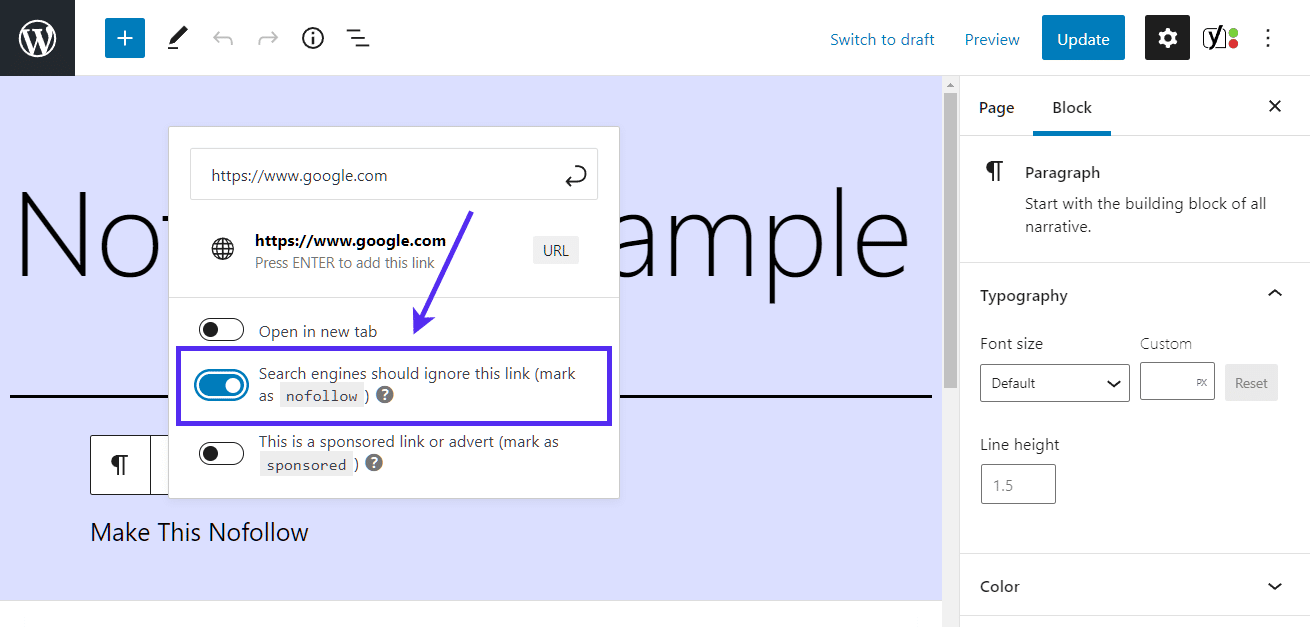
Nofollow links help websites to manage spam and control SEO. They tell search engines not to count certain links in ranking. These links are used for paid ads and user-generated content. This stops search engines from thinking the site is trying to cheat. Bloggers use nofollow links to keep their sites clean. It is easy to add a nofollow link in WordPress. Just use the link settings to change it. Adding nofollow can help keep your site trustworthy.
Site owners can use nofollow for untrusted sites. This helps protect their site from bad links. Nofollow links are important for keeping a site safe. They help site owners keep control over their links. This makes the site better for visitors and search engines.
Impact On Seo
Nofollow links tell search engines not to follow a link. They don’t pass SEO value to the linked page. This means they do not help in improving search engine rankings.
These links can still bring traffic to your website. People may click on them and visit. But they will not boost your site’s SEO.
Search engines like Google introduced nofollow to stop spam. It helps keep the web clean.
Websites often use nofollow for ads or untrusted content. This ensures they don’t accidentally support bad sites. Always check your links on WordPress. Make sure they are what you want.
How To Add Nofollow Links In WordPress
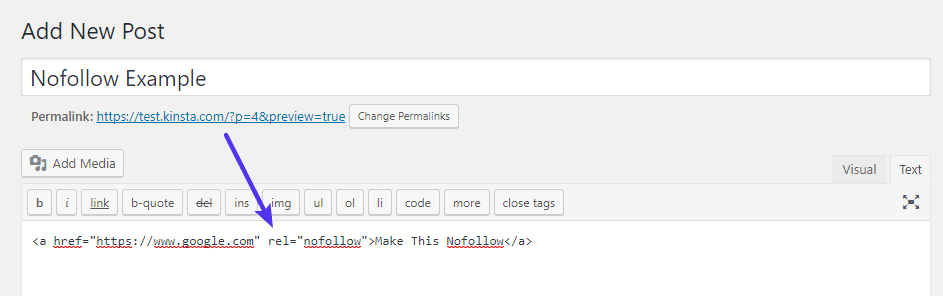
Adding a nofollow link in WordPress using HTML is simple. When you add a link, use the rel="nofollow" tag. This tag tells search engines not to follow the link. Use it when linking to untrusted sites. It keeps your site safe from bad links.
Here’s how: Go to your post editor. Click on the text tab. Find the link you want to change. Add rel="nofollow" inside the link tag. Save your changes. Now your link is nofollow. This helps manage your site’s SEO.
Plugins make adding nofollow links easier. Many plugins are free. Search for “nofollow plugins” in the plugin store. Install one that suits your needs. Plugins automate the process. They add the nofollow tag for you. This saves time. It also reduces mistakes.
After installing, activate the plugin. Check its settings. Some plugins add nofollow to all external links. Others allow manual selection. Choose what works best for your site. Plugins simplify SEO management.
Pros And Cons
Nofollow links help control spam on websites. They stop unwanted comments. This keeps your site clean. They also protect your site from bad links. Bad links can hurt your site’s health. Nofollow links are great for SEO. They keep your site’s authority safe.
Nofollow links do not pass link juice. This means no extra SEO boost. No extra traffic from search engines. Some people might ignore these links. They think they are less important. Your site might miss out on valuable connections.
Credit: www.fixrunner.com
Common Misconceptions
Many people think nofollow links are useless. This is not true. Nofollow links can help in different ways. They can bring traffic to your site. Nofollow links can also build your brand. Some think nofollow means Google will ignore the link. But Google still sees it. It just does not pass SEO value like a dofollow link.
Another myth is that all nofollow links are bad. They are not. They can keep your site safe from spam. Using only dofollow links can seem unnatural. A good site has a mix of both. So, it is important to use nofollow links wisely. They are a part of a healthy link profile.
Best Practices
Nofollow links help control search engine results. They tell search engines not to follow certain links. Use them for sponsored or paid content. This keeps your site’s trust high. Also, apply nofollow to comments or guest posts. This prevents spammy links from affecting your site’s ranking.
Always check links before adding them. Make sure they are relevant and quality. Avoid linking to bad sites. Use nofollow for any link you are unsure about. This protects your site’s reputation.
Use plugins to manage nofollow links easily. Many plugins offer simple settings. They help you add or remove nofollow quickly. This makes managing links more efficient.
Credit: kinsta.com
Frequently Asked Questions
What Is A Nofollow Link In WordPress?
A nofollow link in WordPress tells search engines not to pass on SEO value to the linked page. It is used to prevent spam and maintain link equity. By default, WordPress doesn’t add nofollow to links, so users must manually add the nofollow attribute to desired links.
Why Use Nofollow Links On Your Website?
Nofollow links help manage your website’s link equity by controlling which links pass SEO value. They are crucial for preventing spammy or untrustworthy sites from gaining authority through your site. Additionally, they help maintain the integrity of your website’s SEO performance, ensuring better search engine rankings.
How To Add A Nofollow Link In WordPress?
To add a nofollow link in WordPress, use the HTML editor. Locate the link and insert the rel=”nofollow” attribute within the anchor tag. Alternatively, you can use plugins that simplify this process, automatically adding the nofollow attribute to selected links without manual coding.
Do Nofollow Links Affect Seo Rankings?
Nofollow links do not directly affect your website’s SEO rankings, as they don’t pass link equity. However, they can indirectly benefit your site by increasing traffic and visibility. By linking to credible sources, you enhance your content’s authority, which may improve user trust and engagement.
Conclusion
Nofollow links in WordPress guide search engines. They help manage link value. Adding them is simple. Use plugins or HTML code. This control affects your site’s SEO. Use nofollow wisely to direct link equity. Not all links need this tag.
Decide based on your strategy. Learning about nofollow links boosts your WordPress skills. It helps you manage links better. Keep practicing and adjust as needed. Your site will benefit from this knowledge.


