Are you confident that your AI models are truly secure? As AI becomes a bigger part of your business or projects, protecting these models from attacks isn’t just optional—it’s essential.
You might wonder: what exactly is AI model security, and how can training platforms help you defend against threats like data poisoning, prompt injection, or model theft? This article will guide you through the key risks your AI faces and reveal how specialized security training platforms empower you to safeguard your models at every stage.
Keep reading to discover practical steps you can take right now to strengthen your AI’s defenses and stay ahead of evolving cyber threats.
Ai Model Security Basics
AI model security basics focus on protecting AI systems from threats. These threats appear at different stages of the AI lifecycle. Safeguarding AI involves securing data, models, and deployment environments. Understanding these basics helps reduce risks and maintain trust in AI applications.
Lifecycle Protection
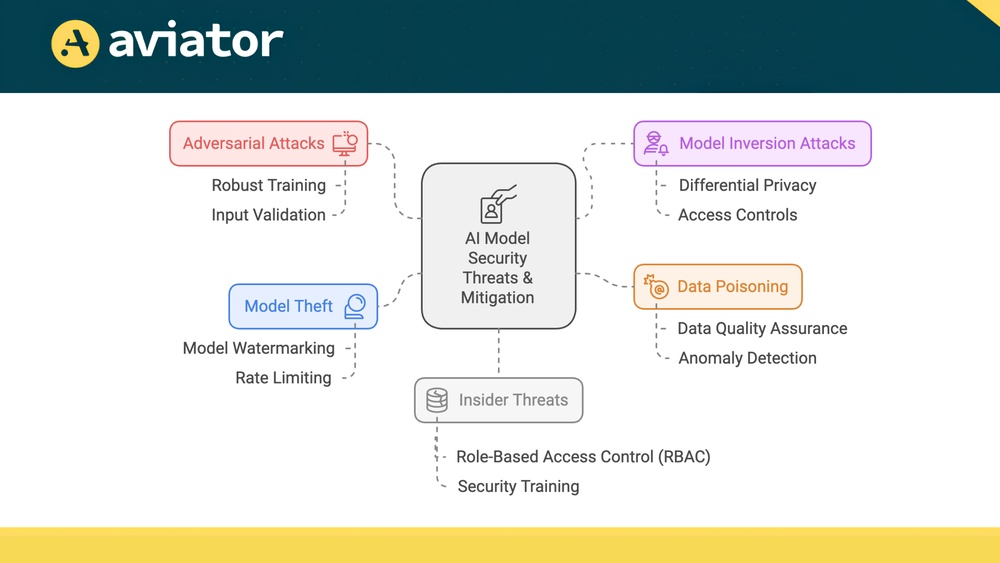
AI models face risks during data collection, training, and deployment. Each stage requires specific security measures. Data must be verified to avoid poisoning attacks. Training processes need protection against manipulation attempts. Deployment environments should be hardened to prevent runtime attacks. Regular checks ensure the model remains safe throughout its life.
Key Security Aspects
Protecting AI models means focusing on data, model, and access controls. Data encryption stops unauthorized access to sensitive information. Access controls restrict who can modify or use the model. Monitoring helps detect unusual activities or performance changes. Adversarial training prepares models to resist manipulation. Together, these aspects build a strong defense against threats.

Credit: radiantsecurity.ai
Common Ai Model Threats
AI models face many threats that can harm their performance and security. Understanding these common threats helps protect AI systems better. Attackers try to exploit weaknesses in AI models at different stages. These attacks can cause data loss, privacy breaches, and incorrect AI behavior. Below are some of the key threats targeting AI models.
Prompt Injection
Prompt injection tricks AI by giving it harmful or misleading input. This attack changes the AI’s output beyond its intended purpose. It targets generative AI systems, making them act wrongly or reveal sensitive data. Preventing prompt injection requires careful input validation and monitoring.
Data Poisoning
Data poisoning corrupts the training data of AI models. Attackers insert false or harmful data to manipulate model behavior. This can create backdoors or cause the model to make bad decisions. Strong data verification and cleaning help stop poisoning attacks.
Model Inversion
Model inversion extracts private information from AI models. Attackers analyze outputs to recover sensitive training data. This risks leaking personal or confidential information. Limiting data exposure and using privacy-preserving techniques reduce this threat.
Model Theft
Model theft steals the AI model or its intellectual property. Attackers copy or reverse-engineer models without permission. This causes financial loss and weakens competitive advantage. Secure access controls and encryption protect models from theft.
Runtime Attacks
Runtime attacks exploit weaknesses when AI models are running. Attackers inject malicious code during loading or inference. These attacks can alter model decisions or cause crashes. Continuous monitoring and secure deployment environments defend against runtime threats.
Security Measures And Controls
Security measures and controls form the backbone of AI model security training platforms. They protect AI systems from threats at every stage. These controls help prevent data leaks, unauthorized access, and model manipulation. A strong security framework builds trust and ensures safe AI deployment.
Securing Development Lifecycle
Protecting AI starts from the development phase. Every stage, from data collection to model deployment, must have security checks. Secure coding practices reduce vulnerabilities. Testing for weaknesses before deployment limits attack surfaces. Secure development prevents threats like data poisoning or backdoors.
Access Controls
Access controls limit who can use or change AI models. Role-based access ensures only authorized users have permissions. Identity verification and multi-factor authentication add layers of security. Restricting access reduces risks of insider threats and unauthorized model changes.
Encryption Techniques
Encryption safeguards data and AI models from unauthorized access. Encrypting training data protects sensitive information. Models themselves can be encrypted to prevent theft or tampering. Strong encryption ensures data remains secure during storage and transmission.
Audits And Monitoring
Regular audits check for security gaps and compliance issues. Continuous monitoring detects unusual activities or performance drops. Monitoring helps spot runtime attacks or data leaks early. Timely alerts allow quick responses to potential threats.
Advanced Defense Techniques
Advanced defense techniques are essential to protect AI models from evolving threats. These methods strengthen the security of AI systems during training and deployment. They help reduce risks and improve the model’s reliability. Organizations use a mix of technical and human-centered strategies to defend AI assets effectively.
Adversarial Training
Adversarial training involves exposing AI models to carefully crafted attacks during training. This process helps the model learn to recognize and resist malicious inputs. It improves the model’s ability to handle unexpected or harmful data. Regular adversarial training boosts the model’s robustness against common attack methods.
Risk Assessments
Risk assessments identify potential vulnerabilities in AI systems. They evaluate threats from data collection to deployment. This process helps prioritize security efforts based on the impact and likelihood of risks. Frequent risk assessments ensure that defenses stay up to date with new threats.
Threat Scanning
Threat scanning uses automated tools to detect suspicious activity around AI models. It monitors data flows, model behavior, and access patterns. Early detection allows quick response to attacks or breaches. Continuous threat scanning is key to maintaining AI system integrity.
Employee Training
Employee training educates staff about AI security best practices. It raises awareness about common attack techniques and safe handling of AI tools. Well-trained employees reduce human errors that can lead to security gaps. Training should be ongoing to keep pace with evolving threats.
Leading Ai Model Security Platforms
Leading AI model security platforms provide essential tools to protect AI systems. These platforms focus on safeguarding AI models against various cyber threats. They help maintain the integrity and confidentiality of AI throughout its lifecycle. Each platform offers unique features designed to secure AI models from data poisoning, prompt injection, and other attacks.
Google Cloud Model Armor
Google Cloud Model Armor protects AI models deployed on the cloud. It uses advanced threat detection to stop attacks early. The platform offers continuous monitoring of model behavior. It also applies adaptive security policies to block suspicious activity. Google Cloud Model Armor integrates well with other Google Cloud security tools.
Palo Alto Networks Solutions
Palo Alto Networks provides AI security solutions that focus on threat prevention. Their platform detects unusual AI model activity in real time. It uses machine learning to identify new attack patterns. Palo Alto Networks offers strict access controls to limit user permissions. The platform supports automation for faster threat response.
Sentinelone Ai Security
SentinelOne AI Security offers endpoint protection tailored for AI systems. It uses behavioral AI to detect malicious actions targeting AI models. The platform automates threat hunting and response tasks. It provides detailed forensic data for incident analysis. SentinelOne helps organizations secure AI models across devices and cloud environments.
Ibm Ai Security Tools
IBM AI Security Tools focus on building secure AI from development to deployment. They provide solutions for data encryption and model integrity checks. IBM tools include risk assessments to identify AI vulnerabilities. Continuous monitoring alerts teams about unusual model activities. IBM offers compliance features to meet industry security standards.

Credit: cranium.ai
Collaborating With Security Experts
Collaborating with security experts is essential for protecting AI models. Experts bring knowledge to identify risks and build strong defenses. Their insights help create practical training platforms that address real threats. Working together ensures AI systems remain safe from attacks at all stages.
Privacy Professionals
Privacy professionals focus on protecting sensitive data used in AI training. They ensure compliance with laws and regulations. Their role includes assessing risks linked to data collection and storage. These experts guide teams on how to keep user information confidential. Their input helps prevent data leaks and misuse in AI models.
Security Consultants
Security consultants analyze AI systems for vulnerabilities. They design strategies to prevent attacks like data poisoning and prompt injection. These consultants test AI models under different scenarios to find weak points. Their advice strengthens security controls and improves incident response plans. Consultants also train teams on best practices to maintain AI safety.
Community And Industry Resources
Joining communities and using industry resources enhances AI security knowledge. Forums and groups share the latest threats and defense techniques. Industry standards provide guidelines for secure AI development and deployment. Participating in these networks keeps teams updated with evolving risks. Sharing experiences with peers fosters better security solutions for AI models.

Credit: industrialcyber.co
Frequently Asked Questions
What Is The Ai Model Of Security?
AI model security protects AI systems from threats during data collection, training, deployment, and use. It includes safeguarding data, preventing attacks like prompt injection, and continuous monitoring to ensure model integrity and confidentiality.
Which Ai Security Certification Is Best?
The best AI security certification depends on your goals. Popular options include Stanford Online’s AI Security Course and Practical DevSecOps training. Choose certifications that cover AI threats, adversarial training, and secure development practices for comprehensive learning.
How Is Ai Used In Security Systems?
AI enhances security systems by detecting threats, analyzing behavior, automating responses, and preventing unauthorized access in real time.
What Is An Ai Training Model?
An AI training model is a computer program that learns patterns from data to make predictions or decisions. It improves accuracy by analyzing examples during training.
Conclusion
AI model security training platforms help protect AI systems effectively. They focus on securing data, models, and deployment stages. These platforms guide users to prevent attacks like data poisoning and prompt injection. Regular monitoring and risk assessments keep AI safe over time.
Using such training supports stronger, more reliable AI solutions. Staying informed about AI threats helps organizations act quickly. Security is essential as AI use grows in many fields. Trustworthy AI depends on ongoing protection and smart practices.