
Are you trying to decide between creating a WordPress site or a traditional website? You’re not alone.
Many people like you face this decision when building their online presence. Understanding the differences is crucial for making the right choice that fits your needs. WordPress is often praised for its user-friendly interface and flexibility, but does it hold up against a custom website that might offer more control and personalization?
You’ll discover the key differences, advantages, and potential drawbacks of each option. By the end, you’ll have a clearer picture, helping you make an informed decision for your online venture. Ready to uncover which path is right for you? Let’s dive in!
Credit: www.hostinger.com
WordPress Basics
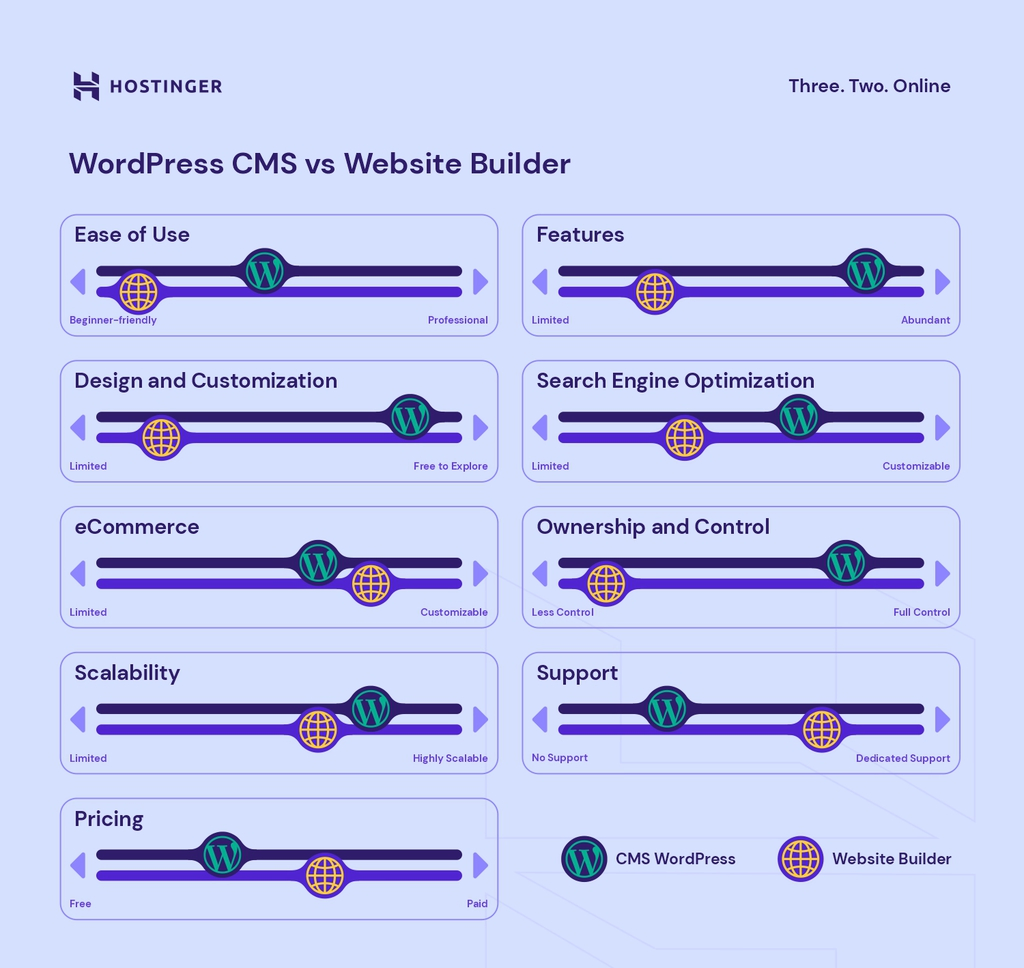
A content management system is a tool to make websites. WordPress is a popular choice. It helps you manage your content easily. You can add or remove text, images, and videos. No coding skills are needed. Even beginners can use it. WordPress has many themes. Themes change how your site looks. You can also add plugins. Plugins add more features to your site. WordPress is flexible and easy to use.
WordPress is known for its simple interface. It’s easy to learn. Many people use it worldwide. You can make a website quickly. Just a few clicks and your site is live. It offers a dashboard. The dashboard is user-friendly. You can see everything in one place. This makes managing content smooth. WordPress saves time and effort. Users find it very convenient.
Website Fundamentals
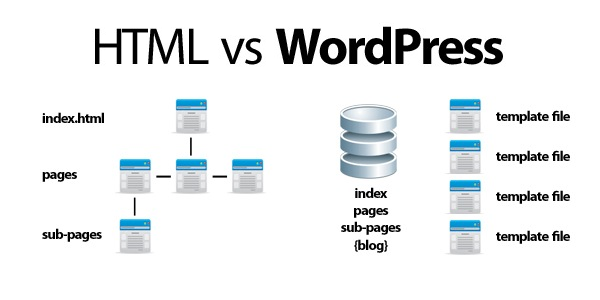
Static websites show the same content to everyone. The pages do not change. They are simple and easy to make. They load fast. Dynamic websites change content based on user actions. They are interactive. Users see different things based on choices. Dynamic sites are complex. They can be slower to load.
Custom development means making a website from scratch. It meets special needs. Developers write code to match requirements. This can take time. It can also cost more. But it offers more flexibility. Websites can have unique designs. They can include special features. Custom sites are not limited by templates. They fit business needs well.
Design And Customization
WordPress offers many themes. You can choose from thousands. Themes change the look of your site. They are easy to use. You don’t need coding skills. Choose a theme and install it. Your site will look great. Themes can be changed anytime. This gives your site a new look.
WordPress is flexible. You can add plugins. Plugins add features to your site. They can be installed easily. Website builders often limit design. You can’t change much. WordPress lets you change almost everything. You have control over design. You can make your site unique. Many people like this freedom. It’s a big advantage.
Credit: zebratechies.com
Functionality And Features
WordPress has thousands of plugins. These plugins help in adding new features to your site. You can find plugins for SEO, security, and even design. Installing them is easy. Just a few clicks. Website builders have extensions too. But they might not have many. Some builders limit choices. You can use only what they offer. This makes WordPress more flexible. You can create what you want. You have more control over your site.
WordPress offers many built-in features. You get a content editor. You can easily add images and text. There are themes for your site. These themes change the site’s look. Website builders also have these features. But they might be simpler. Some builders focus more on ease of use. They make it simple for beginners. This can be good if you want a basic site. WordPress is more for those who want extra options. You can make a site unique with WordPress.
Cost Considerations
WordPress is often a cost-effective choice for many. The platform itself is free. You only pay for hosting and domain. Some themes and plugins are free. Others may cost you. Costs can add up with premium themes. Custom plugins may also be pricey. It’s important to budget wisely.
Custom websites can be more expensive. You pay for design and development. These sites need skilled developers. They often charge high fees. You also pay for hosting and domain. Custom websites offer unique designs. This can be worth the cost for some. It’s essential to consider your needs and budget.
Scalability And Growth
WordPress offers flexibility with themes and plugins for scalability, while custom websites provide tailored growth solutions. Choosing WordPress can simplify scalability, whereas custom sites require more development effort but offer precise control over growth. Understanding these differences helps in selecting the right platform for future expansion.
WordPress Limitations
WordPress is popular but has limits. It suits small sites well. For big sites, it struggles. Plugins can slow down performance. Updates might break your site. Themes are often similar. Customization needs coding skills. For growth, these are challenges. Security can be an issue. Many plugins mean many risks. Fixing bugs can be hard. WordPress sites need regular care. This can be time-consuming. Traffic spikes can crash your site. Hosting choices affect speed and reliability. E-commerce is possible but needs more work. WordPress is good but not perfect for fast-growing sites.
Custom Website Potential
Custom sites have great flexibility. You can design them to fit your needs. Growth is easier with custom sites. They handle traffic well. Security is often better. Custom sites are fast. They use efficient code. No unwanted plugins or themes. They scale with your business. Custom sites can be unique. They offer personal touches. E-commerce is smoother. Custom sites need more initial work. But they offer long-term benefits. They are great for large projects. Custom sites provide room for innovation and change.
Security And Maintenance
WordPress has many security plugins. They help protect your site. Regular updates are important. Always update your plugins and themes. Hackers look for old software. Strong passwords are a must. Use unique passwords. Enable two-factor authentication. This adds an extra layer of security. Backing up your site is vital. It ensures you can restore data.
Maintaining a website needs regular checks. Check for broken links. Fix them quickly. They can frustrate visitors. Update the website content. Fresh content keeps visitors engaged. Test website speed. Slow websites lose visitors. Monitor site performance. Good performance means happy users. Ensure your website is mobile-friendly. More people use phones to browse. Keep your site secure and updated.
User Experience
WordPress sites often have menus and search bars. These help users find what they need quickly. Websites built from scratch may lack these features. This can make them hard to navigate. Consistent layout and design are key in both. They guide the user and ensure a smooth journey.
Fast loading times are crucial. WordPress has many plugins to boost speed. Custom websites may need more work to optimize. Responsive design ensures sites work well on phones and tablets. WordPress themes often come with this feature. Custom sites might require extra coding. Monitoring tools help check site performance. WordPress offers many of these tools.

Credit: www.facebook.com
Frequently Asked Questions
What Is WordPress Used For?
WordPress is a versatile platform primarily used for creating blogs and websites. It offers user-friendly tools, themes, and plugins, making web development accessible without coding knowledge. It’s ideal for businesses, personal blogs, and e-commerce sites, providing flexibility and customization options to fit various needs.
Is WordPress A Website Builder?
Yes, WordPress is a popular website builder known for its ease of use. It allows users to create websites using themes and plugins. Unlike traditional website development, WordPress doesn’t require extensive coding skills. It’s a flexible platform, suitable for beginners and experienced developers alike.
How Does A Website Differ From WordPress?
A website is a collection of web pages under a domain. WordPress, however, is a platform used to build and manage these websites. While a website can be built using various methods, WordPress simplifies the process with its themes and plugins, making web management easier.
Can I Create A Website Without WordPress?
Yes, creating a website without WordPress is possible. Alternatives include HTML, CSS, and other CMS like Wix or Squarespace. These platforms offer different features and customization options. Choosing the right method depends on your technical skills and specific website requirements.
Conclusion
Choosing between WordPress and a traditional website depends on your needs. WordPress offers flexibility with themes and plugins. Great for blogging and small businesses. Traditional websites provide full control over design and functionality. Better for unique, complex projects. Consider your budget, technical skills, and goals.
WordPress suits beginners with its user-friendly interface. A custom website requires more technical knowledge. Evaluate what suits your purpose best. Both have strengths and weaknesses. Make an informed decision. The right choice enhances your online presence effectively.


