Starting a consulting software business can open doors to exciting opportunities, but it’s not as simple as just having a great idea. You need to think carefully about several key factors before diving in.
What kind of clients will you serve? How will you stand out from the competition? What tools and skills do you really need to succeed? If you want your business to grow and thrive, understanding these points is crucial. Keep reading to discover exactly what you should consider to build a strong foundation for your consulting software venture.
Choosing Your Niche
Choosing your niche is a crucial step in starting a consulting software business. It helps you focus your efforts and stand out in a crowded market. Picking the right niche allows you to serve clients better and grow your reputation quickly.
Evaluating Market Demand
Research the current needs in the software consulting market. Find areas with high demand but low competition. Check online forums, job boards, and industry reports. Focus on niches where businesses face real problems. High demand means more clients and steady work.
Leveraging Your Expertise
Choose a niche that matches your skills and knowledge. Your experience will help you deliver better solutions. Clients trust consultants who understand their field well. Specializing in what you know saves time and builds confidence. It also makes marketing your services easier.
Identifying Target Clients
Know who will benefit most from your consulting services. Define the size, industry, and location of your ideal clients. Understanding their challenges helps you tailor your offerings. Clear client profiles improve communication and sales. Targeting the right clients leads to long-term relationships.

Credit: www.getcone.io
Building A Strong Brand
Building a strong brand is key to success in the consulting software business. It helps clients recognize your value and trust your services. A clear brand sets you apart in a crowded market. It makes your business memorable and reliable. Focus on creating a brand that speaks to your audience with clarity and professionalism.
Crafting A Clear Value Proposition
Your value proposition explains why clients should choose you. It must be simple and direct. Highlight what makes your software consulting unique. Show how your services solve specific problems. Use language that your target customers easily understand. A clear value proposition attracts the right clients quickly.
Designing A Professional Online Presence
Your website is often the first impression clients get. Make it clean, easy to navigate, and mobile-friendly. Use consistent colors and fonts that match your brand. Include clear calls to action on every page. Add client testimonials and case studies to build confidence. A professional online presence signals reliability and expertise.
Establishing Credibility And Trust
Trust is vital in consulting. Share your experience and qualifications openly. Show certifications and awards if you have them. Provide free resources or advice to demonstrate knowledge. Respond quickly and politely to client inquiries. Building credibility leads to long-term relationships and repeat business.
Setting Up Operations
Setting up operations is a key step in starting a consulting software business. This phase lays the foundation for smooth daily work and future growth. Focus on building a solid structure that supports your services and clients.
Legal And Financial Considerations
Register your business legally to avoid future problems. Choose the right business structure like LLC or sole proprietorship. Understand tax rules and keep accurate financial records. Open a separate business bank account. Plan your budget carefully to cover startup costs and ongoing expenses. Consider hiring an accountant or using accounting software for better financial management.
Choosing The Right Tools And Software
Select tools that fit your consulting services well. Use project management software to keep tasks organized. Communication tools help you stay in touch with clients and team members. Choose reliable software for coding, testing, and documentation. Invest in cloud storage to save and share files securely. Test different tools to find what works best for your team.
Creating Efficient Workflows
Design workflows that simplify your processes. Break down tasks into clear, manageable steps. Automate repetitive tasks to save time and reduce errors. Set deadlines and assign responsibilities clearly. Regularly review and improve workflows to increase productivity. Keep workflows flexible to adapt to new challenges and client needs.
Developing Service Offerings
Developing your service offerings is a key step in starting a consulting software business. Clear and well-defined services help clients understand what you provide. This clarity builds trust and makes it easier to sell your expertise.
Think about what problems your services solve. Focus on solutions that match your skills and market demand. Tailor your offerings to meet client needs and stand out from competitors.
Packaging Your Services
Group related services into clear packages. Packages help clients choose easily and see the value. Offer different levels, like basic, standard, and premium. Each level can include more features or support. Packages create simple options and avoid confusion.
Pricing Strategies
Set prices based on the value you provide, not just time spent. Research what competitors charge for similar services. Choose pricing models like hourly rates, fixed fees, or subscriptions. Consider offering discounts for long-term contracts. Price fairly to attract clients and cover your costs.
Customizing Solutions For Clients
Every client has unique needs. Offer flexible solutions that can be adjusted. Listen carefully to client goals and challenges. Adapt your services to fit their specific problems. Customization shows you care and improves client satisfaction.
Marketing And Client Acquisition
Marketing and client acquisition are key for a consulting software business. Without clients, the business cannot grow. Effective marketing helps attract potential clients. Client acquisition turns interested people into paying customers. A strong strategy creates steady work and income.
Building A Referral Network
Referrals bring trusted clients to your business. Happy clients recommend your services to others. Ask satisfied customers to share your contact. Connect with other professionals who serve the same market. Partnerships with complementary businesses widen your reach. A good referral network builds over time.
Utilizing Content Marketing
Content marketing shows your knowledge and skills. Write blogs, create videos, or share tips online. Useful content attracts people searching for solutions. It also builds trust and authority in your field. Regular content keeps your audience engaged. Clear, simple content works best for all readers.
Engaging On Social Media
Social media connects you directly with potential clients. Choose platforms where your audience spends time. Share helpful posts and respond to comments quickly. Join groups related to software consulting. Active engagement increases your visibility. Consistent interaction helps build strong relationships.
Managing Client Relationships
Managing client relationships is key to a consulting software business. Strong relationships build trust and repeat business. Every interaction with a client shapes their view of your company. Good management keeps projects smooth and clients happy. It helps avoid misunderstandings and delays. Focus on clear communication and setting realistic goals. Be open to feedback and ready to make changes. These steps keep clients satisfied and loyal.
Effective Communication
Clear communication avoids confusion and mistakes. Use simple language clients can understand. Update clients regularly about project progress. Listen carefully to their needs and concerns. Respond quickly to emails and calls. Good communication shows professionalism and respect.
Setting Expectations
Set clear goals and deadlines from the start. Explain what the client should expect at each stage. Be honest about what your software can do. Avoid promising more than you can deliver. Clear expectations prevent frustration and build trust.
Handling Feedback And Revisions
Encourage clients to share their opinions. Accept feedback without getting defensive. Use feedback to improve your software and service. Explain how revisions affect timeline and cost. Stay flexible but keep control of the project. This balance creates a positive experience for clients.
Scaling Your Business
Scaling your consulting software business means growing steadily and managing more clients. It requires smart strategies and careful planning. Growth brings new challenges, but also more opportunities.
Focus on building a strong team, offering more services, and using technology to save time. These steps help your business handle more work without losing quality.
Hiring And Team Building
Hiring the right people is key to growth. Look for skilled professionals who fit your company culture. Train new hires well to keep your service quality high.
Build a team that works well together. Clear roles and good communication help avoid confusion. A strong team can solve problems faster and serve clients better.
Expanding Service Lines
Add new services that match your clients’ needs. This can attract more customers and increase income. Start with simple services and grow gradually.
Research the market to find what clients want. Offer solutions that complement your main service. This shows your business is flexible and ready to help.
Automating Repetitive Tasks
Use software tools to automate routine work. This saves time and reduces mistakes. Tasks like scheduling, invoicing, and reporting can be automated easily.
Automation lets your team focus on important tasks. It improves efficiency and speeds up work. This keeps clients happy and your business running smoothly.
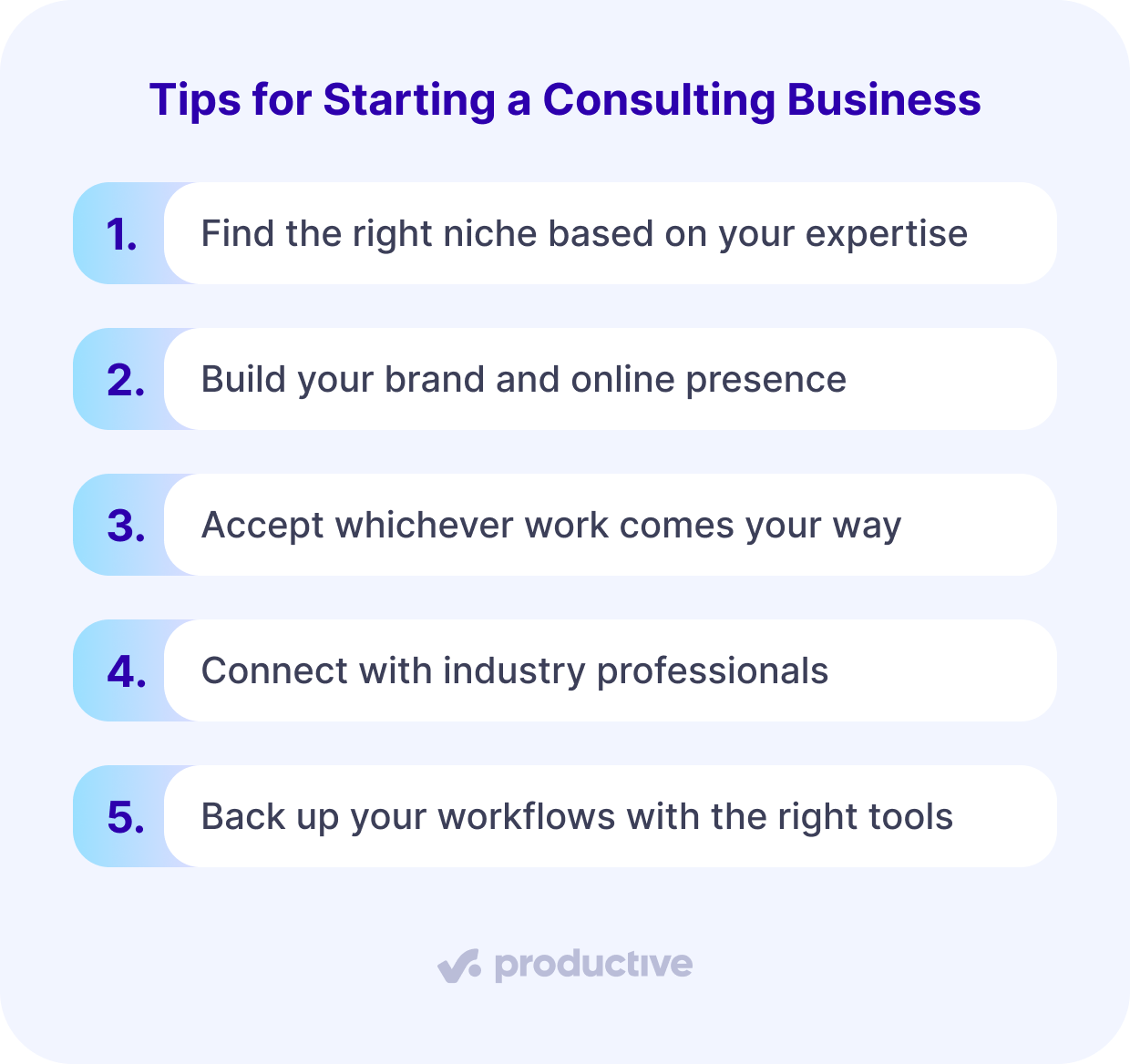
Credit: productive.io

Credit: www.aiuniv.edu
Frequently Asked Questions
What Skills Are Essential For A Consulting Software Business?
Strong technical expertise and problem-solving skills are essential. Communication and project management abilities also ensure client satisfaction. Business acumen helps in understanding market needs and delivering tailored solutions. These skills combined build a successful consulting software business.
How Do I Identify My Target Market?
Analyze industries that require software consulting. Research client pain points and demands. Define your niche based on expertise and market gaps. Understanding your target market ensures focused marketing and higher client acquisition.
What Legal Steps Are Needed To Start The Business?
Register your business legally to establish credibility. Obtain necessary licenses and permits. Draft client contracts and non-disclosure agreements. Consult a legal expert to ensure compliance with local laws and protect your business interests.
How Should I Price Consulting Software Services?
Consider project complexity, client budget, and market rates. Use value-based pricing to reflect the benefits your service provides. Transparent pricing builds trust and helps attract long-term clients.
Conclusion
Starting a consulting software business needs clear planning and smart choices. Know your market well and choose the right tools. Keep your services simple and easy to explain. Build trust with clients by offering real value. Stay ready to learn and change as you grow.
Focus on solving problems, not just selling software. Success comes from patience and steady effort. Keep these points in mind to build a strong foundation. Your business can thrive with the right approach.