
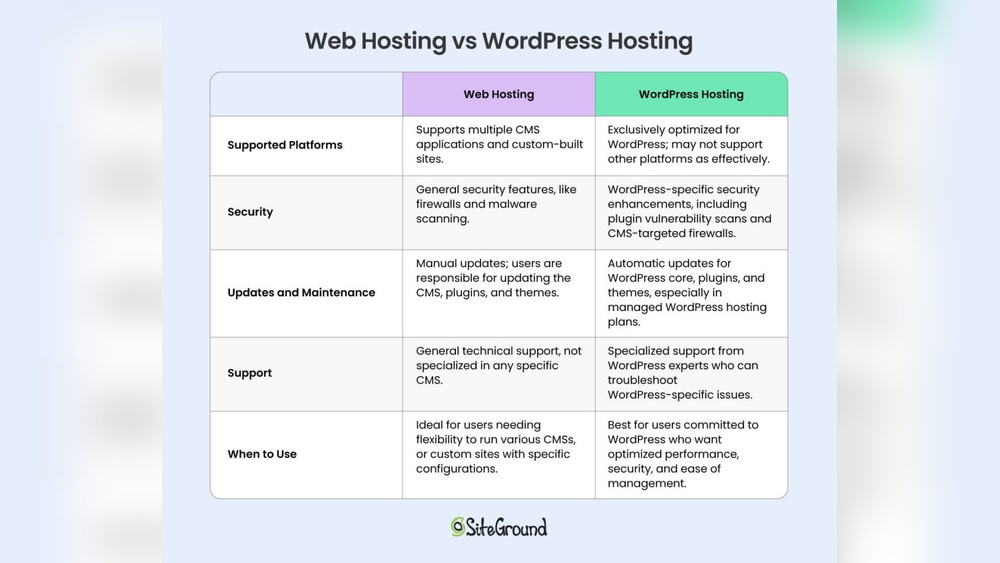
Are you confused about the difference between WordPress hosting and web hosting? You’re not alone.
Choosing the right hosting can make or break your website’s performance, speed, and security. But what exactly sets WordPress hosting apart from regular web hosting? Understanding this can save you time, money, and frustration. You’ll discover the key differences, so you can pick the perfect hosting solution for your website’s needs.
Keep reading to make a smart choice that boosts your online success.
WordPress Hosting Basics
WordPress hosting is a type of web hosting designed specifically for WordPress websites. It offers features and tools that make managing a WordPress site easier and faster. This hosting type supports WordPress software optimally, improving site performance and security.
Understanding WordPress hosting basics helps in choosing the right service for your site. It is different from general web hosting, which serves many types of websites without special adjustments for WordPress.
Key Features
WordPress hosting often includes automatic WordPress updates. This keeps the site secure and up to date. It also provides one-click WordPress installation to simplify setup. Many plans offer enhanced security to protect against WordPress-specific threats.
Speed optimization is common, with caching and content delivery network (CDN) support. Customer support teams usually have WordPress expertise. These features help run WordPress sites smoothly and securely.
Types Of WordPress Hosting
Shared WordPress hosting is the most affordable option. Many users share server resources, which suits small sites. Managed WordPress hosting offers more features and handles technical tasks. It is ideal for busy or complex websites.
VPS WordPress hosting provides dedicated resources on a virtual private server. It gives better performance and control. Dedicated WordPress hosting means a server only for your site. This option suits large sites with high traffic.
Benefits For WordPress Sites
WordPress hosting improves website speed and reliability. Faster websites keep visitors engaged and reduce bounce rates. It enhances security by focusing on WordPress-specific risks. Backup and restore options protect data from loss.
Technical support with WordPress knowledge helps solve problems quickly. The hosting environment is optimized for WordPress plugins and themes. This ensures better compatibility and fewer errors on your site.
Credit: www.milesweb.com
Web Hosting Essentials
Web hosting is the foundation of every website on the internet. It provides space on a server to store your website files. It also makes your site accessible to visitors worldwide. Understanding web hosting helps you choose the right service for your needs.
There are many types of web hosting, each designed for different needs. Features vary, but all web hosting services offer the basics required to run websites. Web hosting supports more than just WordPress sites. It serves many other web platforms and uses.
Common Hosting Types
Shared hosting is the most popular and affordable option. Multiple websites share the same server resources. VPS (Virtual Private Server) hosting offers more power and control. It splits a server into virtual machines for each user.
Dedicated hosting provides an entire server for one user. It offers maximum performance and security. Cloud hosting uses multiple servers to host websites. It provides scalability and uptime benefits.
Features Of General Web Hosting
Most web hosting plans include a control panel for easy management. They offer email accounts linked to your domain name. Storage space and bandwidth are key features to consider. Security measures like SSL certificates protect your site and visitors.
Backups are often included to protect your data. Many hosts provide one-click software installations. These help set up popular platforms quickly.
Use Cases Beyond WordPress
Web hosting supports many website types beyond WordPress. It can host online stores, forums, and portfolios. Developers use hosting for custom-built websites and applications. Businesses use hosting for email servers and internal tools.
Hosting supports content management systems like Joomla and Drupal. It also powers static websites and web apps. Web hosting is flexible for all kinds of online projects.
Performance Comparison
Comparing WordPress hosting and web hosting is important for website performance. Both affect how fast and reliable your site runs. Choosing the right hosting can improve visitor experience and SEO rankings.
Speed And Optimization
WordPress hosting often includes tools to speed up WordPress sites. It uses caching and content delivery networks (CDNs) designed for WordPress. Web hosting may not have these specific optimizations. This can make WordPress hosting faster for WordPress websites.
Web hosting serves many types of sites. It may not be as tuned for WordPress speed. Without specific tools, loading times might be slower. Speed affects user satisfaction and search engine ranking.
Reliability And Uptime
WordPress hosting providers usually guarantee high uptime. They focus on keeping WordPress sites online and stable. They monitor servers closely for WordPress-related issues. This reduces downtime and site crashes.
Web hosting can be reliable but may not specialize in WordPress. Uptime depends on the provider and plan. Sites may face more downtime without WordPress-specific support. Reliable hosting keeps visitors happy and returning.
Scalability Options
WordPress hosting often offers easy upgrades for growing sites. Plans can scale resources like storage and bandwidth quickly. This suits websites that expect more traffic over time.
Web hosting also supports scaling but may require manual setup. It can handle many site types but might lack easy WordPress upgrades. Scalability ensures your site can grow without performance loss.
Security Differences
Security is a key point in choosing hosting for your website. WordPress hosting and web hosting offer different security levels. Understanding these differences helps protect your site from threats and attacks.
Built-in Security Features
WordPress hosting often includes built-in security tools. These tools are designed specifically for WordPress sites. They block common threats like malware and hackers. Web hosting usually offers general security features. These may not target WordPress-specific risks.
Backup And Recovery
WordPress hosting often provides automatic backups. These backups save your site data regularly. If something goes wrong, recovery is quick and easy. Standard web hosting may require manual backups. This can increase the risk of data loss.
Vulnerability Management
WordPress hosting providers usually manage software updates. They fix vulnerabilities fast to keep sites safe. Web hosting may leave updates to the user. This can leave websites open to attacks longer.
Ease Of Use
Ease of use is a key factor when choosing between WordPress hosting and general web hosting. It affects how quickly you can start and how smoothly your site runs. Simple tools and clear support help you manage your website better. This section looks at control panels, setup, and support.
Control Panel And Interface
WordPress hosting usually comes with a control panel made just for WordPress. This panel is simple and clean. It shows WordPress-specific options clearly. Web hosting often uses general control panels like cPanel. These panels have many features but can feel complex for beginners. WordPress hosting control panels help users focus on website tasks. They avoid extra steps that might confuse new users.
Installation And Setup
WordPress hosting often includes one-click WordPress installation. This means you can start your site in minutes. No need to upload files or create databases manually. Web hosting may require manual installation. You might need to download WordPress, set up a database, and configure files. This process can take time and be hard for beginners. WordPress hosting reduces setup headaches and saves time.
Technical Support
WordPress hosting providers usually offer support focused on WordPress issues. They know the platform well and solve problems fast. Web hosting support covers broader topics but may lack deep WordPress knowledge. This can slow down solutions. WordPress hosting support helps fix errors, optimize speed, and keep the site secure. Users get expert help tailored to their needs.

Credit: www.bluehost.com
Pricing And Value
Pricing and value are key factors when choosing between WordPress hosting and general web hosting. Understanding costs helps you pick the best option for your website. Value is not just about price but also what you get for that price.
Cost Structures
WordPress hosting often has a fixed monthly fee. This fee covers optimized servers and special support. Web hosting pricing can be more flexible. It ranges from low-cost shared plans to expensive dedicated servers. The price depends on resources and features.
Included Resources
WordPress hosting usually includes tools for easy WordPress setup. It offers automatic updates and backups. Web hosting may not include these extras. You might need to install and manage everything yourself. WordPress hosting saves time and effort with built-in features.
Long-term Savings
WordPress hosting can save money over time. It reduces the need for extra plugins and manual work. Web hosting might cost less at first. But managing security and updates can add expenses later. WordPress hosting offers value by simplifying website management.
Choosing The Right Hosting
Choosing the right hosting is key for your website’s success. The hosting type affects your site’s speed, security, and reliability. Picking the wrong hosting can cause slow load times and frequent downtime. Understanding your needs helps you select the best option.
WordPress hosting and web hosting differ in many ways. WordPress hosting is tailored for WordPress sites. Web hosting supports many types of websites. Knowing these differences guides your decision.
Site Requirements
Consider what your website needs to run smoothly. WordPress hosting often includes features like automatic updates and built-in security for WordPress. Web hosting may need more setup for specific platforms. Think about the software and tools you want to use.
Growth Considerations
Plan for your website’s future growth. WordPress hosting can handle traffic spikes better for WordPress sites. Web hosting offers flexibility for different site types but might need upgrades. Choose a host that can scale with your website’s audience.
Budget Constraints
Look at your budget before selecting hosting. WordPress hosting usually costs more than basic web hosting. Web hosting plans vary widely in price and features. Balance your needs with your budget to find the best fit.
Credit: blog.yuanjhen.com
Frequently Asked Questions
What Is The Main Difference Between WordPress Hosting And Web Hosting?
WordPress hosting is optimized specifically for WordPress sites. Web hosting supports various website types. WordPress hosting includes features like automatic updates and enhanced security tailored for WordPress. Web hosting offers broader flexibility but fewer specialized features.
Is WordPress Hosting Better For WordPress Websites?
Yes, WordPress hosting is better for WordPress sites. It provides faster performance, automatic updates, and dedicated support. These features improve site speed, security, and ease of management compared to generic web hosting.
Can I Use Web Hosting For A WordPress Site?
Yes, you can use web hosting for WordPress. However, it may require manual setup and maintenance. WordPress hosting simplifies these tasks with built-in tools and optimized environments.
Does WordPress Hosting Cost More Than Regular Web Hosting?
Typically, WordPress hosting costs slightly more than regular web hosting. The extra cost covers specialized features and enhanced performance. For WordPress users, the benefits often outweigh the additional expense.
Conclusion
Choosing between WordPress hosting and web hosting depends on your website needs. WordPress hosting offers features designed for WordPress sites. Web hosting works for all kinds of websites. WordPress hosting can make managing your site easier and faster. Web hosting gives more flexibility for different platforms.
Think about your budget and technical skills too. Both types have pros and cons to consider. Pick the one that fits your goals best. Clear understanding helps you build a better website. Start with what suits you now and grow from there.


