
Are you feeling overwhelmed by the tech jargon surrounding websites? You’re not alone.
Understanding web hosting and domains is crucial for anyone looking to establish an online presence. These terms might seem confusing at first, but they’re the backbone of your website’s online existence. Imagine your website as a house. The domain is your address, making it easy for people to find you.
Web hosting, on the other hand, is the land where your house is built. Without it, your website can’t exist online. You’ll discover the key differences between web hosting and domains, and why both are essential for your website’s success. You’ll learn how they work together to make your site accessible to the world. Stick around, and by the end of this read, you’ll be equipped to make informed decisions about your online presence. Let’s unravel these essential concepts and empower your digital journey.
Web Hosting Basics
Web hosting keeps your website online. It stores all your website files. These files include text, images, and videos. A web hosting provider offers space on a server. This server is powerful and always connected to the internet. Visitors use their browser to view your site. They get the data from the server. Without web hosting, your site can’t be seen.
There are different types of hosting. Shared hosting is where many sites use one server. It’s cheap but slower. VPS hosting gives more control and space. It costs more than shared hosting. Dedicated hosting means one server for one site. It’s fast and secure. Cloud hosting uses many servers. It’s flexible and reliable. Choose based on your needs.
Web hosting works by storing files on servers. When a person types your website name, a domain name directs them to your server. The server sends website files to their browser. This lets them see your site. Hosting providers keep servers running smoothly. They ensure your site stays online. Good hosting keeps your site fast and safe.
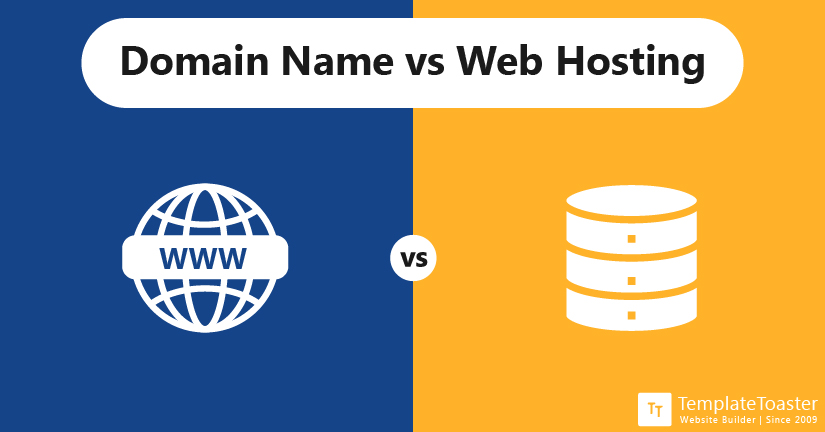
Credit: blog.templatetoaster.com
Domain Basics
A domain is like an address for websites. It helps people find your site on the internet. Without a domain, visitors can’t reach your site easily. Think of it as a name tag for your website. Every website needs a unique domain. It ensures your site stands out online.
Domains are crucial for brand identity. They help build trust with visitors. A good domain is easy to remember. It attracts more people to your site. Domains also improve search engine visibility. They play a big role in online success. Protect your brand with a strong domain. It keeps your online presence safe.
Domain names have a few parts. The main part is the name you choose. Then there’s a dot (.), followed by an extension. Common extensions include .com, .net, and .org. Each extension serves a purpose. .com is for commercial sites. .org is for organizations. .net is for networks. Choose wisely for your site needs.
Differences Between Web Hosting And Domain
Web hosting is like a space on the internet. It stores your website’s files. A domain is the website’s name. It helps people find your site. Both are important for a website. Without hosting, your site can’t be seen online. Without a domain, people can’t find it easily. Each plays a unique role.
Web hosting uses servers to store data. It makes sure your site is online. Domains use DNS to link names to IP addresses. This lets users reach your site. Hosting needs storage, bandwidth, and uptime. Domains need registration and DNS settings. Both have technical needs but in different areas.
Hosting needs regular updates and backups. This keeps the site secure. Domains require renewal. This keeps the name active. Hosting tasks include managing server settings. Domain tasks include updating contact info. Both require attention but in their own ways.

Credit: dorik.com
Choosing The Right Web Hosting
Understanding your website’s needs is important. Consider the traffic your site might get. Big sites need more resources. Look at storage space. Websites with lots of pictures need more space. Security is key. Protect your site and users. Check for SSL certificates. Fast loading times matter. Slow sites can lose visitors. Customer support is helpful. Get help when problems arise.
Many companies offer web hosting. Bluehost is known for good support. HostGator provides affordable plans. SiteGround is praised for speed and security. GoDaddy offers easy site building tools. DreamHost is reliable and has a good reputation.
| Provider | Cost | Performance |
|---|---|---|
| Bluehost | Medium | Good |
| HostGator | Low | Average |
| SiteGround | High | Excellent |
| GoDaddy | Medium | Good |
| DreamHost | Medium | Good |
Selecting A Domain Name
Pick a name that is easy to spell and remember. Use words that are common. Keep it short. Long names are hard to type. Choose a name that tells about your website. Check if the name is not taken by someone else. Avoid numbers and hyphens. They confuse people.
You must register your domain with a trusted service. Pay attention to the fee. Some services offer a free first year. After that, you pay. Look for any hidden charges. Keep your contact info up-to-date. This ensures you get important messages.
Do not use complex words in your domain. They are hard to remember. Avoid trendy words. Trends change. You need a name that lasts. Ensure your name does not have double letters. They are easy to misspell. Do a search to see if your name sounds like a bad word.

Credit: beautifulthemes.com
Integrating Domain And Hosting
Choose a domain name for your website. Buy this name from a domain registrar. Get a hosting plan from a hosting provider. Hosting stores your website’s files. Link the domain to the hosting. This makes your site visible online. Use the control panel from the host. Follow easy steps to connect. Now your website is ready!
DNS stands for Domain Name System. Think of it as the phone book for the internet. It matches domain names to IP addresses. Access the DNS settings through your host’s control panel. Change the DNS records to point your domain to your host. This helps users find your website. Without DNS, websites can’t be found easily.
Sometimes websites face issues. A common problem is DNS propagation. It means changes take time to update. Check if the domain and hosting are properly linked. Look for typos in DNS records. Ask your host for help if needed. Many hosting providers offer customer support. They can fix problems quickly.
Future Trends In Web Hosting And Domains
New technologies are shaping the web hosting world. Artificial Intelligence (AI) helps manage servers better. AI can predict server issues before they happen. This keeps websites running smoothly. Blockchain technology is also gaining attention. It makes domain management safer. Blockchain offers a transparent record of domain ownership. This reduces fraud and increases trust.
Cloud computing changes how we host websites. It offers flexibility and scalability. People can add more resources when needed. This means websites can handle more visitors easily. Cloud services also provide automatic backups. This keeps data safe from loss. Many businesses prefer cloud hosting for its cost-effectiveness.
Security is a top priority for web hosting. Hackers always try to find new ways to attack. Hosting services are using advanced security measures. These include firewalls, encryption, and two-factor authentication. Privacy is also important. Users want their data protected. Hosting providers must follow strict privacy laws. This ensures user data stays safe and private.
Frequently Asked Questions
What Is The Difference Between Domain And Hosting?
A domain is your website’s address on the internet, like www. example. com. Hosting is the service providing storage and access for your website on a server. Domains direct users to your site, while hosting ensures the site is visible online.
Both are essential for a website.
Do I Need Web Hosting If I Have A Domain Name?
Yes, web hosting is essential for displaying your website online. A domain name serves as your site’s address, while hosting stores your website’s files and data. Both are necessary for a fully functional website. Without hosting, visitors cannot access your content even if you own a domain name.
Is Godaddy A Host Or Domain?
GoDaddy offers both domain registration and hosting services. They help users buy domain names and provide web hosting solutions. Known for domain management, GoDaddy also supports websites with various hosting plans. They’re a popular choice for small businesses and individuals starting their online presence.
What Do You Mean By Web Hosting?
Web hosting provides online storage for websites, allowing them to be accessible on the internet. Servers store site data, ensuring fast loading and uptime. Choose hosting plans based on needs like shared, VPS, or dedicated. Secure hosting improves SEO and site reliability.
Conclusion
Understanding web hosting and domains is crucial for your online presence. Web hosting stores your website files. A domain is your site’s address. Both are essential for a functional website. Choose a reliable host for smooth performance. Pick a memorable domain name for easy recall.
These elements work together seamlessly. They form the backbone of your website. Ensure you make informed decisions. This will help your site succeed online. With the right choices, your website will thrive. Your online journey starts with these basics. Embrace them for a strong foundation.
They are the key to your digital success.


