
Are you setting up your website and feeling a bit overwhelmed by all the jargon? You’re not alone.
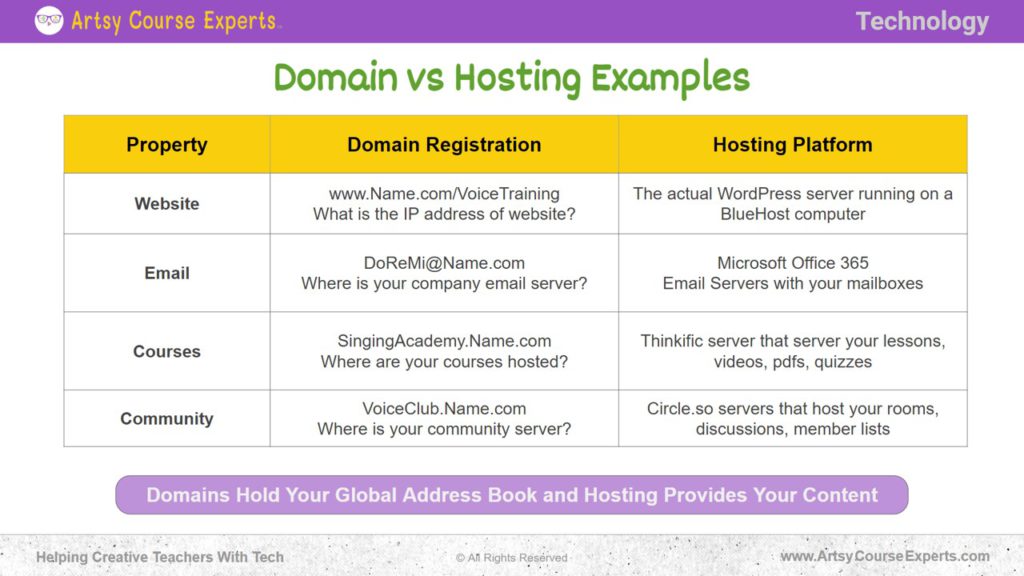
Two terms that often cause confusion are “web hosting” and “domain. ” These are fundamental components of getting your site online, yet they’re distinctly different. Imagine your website as your house. The domain is like the address that tells people where to find you, while web hosting is the land where your house sits.
Understanding the difference between the two can save you time, money, and a lot of headaches. Keep reading to discover why both are crucial for your website’s success and how they work together to bring your online presence to life.
Credit: www.artsycourseexperts.com
Web Hosting Basics
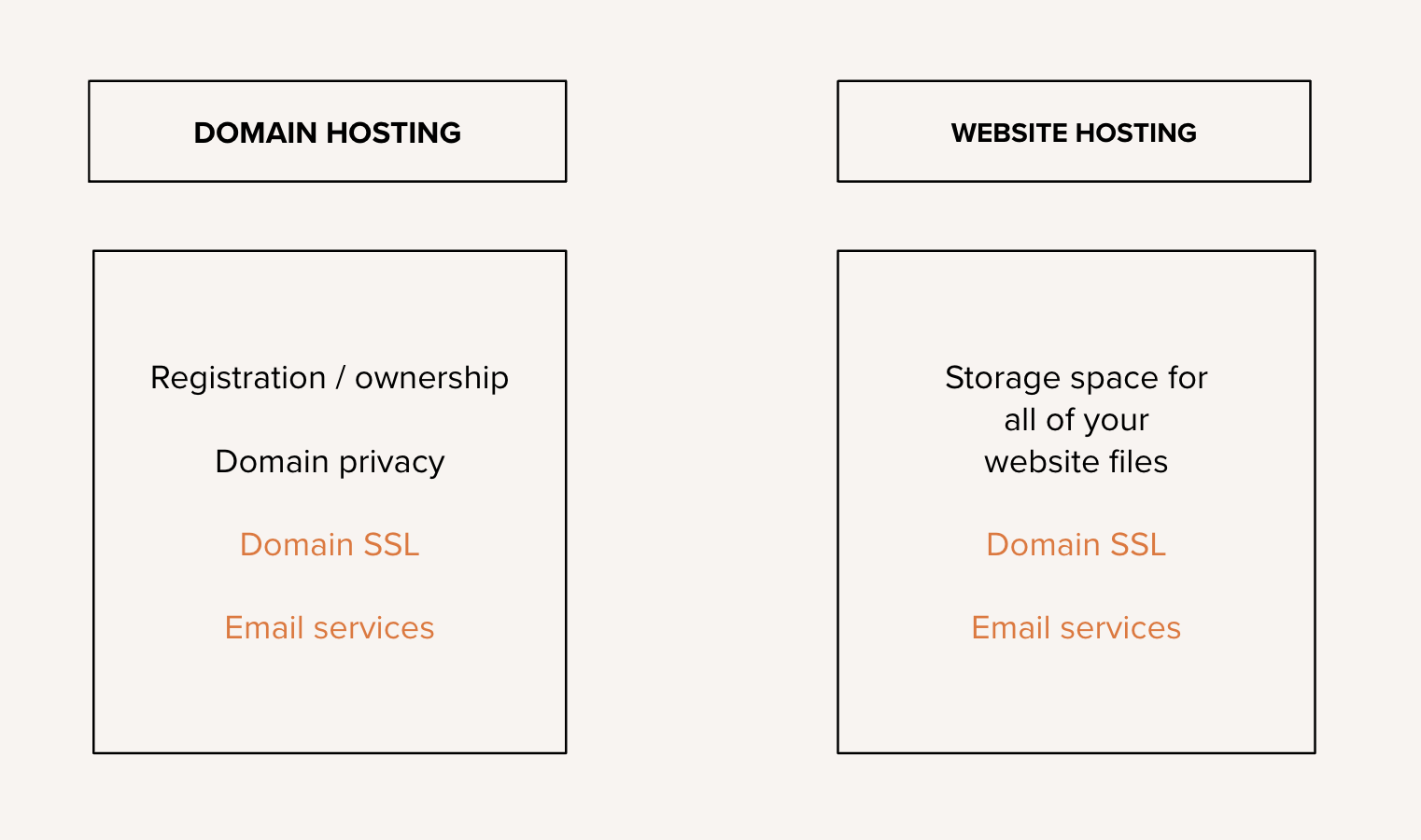
Web hosting means storing your website files on a server. This server is like a big computer. It runs all the time. It shows your website to everyone online. Think of it as a home for your website. Without hosting, your site cannot be seen on the internet.
Web hosting comes in different types. Shared hosting is popular. Many websites share one server. It’s cheap but can be slow. VPS hosting is better. It gives more space and speed. Dedicated hosting is the best. You get your own server. It’s fast but costs more. Cloud hosting is new. It uses many servers. This makes it very fast and reliable.
Credit: thedesignspace.co
Domain Name Essentials
Web hosting and domain names are different. A domain name is your website’s address online. Web hosting stores your site’s files on a server. Both are essential for a website, but they serve distinct purposes. Understanding these differences helps in setting up a website efficiently.
What Is A Domain Name?
A domain name is like a street address. It helps people find your website. Every website has a unique domain name. It can be short or long. It usually ends with a dot followed by letters. The letters are called extensions. Examples include .com, .org, and .net.
Think of it as your online identity. It tells people where your website lives. Without it, people can’t find your site. It’s very important for websites. Every domain name is unique. No two websites have the same domain name.
Types Of Domain Extensions
| Extension | Purpose |
|---|---|
| .com | Most popular. Used for businesses and general websites. |
| .org | Used by organizations and nonprofits. |
| .net | Originally for networks. Now used for various sites. |
| .edu | Used by educational institutions. |
| .gov | Used by government sites. |
Extensions help people know what type of website it is. They can show if a site is for business or learning. Choosing the right extension is important. It can help your website be found more easily.
Key Differences
Web hosting provides the space for your website on the internet, while a domain is your website’s address. Think of hosting as the land where your house sits, and the domain as the street name. Both are essential for a functional website.
Functionality And Purpose
Web hosting is like renting a space on the internet. It stores your website files. These files include images, text, and videos. Domain is like a street address. It helps users find your website online. Both are important for a website. Without hosting, a website cannot show its content. Without a domain, users cannot find the website.
Ownership And Control
You can own a domain by buying it. It is like owning a name. You can control where it points. Web hosting is rented from companies. You can choose how long to rent it. Control the files and data stored there. But you need to follow the host’s rules. These rules keep the server safe and fast for all users.
How They Work Together
Domains and web hosting must work together. The domain is like an address. It tells people where your website lives. The hosting is like the house. It holds all the files that make up your website. Without a domain, visitors can’t find your website. Without hosting, your website files have nowhere to live. They must connect for your website to work.
Connecting Domain To Hosting
To connect a domain to hosting, use DNS settings. DNS stands for Domain Name System. It helps direct traffic to your website. You need to change the nameservers. Nameservers tell the domain where to point. They must match your hosting provider. This step is crucial for your site to show.
Common Integration Issues
Integration issues can happen. Sometimes the DNS settings are wrong. This can lead to a website not loading. Another issue is a delay in updating. DNS changes can take time. Sometimes, up to 48 hours. Typos in the domain or nameserver can also cause issues. Double-check all entries for accuracy.
Choosing The Right Solutions
Hosting keeps your website online. Think about storage and speed. More storage means more files. Faster speed helps visitors. Security is important too. Protect your site from bad people. Support can help with problems. Good support is fast and friendly. Price matters. Choose one that fits your budget. Features are also key. Check if they offer email and backups. Look at reviews. They tell you if the service is good.
Domains are your website names. Pick a name that is easy. Short names are better. They are easy to type. Unique names stand out. Avoid long names. They confuse people. Extensions matter. “.com” is popular. But “.net” or “.org” can work too. Availability is key. Check if your name is free. Keywords help people find you. Use words that show your business. Memorable names stick in minds. Ask friends if they like the name.
Common Misconceptions
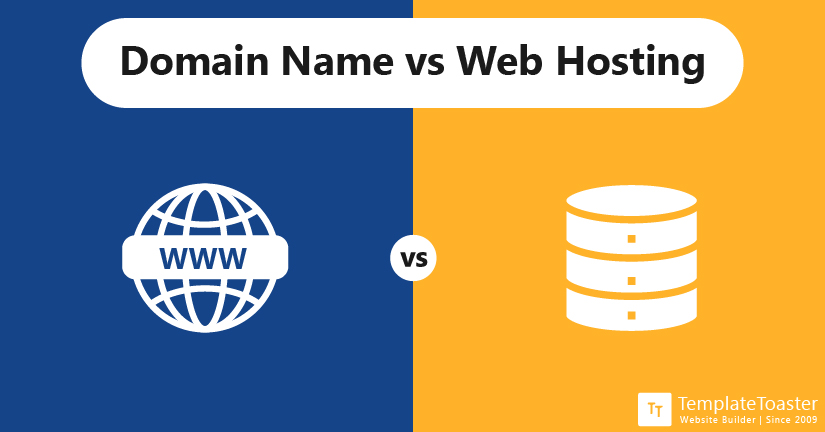
Many people mix up domains and web hosting. They are not the same. A domain is like your home address. It tells people where to find your website. Web hosting is like the house. It stores your website files. You need both to have a website. Without a domain, people can’t find you. Without hosting, there is no website to visit.
Domains and hosting have different costs. Buying a domain is usually cheaper. Hosting can cost more. You pay for space and maintenance. You are responsible for renewing both. If not, your website might go offline. Always know what you are paying for. This helps avoid surprises. Keep track of renewal dates. Stay organized to avoid losing your website.
Credit: blog.templatetoaster.com
Frequently Asked Questions
Are Domain And Web Hosting The Same?
Domain and web hosting are not the same. A domain is your website’s address, while web hosting stores your site’s data. Both are essential for a functioning website but serve different purposes.
Is Godaddy A Host Or Domain?
GoDaddy serves both as a domain registrar and a web hosting provider. It offers domain registration services, enabling users to buy and manage domain names. Additionally, GoDaddy provides various web hosting solutions, including shared, VPS, and dedicated hosting plans, catering to diverse website needs.
Do You Need Hosting If You Have A Domain Name?
Yes, hosting is essential to make your domain name functional online. It stores your website’s files and data. Without hosting, your domain name is just an address with no content. Choose a reliable hosting provider to ensure your website is accessible and performs well.
Can A Domain Work Without Hosting?
A domain can exist without hosting, but it won’t display a website. Hosting is needed to store website files. Without hosting, a domain can only be used for email or parked pages.
Conclusion
Understanding web hosting and domains is crucial. Web hosting stores your website files. A domain is your website’s address. Think of it like a house and its street address. Both are essential for a website. Without hosting, your site won’t exist online.
Without a domain, users can’t find your site. Choose both wisely for your online success. They work together, bringing your website to life. Remember, a strong foundation is key. Start building your online presence today. Keep learning, and stay informed.
Your digital journey awaits.


