
Have you ever wondered what sets web hosting apart from cloud computing? If you’re looking to launch a website or expand your digital presence, understanding these two concepts is crucial.
They might sound similar at first, but they offer distinct advantages and serve different purposes for your online needs. By grasping the key differences, you’ll be equipped to make informed decisions that align with your goals, whether it’s optimizing your site’s performance or ensuring robust data security.
We’re diving deep into the world of web hosting and cloud computing to demystify their unique roles and help you choose the best solution for your digital endeavors. Stick around to discover how each can impact your website and the future of your online presence.
Credit: www.silvertouch.com
Web Hosting Basics
Shared hosting is the most common. Many websites share one server. It’s cheap but can be slow. Dedicated hosting gives one server to one website. It’s fast but costs more. VPS hosting is in the middle. It splits a server into parts. Each part acts like a small server. It’s faster than shared hosting.
Web hosting stores your website files. It lets people see your site online. Hosting includes disk space for your files. It has bandwidth for data transfer. Security features protect your site. Some hosting offers email services too. It supports different technologies like PHP and databases.
Pros: Web hosting is easy to use. It helps beginners start a website. Many plans are affordable. Hosts offer support and tools. Cons: Shared hosting can be slow. Some hosts limit resources. Dedicated hosting is expensive. Issues may need technical help.
Credit: www.cloudpanel.io
Cloud Computing Essentials
Web hosting provides space on a server for your website. Cloud computing offers scalable resources for various applications. Understanding their roles helps in choosing the right solution for your needs.
Types Of Cloud Services
Cloud services are everywhere today. They help store data online. There are three main types. Infrastructure as a Service (IaaS) gives basic computer resources. Platform as a Service (PaaS) helps developers build apps. Software as a Service (SaaS) lets users access software online. Each type has a different role. They make tasks easier and faster. Businesses choose the type they need. It depends on their goals.
Key Features Of Cloud Computing
Cloud computing has many features. It offers scalability. This means you can use more or less resources as needed. It provides accessibility. You can reach data from anywhere. Cost-effectiveness is another feature. Pay only for what you use. It ensures security. Data is protected by strong measures. These features make cloud computing powerful. They help users do more with less hassle.
Advantages And Disadvantages Of Cloud Computing
Cloud computing has many advantages. It is flexible. Users can work from different places. It reduces costs. No need for buying hardware. It offers quick updates. Software stays current. But it has some disadvantages too. Internet dependence can be a problem. Without the internet, access is lost. There are security concerns. Data breaches can happen. Weigh these pros and cons carefully.
Comparing Web Hosting And Cloud Computing
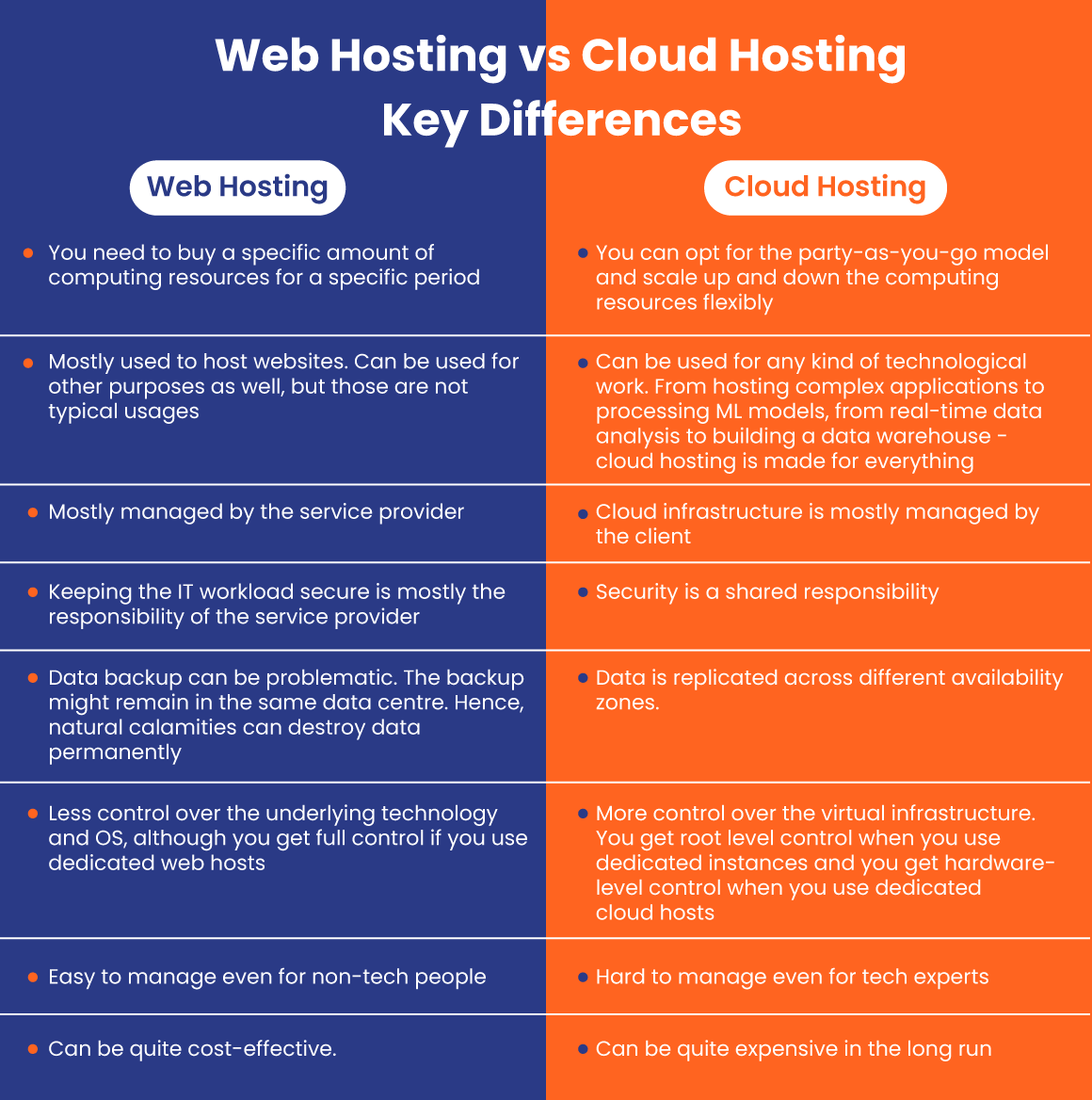
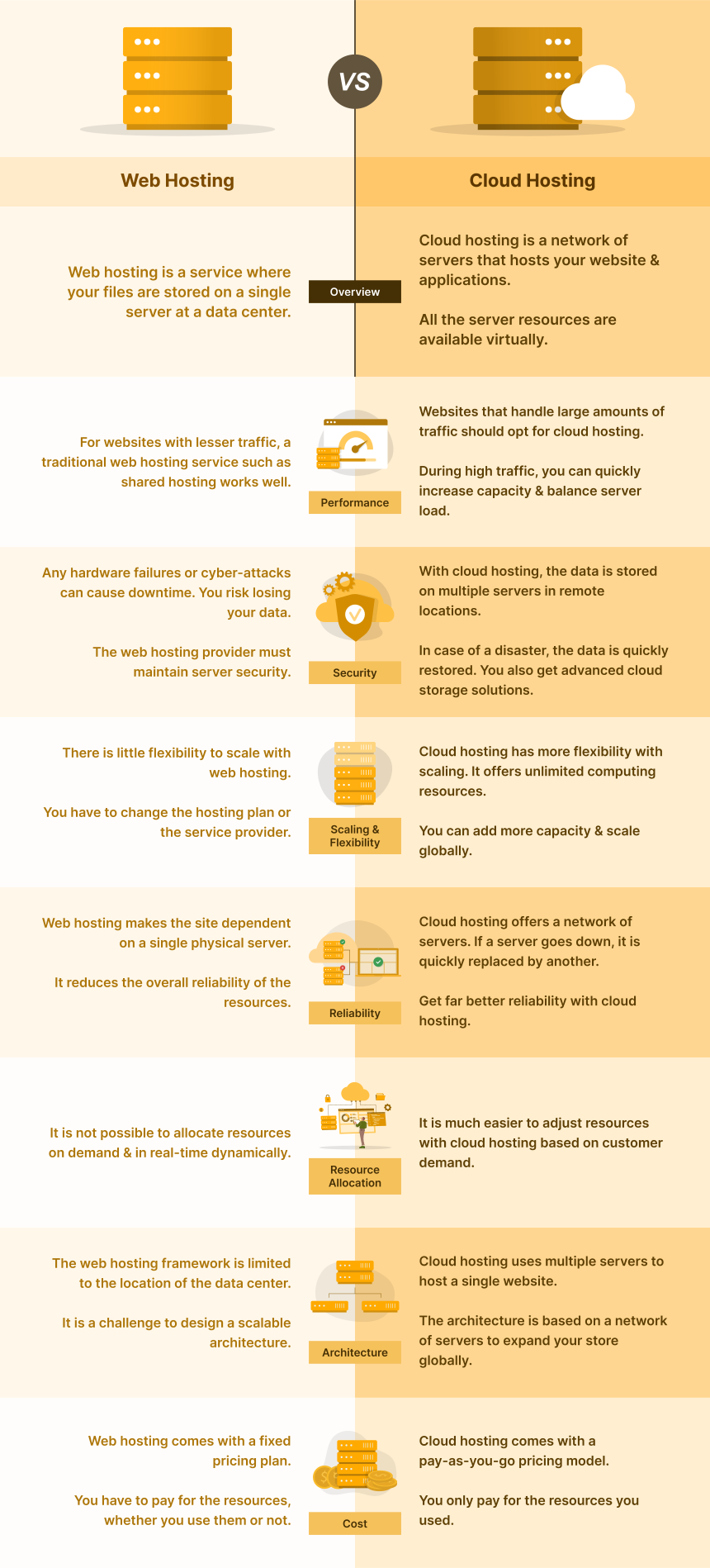
Web hosting stores website data on a server, making it accessible online. Cloud computing offers scalable resources over the internet. While web hosting focuses on websites, cloud computing provides broader services like data processing and storage.
Performance Differences
Web hosting relies on a single server. This can limit speed. One server handles all tasks. If traffic is high, sites slow down. Cloud computing uses many servers. It shares the load. This boosts speed and reliability. If one server fails, others help. This keeps sites running smoothly.
Scalability And Flexibility
Web hosting has fixed resources. Upgrading needs time and effort. Cloud computing offers easy scaling. Add or remove resources fast. This suits growing businesses. Changes are simple and quick. Flexibility is a key benefit. Businesses can adapt to their needs.
Cost Comparison
Web hosting often costs less. It has fixed plans. No surprise costs. But scaling can be pricey. Cloud computing offers pay-as-you-go. Pay for what you use. This can save money. But costs can rise with high use. It’s flexible but needs monitoring.
Use Cases And Applications
Web hosting suits small websites and blogs. These sites have low traffic. Simple sites benefit from web hosting. It is cost-effective. Shared hosting is popular. It is good for static content. Businesses use it for basic online presence. Personal sites often use it. It is easy to set up. This makes it great for beginners. Web hosting is reliable for small needs.
Cloud computing fits large businesses. They need scalable solutions. It handles big data well. Companies with global reach use it. It offers flexibility. Dynamic websites benefit from it. It supports remote work. Cloud services are secure. They provide backup and disaster recovery. Cloud adapts to changing needs. It is great for complex projects.
Security And Reliability
Web hosting offers basic security features. Firewalls and antivirus software are common. Data protection is limited to servers. Regular backups help in case of data loss. Hosting companies monitor for malware threats. User data stays on one server. Security depends on the provider’s policies.
Cloud computing provides high reliability. Data is stored in multiple locations. Automatic backups ensure data safety. Downtime is rare due to server distribution. Cloud providers offer scalable resources. Users can access data anytime, anywhere. Hardware failures do not affect data access.

Credit: cloudrifles.wordpress.com
Future Trends
Understanding the difference between web hosting and cloud computing is essential for future technology planning. Web hosting involves storing website data on a single server. Cloud computing, on the other hand, uses multiple servers for dynamic data access and scalability.
Emerging Technologies In Hosting
New technologies are coming to web hosting. AI helps servers run better. Machine learning makes websites faster. These tools can fix problems quickly. Security is also improving. New tech keeps data safe. More people want green hosting. This means less harm to the planet. Hosting companies use less energy now. New ways to host websites are being made. This helps people all over the world.
Innovations In Cloud Computing
Cloud computing is always changing. Serverless computing is growing fast. It helps save money. Edge computing brings data closer to users. This makes things faster. Hybrid clouds mix public and private clouds. They offer more options. Quantum computing is a big idea. It could change everything. New tools make cloud services better. They are easy to use. People can learn them quickly. More businesses use the cloud every day.
Frequently Asked Questions
What Is The Difference Between Cloud Computing And Web Hosting?
Cloud computing offers scalable resources and services over the internet, while web hosting stores websites on servers. Cloud computing provides flexibility and broad functionalities, whereas web hosting focuses on making websites accessible online. Both serve distinct purposes in technology infrastructure.
What Is The Difference Between Web Computing And Cloud Computing?
Web computing involves applications running on web browsers, while cloud computing provides services via the internet, storing data remotely.
Is Hosted The Same As Cloud?
No, hosted and cloud are not the same. Hosted involves dedicated servers, while cloud uses virtual resources. Cloud offers scalability and flexibility. Hosted solutions are often more static and managed by a provider. Cloud services can be accessed anywhere with internet, offering more versatility.
What Is The Difference Between Cloud Hosting And Normal Hosting?
Cloud hosting uses multiple servers for resources, ensuring reliability and scalability. Normal hosting relies on a single server.
Conclusion
Choosing between web hosting and cloud computing depends on your needs. Web hosting suits smaller websites with fewer resources. Cloud computing offers flexibility and scalability for growing businesses. Both have unique features and benefits. Web hosting is straightforward and cost-effective.
Cloud computing provides advanced solutions and storage. Evaluate your requirements to make an informed decision. Consider factors like budget, scalability, and technical support. Understanding these differences helps in selecting the right service. Make the choice that fits your business goals best.


