
Imagine you’re about to launch your very own WordPress site. Exciting, isn’t it?
But wait, there’s a decision to be made: how will you host it? You’ve likely come across terms like “Shared Web Hosting” and “WordPress Hosting,” leaving you wondering what the differences are and which one suits your needs best. Understanding these options can make a significant impact on your site’s performance, security, and user experience.
We’ll break down the key distinctions between Shared Web Hosting and WordPress Hosting in a simple, straightforward way. By the end, you’ll have a clear picture of which hosting solution is the perfect match for your WordPress dream. Let’s dive in and explore the world of hosting so you can make the best choice for your website!
Shared Hosting Basics
Shared web hosting and WordPress hosting differ mainly in optimization and resources. Shared hosting supports various websites, while WordPress hosting is tailored for WordPress sites. This means WordPress hosting often provides better performance and security for WordPress users.
What Is Shared Hosting?
Shared hosting is like renting a room. You share a server with others. Each website gets a part of the server. This is very affordable for beginners. It’s perfect for small websites and blogs. Resources are divided among users. Everyone has a piece of the server pie.
How Shared Hosting Works
A single server hosts many websites. Each site gets a limited space. The server’s power is shared. If one site gets busy, others may slow down. Security is also shared. One site can impact others. It’s a bit like sharing a computer with family. Everyone uses the same machine.
Pros And Cons Of Shared Hosting
- Pros: Low cost, easy setup, beginner-friendly.
- Cons: Limited resources, shared security, can be slow.

Credit: www.hostgator.com
WordPress Hosting Essentials
WordPress hosting is a type of web hosting. It is designed for WordPress websites. The server is configured specifically for WordPress. This makes your website run faster and smoother. You get tools and features for easy WordPress management. It includes automatic updates and security measures.
WordPress hosting offers automatic backups. It provides enhanced security for your site. You have access to WordPress expert support. It ensures your website performs optimally. Some plans offer free themes and plugins. It simplifies the setup process.
WordPress hosting has many advantages. It offers optimized performance. It includes easy site management. Expert support is available. But it can be more expensive than shared hosting. It may limit some functionalities for non-WordPress sites. It’s ideal for WordPress users.
Performance Comparison
Shared hosting can be slower. Many sites share the same server. This can affect speed. WordPress hosting often offers better speed. It is optimized for WordPress. Reliability can be better with WordPress hosting. Shared hosting might face more downtime.
Shared hosting divides resources. All websites use the same resources. WordPress hosting provides dedicated resources. This means better performance. Shared hosting may lead to slowdowns. Especially if many sites are busy.
Shared hosting is less flexible. Difficult to handle traffic spikes. WordPress hosting can scale easier. It can manage more users. If you grow, WordPress hosting can be better. Shared hosting might struggle with growth.

Credit: www.a2hosting.com
Security Aspects
Shared hosting means many websites on one server. This can be risky. If one site gets hacked, others may be affected. It is like sharing a room with many people. One person’s cold can spread easily. Security measures are often basic. Firewalls and antivirus tools help but are not strong. For better security, each site must update its software regularly.
WordPress hosting is special for WordPress sites. It has extra security features. These include automatic updates and backups. Such hosts often use strong firewalls. They also scan for malware regularly. This makes it safer than shared hosting. Websites are less likely to be hacked.
Better security means safer websites. Safer websites protect user data. This builds trust with visitors. Shared hosting can be risky. But WordPress hosting offers more safety. It reduces risks and protects websites better. Choosing the right hosting impacts safety a lot.
Cost Analysis
Shared web hosting and WordPress hosting differ in server management and optimization. Shared hosting involves multiple sites on one server, which can affect performance. WordPress hosting provides tailored resources for better speed and security, specifically optimized for WordPress sites. Understanding these differences helps in effective cost analysis for your hosting needs.
Pricing Models
Shared hosting is often cheaper than WordPress hosting. Shared hosting offers a simple pricing model. You pay a fixed amount monthly or yearly. WordPress hosting can be more expensive. It offers more features and flexibility. Some WordPress hosts charge based on site traffic. This means higher costs with more visitors.
Value For Money
Shared hosting gives basic services at a low price. It’s great for small websites or blogs. WordPress hosting offers extra features like speed and security. These features can make it a better value. For larger sites, WordPress hosting may be worth the extra cost. It’s important to compare what you get for your money.
Hidden Costs
Shared hosting may have hidden costs. These can include extra fees for backups or security. WordPress hosting might charge for plugins or themes. It’s crucial to read the fine print. Knowing all costs helps avoid surprises. Always check for additional charges before choosing.
User Experience
Shared hosting is often easy to use. Beginners find it simple. WordPress hosting is also user-friendly. It is made for WordPress sites. Tools and features are straightforward. Both options offer easy setup. This is good for new users.
Shared hosting has limited options. Users might have less control. WordPress hosting offers more flexibility. Users can tweak their sites more. It provides special plugins and themes. Customization is better here. This helps in making unique sites.
Both hosting types provide support. Shared hosting has basic help. WordPress hosting often has expert support. Users get guides and tutorials. Resources are helpful and plentiful. This assists in solving issues fast.
Ideal Use Cases
Shared hosting is best for small websites. It fits blogs and personal sites. Costs are low. Easy setup for beginners. No need for technical skills. Many users share one server. This makes it affordable. Resources are shared too. It works well if traffic is light.
WordPress hosting suits bigger sites. Business websites benefit most. It offers better speed and security. Dedicated support is available. Handles more traffic than shared hosting. Performance is optimized for WordPress. It requires some technical know-how. E-commerce sites find it useful.
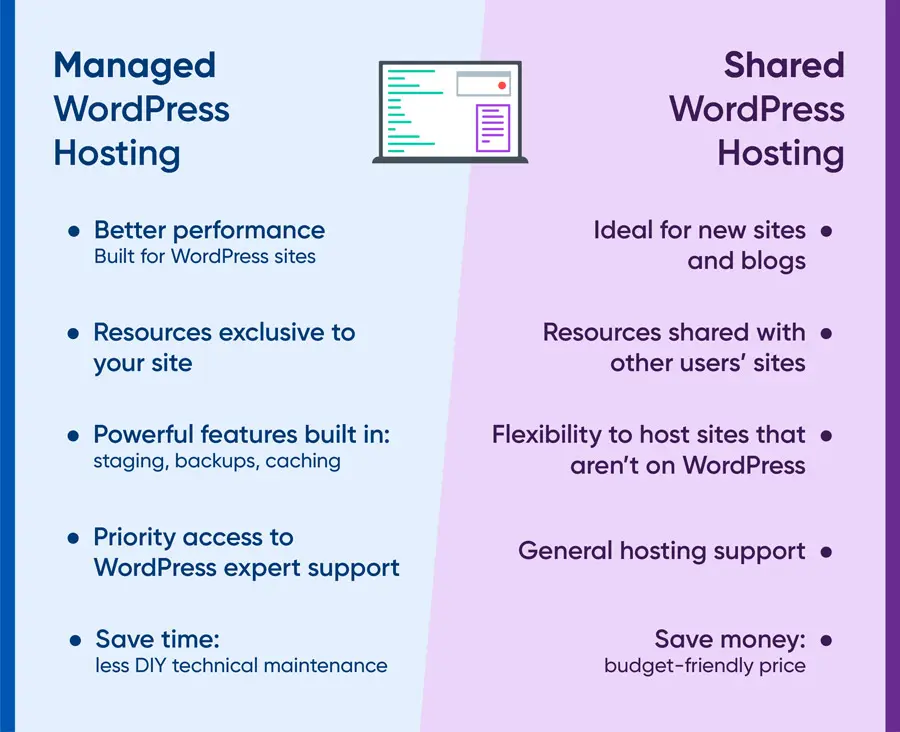
Credit: www.dreamhost.com
Future Trends
Exploring future trends in web hosting, differences between shared and WordPress hosting are significant. Shared hosting offers basic services at lower costs, while WordPress hosting provides optimized features for WordPress sites, enhancing speed and security. Understanding these differences helps in choosing the right hosting solution for your website needs.
Evolving Hosting Technologies
Web hosting changes fast. Cloud hosting is getting popular. It helps websites load quicker. Eco-friendly hosting is another trend. It saves energy and helps the planet. AI is being used more. It can fix problems before they happen.
Predictions For Shared And WordPress Hosting
Shared hosting may get cheaper. More features could be added. Security will improve. WordPress hosting might offer better customization. It could become more user-friendly. Both types will likely have better support. Speed and reliability will be key focuses. Hosting will get more efficient over time.
Frequently Asked Questions
Should I Use Shared Hosting Or WordPress Hosting?
Choose shared hosting for general websites. Opt for WordPress hosting if you’re using WordPress for optimized performance and support.
What Is The Difference Between Shared Hosting And Web Hosting?
Shared hosting involves multiple websites sharing one server. Web hosting is a broader term for storing websites online. Shared hosting is a type of web hosting, offering affordability with shared resources, while web hosting includes various options like dedicated, VPS, and cloud hosting.
What Is Shared Hosting In WordPress?
Shared hosting in WordPress means multiple websites use the same server resources. It’s affordable for beginners. This hosting type offers basic features and limits customization. Ideal for small sites with low traffic. Shared hosting helps manage WordPress efficiently without technical expertise.
It’s a cost-effective solution for personal blogs.
What Are The Disadvantages Of Shared Hosting?
Shared hosting can lead to slow website performance due to resource sharing. Security risks are higher since multiple users share a server. Limited control restricts customization options. Traffic spikes from other sites might affect your website. Often lacks scalability for growing businesses.
Conclusion
Choosing the right hosting is crucial. Shared hosting suits smaller sites. It’s cost-effective and simple. WordPress hosting offers specialized support. Great for WordPress sites needing speed and security. Consider your site’s needs. Budget, traffic, and growth plans matter. Shared hosting is budget-friendly.
WordPress hosting focuses on performance. Each has pros and cons. Match your choice with your goals. Both options have unique benefits. Find what fits best for your website’s success.


