
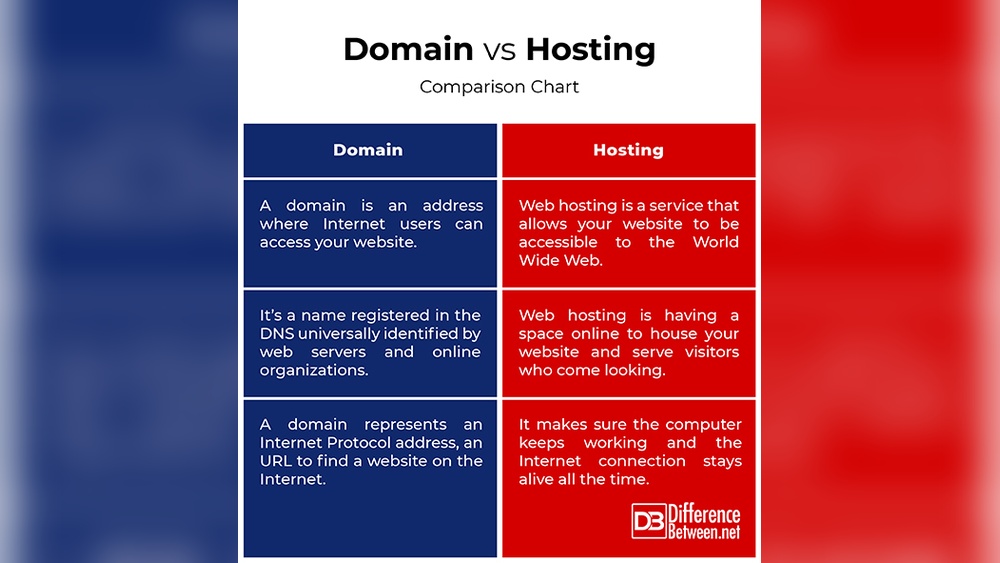
Are you confused about what makes a web domain different from hosting? You’re not alone.
Many people mix these two up, but understanding the difference is key to getting your website up and running smoothly. Imagine your website as a house—your domain is the address, while hosting is the land it sits on. Curious to know why both matter and how they work together?
Keep reading, and by the end, you’ll feel confident about choosing the right domain and hosting for your online presence.

Credit: dorik.com
Web Domain Basics
Understanding web domains is key to building a website. A web domain is your site’s address on the internet. It helps people find your website easily. This section explains the basics of web domains in simple terms.
Knowing how domains work and what different extensions mean can help you choose the right name. Let’s explore these important ideas.
What Is A Domain Name
A domain name is the text you type in a browser to visit a website. For example, “example.com” is a domain name. It replaces the long string of numbers called an IP address. This makes the web easier to use. Every website needs a unique domain name.
How Domains Work
Domains connect your website to the internet. When you enter a domain name, a system called DNS translates it into an IP address. This tells your browser where to find the website. Without domains, you would have to remember complex numbers.
Domain Extensions Explained
Domain extensions are the letters after the dot in a domain name. Common examples are .com, .org, and .net. Each extension has a purpose or meaning. Some show the type of website, like .edu for education. Others indicate the country, like .uk for the United Kingdom.
Hosting Fundamentals
Web hosting is the backbone of every website. It stores your site’s files and makes them visible online. Without hosting, your site cannot be accessed by visitors. Understanding hosting helps you choose the right service.
Hosting comes in various forms. Each type offers different features and price points. Knowing these differences ensures your website runs smoothly and meets your needs.
What Is Web Hosting
Web hosting is a service that stores website data on servers. Servers are powerful computers connected to the internet. They deliver your website files to users’ browsers. This process happens every time someone visits your site.
Hosting services keep your site online 24/7. They handle traffic and data securely. Without hosting, your website would stay offline.
Types Of Hosting Services
Shared hosting is the most common and affordable option. Many sites share the same server resources here. It is good for small websites with low traffic.
VPS hosting provides more power by dividing a server into virtual servers. This suits medium-sized websites needing better speed and control.
Dedicated hosting gives you a whole server to yourself. It offers the best performance and security. Large websites or stores often use this type.
Cloud hosting uses multiple servers to host your site. It is flexible and can handle sudden traffic spikes easily.
How Hosting Supports Websites
Hosting stores all your website files, images, and data securely. It sends this information to visitors instantly. This lets users see your site quickly and without errors.
Good hosting improves website speed and uptime. Faster sites keep visitors happy and reduce bounce rates. Reliable hosting also protects your site from cyber threats.
Many hosting providers include tools for backups, email, and support. These features help keep your website safe and easy to manage.
Domain Vs Hosting
Understanding the difference between a web domain and hosting is essential for building a website. Both are needed but serve different purposes. A domain is like your website’s address. Hosting is where your website lives online. This section explains how they differ and work together.
Key Differences
A domain is the website name people type in a browser. For example, example.com. It points visitors to your site. Hosting stores all your website files and data. It keeps your site online 24/7. Without hosting, your domain won’t show any content.
How They Work Together
The domain directs visitors to your hosting server. Hosting sends the website files to the visitor’s browser. Both must be connected for your site to work. You buy a domain from a registrar and hosting from a provider. Then, you link the domain to your hosting account.
Common Misconceptions
Many think a domain and hosting are the same. They are not. A domain is just an address, not a website. Hosting is not the website name but the storage space. Some believe buying a domain includes hosting. Usually, you pay for each separately. Knowing this helps avoid confusion when creating a website.
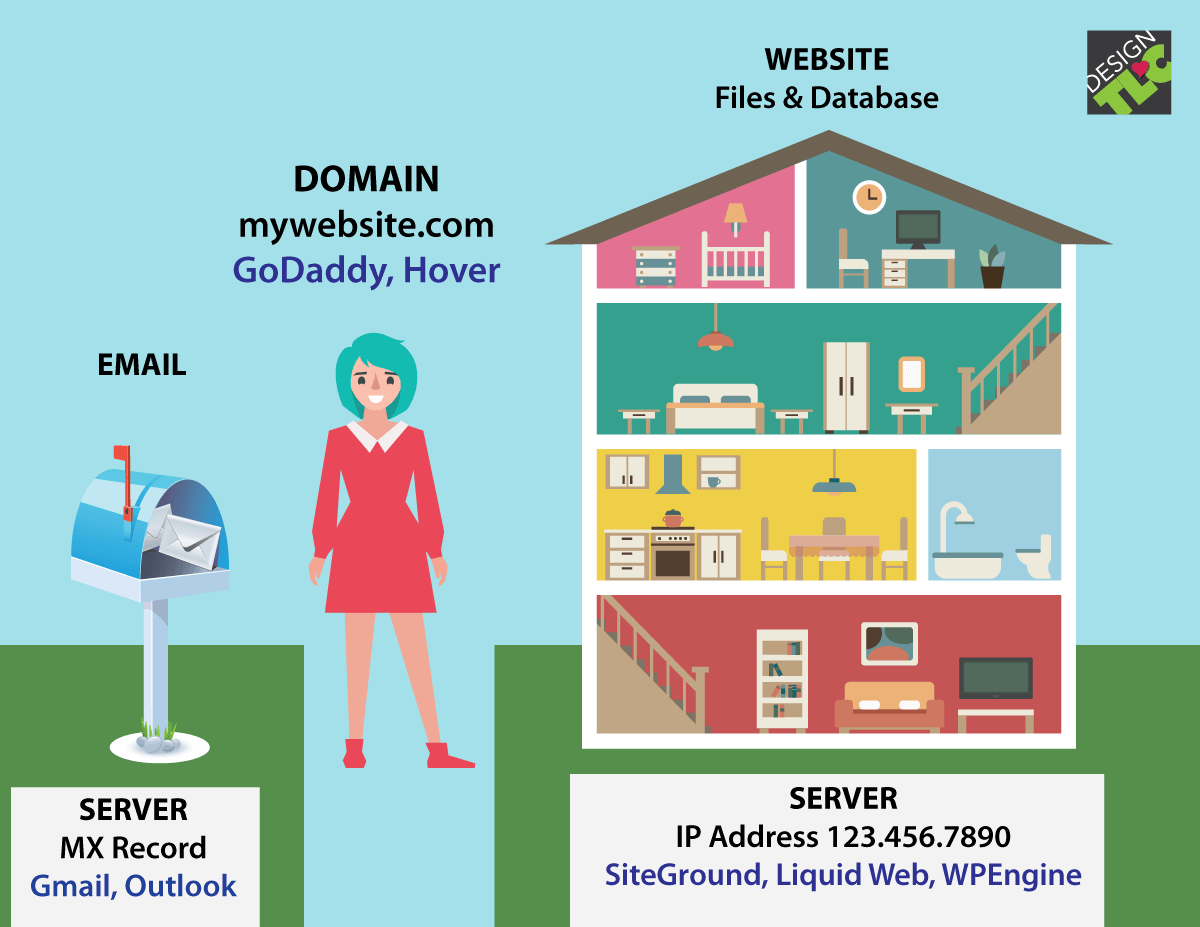
Credit: designtlc.com
Choosing The Right Domain And Hosting
Choosing the right domain and hosting is key to building a strong online presence. The domain is your website’s address on the internet. Hosting is the space where your website lives. Both must work well together to ensure your site runs smoothly.
Picking the best domain and hosting can feel tricky. Focus on what fits your website needs and budget. Careful choices help your site load fast and attract visitors.
Factors To Consider For Domains
Choose a domain name that is short and easy to remember. Use keywords related to your business or topic. Avoid numbers and hyphens to keep it simple. Check if the domain is available and not already taken. Pick a domain extension like .com or .net that suits your site type. A clear domain name builds trust and helps with search ranking.
Selecting The Best Hosting Plan
Hosting plans vary by speed, storage, and bandwidth. Look for a plan that matches your website size and traffic. Shared hosting is cheaper but slower. Dedicated hosting offers better speed but costs more. Cloud hosting is flexible and good for growing sites. Choose a hosting provider with strong uptime and good support. Fast loading times improve user experience and SEO.
Budget And Performance Tips
Balance your budget with the features you need. Avoid the cheapest options if they reduce site speed. Invest in hosting that offers security and backups. Free domains may come with hosting but check renewal fees. Start small and upgrade as your site grows. Good performance keeps visitors happy and coming back.
Managing Domains And Hosting
Managing domains and hosting is essential for running a website smoothly. Both services work together but have different roles. Domains give your site a name on the internet. Hosting stores your website files on a server. Understanding how to manage each helps keep your site online and accessible.
Proper management involves registering your domain, setting up hosting, and renewing services on time. These steps ensure your website stays visible and works well. Let’s explore these tasks in detail.
Domain Registration Process
First, choose a unique domain name that reflects your website. Use a domain registrar to check if the name is available. If it is, you can register it by providing your details and paying a fee. The domain is then yours for a set period, usually one year. Keep your contact info updated with the registrar.
Setting Up Hosting
Select a hosting provider that fits your website needs. Sign up for a hosting plan based on storage and bandwidth. After purchase, you get access to a control panel. Upload your website files or install a content management system. Connect your domain to the hosting server by updating DNS records.
Maintaining And Renewing Services
Domains and hosting must be renewed regularly. Set reminders to renew before expiration to avoid losing your website. Check billing details and update payment methods as needed. Monitor your hosting usage to upgrade or downgrade plans. Keep backups of your website files to prevent data loss.
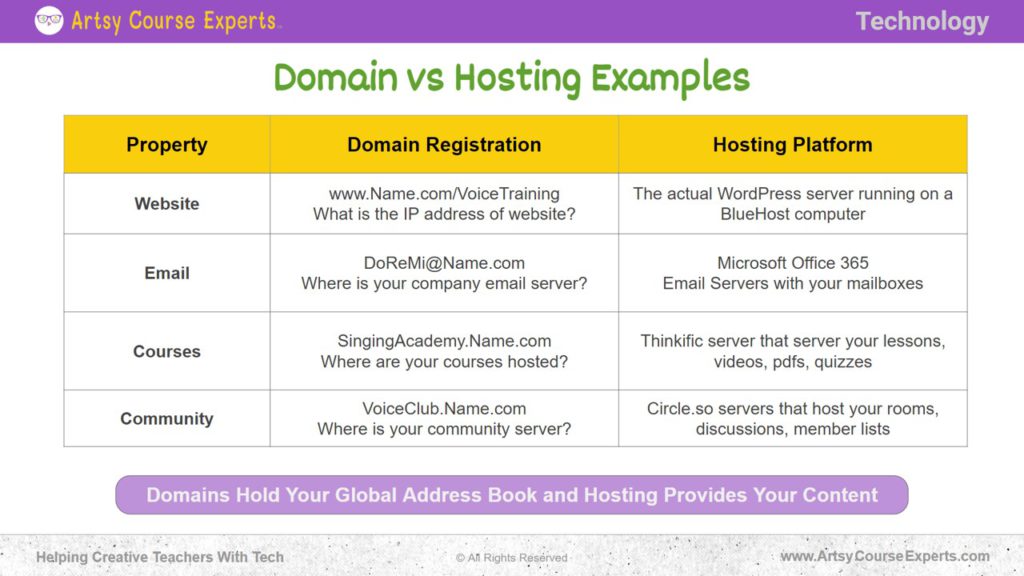
Credit: www.artsycourseexperts.com
Frequently Asked Questions
What Is A Web Domain In Simple Terms?
A web domain is the website’s address people type in browsers. It points users to your site on the internet. Domains include extensions like. com,. org, or. net, making it easy to identify and access your website online.
How Does Web Hosting Work With A Domain?
Web hosting stores your website’s files on servers. When visitors enter your domain, hosting delivers your site content to their browsers. Hosting ensures your website is accessible 24/7 by providing server space and internet connectivity.
Can I Have A Domain Without Hosting?
You can buy a domain without hosting, but no website will appear online. Hosting is necessary to store website files and make your site live. Domains alone only reserve your website’s address on the internet.
What Are The Key Differences Between Domain And Hosting?
A domain is your website’s address, while hosting is where the site lives. Domains help users find your site; hosting stores the actual website data and files. Both are essential but serve different roles for your online presence.
Conclusion
A web domain is your website’s address on the internet. Hosting is where your website lives and works. Both are needed to make a website visible online. Without a domain, people cannot find your site. Without hosting, your site cannot load or run.
Understanding this difference helps you choose the right services. It also makes setting up a website easier. Remember, domains point visitors to your site. Hosting stores all your website’s files safely. Together, they create a complete online presence. Simple but important to know.


