Are you curious about what exactly a software business is and how it works? Whether you’re thinking about starting your own company or just want to understand this booming industry, knowing what a software business involves is key.
It’s not just about creating apps or programs; it’s about solving problems, improving how people work, and building products that make life easier. You’ll discover what a software business really means, the different types of software it covers, and why it could be the perfect opportunity for you.
Stick with me, and you’ll gain clear insights that could change the way you see technology and business forever.

Credit: dojobusiness.com
Software Business Basics
Understanding the basics of the software business is essential for anyone interested in technology or entrepreneurship. This field involves creating, selling, and supporting software products. These products serve various needs, from individual users to large organizations. Learning the foundational concepts helps grasp the industry’s potential and challenges.
Definition And Scope
The software business focuses on developing and selling software programs. These programs solve problems or improve efficiency for users. The scope includes design, coding, testing, marketing, and maintenance of software. It covers a wide range of applications for different industries and users worldwide. Many companies operate in this sector, from startups to global corporations.
Key Software Categories
Software falls into several main categories, each serving unique purposes:
- System Software: Manages computer hardware and provides a base for other software. Examples include operating systems like Windows and Linux.
- Application Software: Helps users perform specific tasks such as word processing, web browsing, or media playback.
- Programming Software: Tools used by developers to create and test other software, including compilers and integrated development environments (IDEs).
- Utility Software: Maintains and optimizes computer systems, such as antivirus programs and disk cleanup tools.
Market Overview
The software market is large and growing rapidly. Demand increases as technology becomes more integral to daily life and business. Cloud computing, mobile apps, and artificial intelligence drive much of this growth. Companies often compete by offering innovative features and better user experience. The market includes both product sales and software-as-a-service (SaaS) models. This diversity provides many opportunities for new and existing businesses.
Credit: www.bdtask.com
Types Of Software
Software comes in different types, each serving a unique purpose. Understanding these types helps in grasping the software business better. The main categories are system software, application software, programming software, and utility software.
System Software
System software controls the computer’s hardware and creates a base for other software. It allows the computer to run smoothly and efficiently.
- Purpose: Manages hardware and provides a platform for other software.
- Examples: Operating systems like Windows, macOS, and Linux, device drivers, firmware.
Application Software
Application software helps users complete specific tasks. It is designed to meet personal or business needs.
- Purpose: Helps users perform tasks like writing, browsing, or playing media.
- Examples: Word processors such as Microsoft Word, web browsers like Chrome and Firefox, media players like VLC, productivity suites like Microsoft Office.
Programming Software
Programming software aids developers in creating and maintaining other software programs. It is essential for software development.
- Purpose: Used to write, debug, and maintain software code.
- Examples: Integrated Development Environments (IDEs), compilers, debuggers.
Utility Software
Utility software helps manage and optimize the computer system. It ensures the system runs efficiently.
- Purpose: Maintains and improves system performance.
- Examples: Antivirus programs, disk cleanup tools, file management utilities.
Starting A Software Business
Starting a software business involves careful planning and clear decisions. It is a path filled with challenges and opportunities. Understanding the basics helps in building a strong foundation for success.
Choosing the right niche, selecting a business model, and setting up legal and financial structures are key steps. Each step shapes the future of your software business and affects its growth.
Choosing Your Niche
Select a niche that matches your skills and interests. Focus on solving specific problems for a target audience. Research market needs and competition. A clear niche helps you stand out and attract customers easily.
Business Models
Pick a business model that fits your product and customers. Common models include subscription services, one-time sales, and freemium versions. Each model has benefits and challenges. Choose one that ensures steady income and growth potential.
Legal And Financial Setup
Register your business to make it official and legal. Choose the right business structure like sole proprietorship, partnership, or corporation. Set up a business bank account and manage finances carefully. Comply with local laws and tax regulations to avoid future issues.
Credit: medium.com
Core Roles In Software Companies
Software companies rely on key roles to create, sell, and support their products. Each role focuses on a specific part of the business. Together, they ensure the company runs smoothly and meets customer needs.
Understanding these core roles helps explain how software businesses operate and grow.
Development Team
The development team builds and tests the software. They write code, fix bugs, and improve features. This team includes programmers, designers, and testers. Their work turns ideas into working products.
Product Management
Product managers guide the software’s direction. They decide what features to build and when. They study market needs and user feedback. This role connects the development team with business goals.
Sales And Marketing
Sales and marketing teams promote the software to customers. Marketing creates awareness and attracts potential buyers. Sales teams close deals and manage customer relationships. Both work to increase revenue and market share.
Support And Maintenance
Support teams help users solve problems with the software. Maintenance involves updating the software and fixing issues. This ensures the product stays reliable and meets user expectations over time.
Growth Strategies
Technology shapes the software business rapidly. New trends influence how companies build and deliver software. Staying updated with these trends helps businesses stay competitive and meet user needs.
Three major technology trends are cloud computing, artificial intelligence, and automation tools. Each trend changes the software landscape in unique ways.
Cloud Computing
Cloud computing offers flexible and scalable computing resources. Software businesses use the cloud to deploy and manage applications easily. It reduces the need for physical servers and lowers costs. Cloud platforms enable quick updates and better collaboration among teams. Many software companies now deliver products as cloud-based services, known as SaaS.
Artificial Intelligence
Artificial intelligence (AI) adds smart capabilities to software products. AI helps automate tasks like data analysis and decision-making. It improves user experience by personalizing features and responses. Software businesses use AI for chatbots, recommendation engines, and predictive analytics. AI enables faster problem-solving and better insights from data.
Automation Tools
Automation tools simplify repetitive tasks in software development and deployment. They improve efficiency and reduce human errors. Continuous integration and continuous delivery (CI/CD) pipelines are popular automation methods. Software businesses use these tools to speed up release cycles. Automation also helps with testing, monitoring, and managing software systems.
Technology Trends Impacting Software Business
Starting and running a software business comes with many challenges. These challenges can slow growth and affect success. Knowing common problems helps in finding smart solutions. Below are key challenges and ways to handle them.
Market Competition
The software market is full of many strong companies. New businesses must stand out to get customers. Offering unique features or better service helps attract users. Keeping products updated with the latest trends keeps the business relevant. Listening to customer feedback improves the product and builds loyalty.
Talent Acquisition
Finding skilled software developers is hard. Many companies compete for the same experts. Offering good pay and benefits attracts top talent. Creating a positive work culture helps keep employees happy. Providing training and growth chances encourages team members to stay and improve.
Funding And Investment
Starting a software business needs money for tools, staff, and marketing. Getting funds can be difficult without a proven track record. Preparing a clear business plan shows investors the potential. Small grants or loans can help early-stage companies. Managing cash flow carefully avoids running out of money.
Frequently Asked Questions
What Is Business Software And Examples?
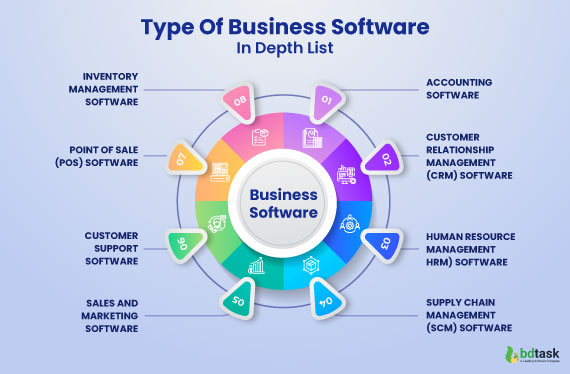
Business software helps companies improve efficiency and manage tasks. Examples include CRM, accounting, project management, and communication tools.
What Are The Jobs In A Software Company?
Jobs in a software company include software developers, testers, project managers, UI/UX designers, system analysts, and technical writers. Other roles are database administrators, DevOps engineers, and support specialists. Each role focuses on creating, maintaining, and improving software products and services.
What Are The Four Types Of Software?
The four types of software are system software, application software, programming software, and utility software. System software manages hardware, application software performs tasks, programming software helps create programs, and utility software maintains system performance.
What Type Of Software Is Most Profitable?
Most profitable software types include SaaS, enterprise solutions, mobile apps, and cybersecurity tools. They solve real problems and have recurring revenue.
Conclusion
Software business plays a vital role in today’s digital world. It involves creating programs that solve real problems. These businesses help people and companies work better and faster. Understanding software business basics opens doors to many opportunities. Whether building apps or tools, the focus stays on user needs.
This field keeps growing with new ideas and technologies. Starting or joining a software business requires learning and adapting. The key is to stay simple, useful, and reliable. Software business shapes how we live and work every day.