
Have you ever wondered how websites store and manage all that data you see online? If you’re delving into the world of web hosting, it’s crucial to understand the role of databases.
One name you’ll hear often is MySQL. But what exactly is a MySQL database, and why is it important for your website? Imagine your website as a bustling library, and MySQL is the meticulous librarian that keeps everything organized and accessible.
Without it, your website would be a chaotic mess of information. You’ll discover the ins and outs of MySQL databases in web hosting, unraveling the mystery of how they work and why they’re essential for your online presence. Get ready to transform your understanding and make your website run smoother than ever before.

Credit: www.greengeeks.com
Mysql Database Basics
A Mysql Database is a place to store data. It helps websites run. Data like user info and posts can go here. It is like a big box that keeps things safe. Websites use it to find and show data fast. Mysql works with many web hosting services. It helps sites be quick and smooth.
Mysql databases have many features. They handle large data amounts well. They are reliable and keep data safe. Mysql lets many users work at once. This is helpful for big sites. It also works with many tools and languages. This makes it easy to use.
Role In Web Hosting
MySQL is a key player in managing data. It organizes data in tables. This makes finding information easy. Web hosting relies on this system. It ensures data is stored safely. It also allows quick access. Data retrieval is fast and efficient. This is vital for websites. Proper management helps keep sites running smoothly.
Dynamic websites need MySQL for operations. These sites change content based on user actions. MySQL stores user data, preferences, and actions. It helps websites show different content to different users. This makes websites interactive. It keeps visitors engaged. MySQL supports real-time data updates. This feature is crucial for dynamic sites. It ensures users get the latest information.
Installation And Configuration
MySQL Database in web hosting manages data efficiently. Installation involves setting up the database on your server. Configuration tailors settings to meet specific hosting needs, ensuring optimal performance.
Server Requirements
MySQL needs specific server requirements to work well. At least 512 MB of RAM is a must. More RAM helps speed. A modern processor is also needed. Disk space should be at least 5 GB. More space is better for storing data. Linux, Windows, or macOS can be used. Linux is often preferred. It offers more stability and security.
Initial Setup
Start with downloading MySQL from its website. Choose the right version for your system. Follow the installation steps. These steps are easy and clear. After installation, start MySQL server. Open the MySQL command line tool. Set up a root password. This keeps data safe. Create databases using simple commands. Each command is easy to type. Test the setup by creating a test database. Ensure everything works fine.
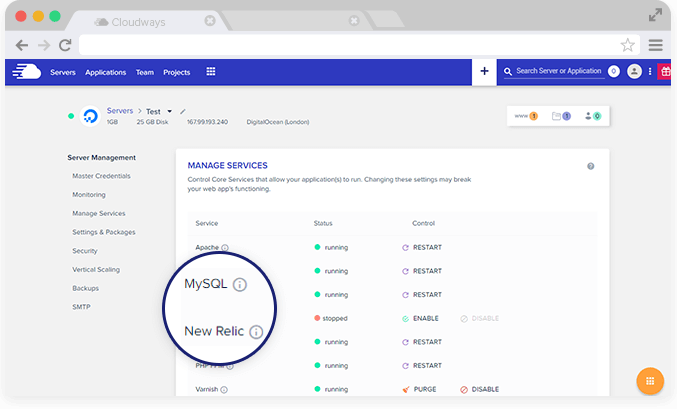
Credit: www.cloudways.com
Database Administration
User management is important in any database. Each user has a unique role. Some users can only read data. Others can change data. Admins have the highest power. They can add or remove users. They can also change user roles. This keeps the database safe.
Backup and recovery are like safety nets. Backups save copies of the data. If data gets lost, backups help. Recovery means getting lost data back. Both are important for database health. Without them, data loss can be a big problem. Regular backups are a must. They protect against data loss.
Security Considerations
Access control is vital for database security. Database users need permissions to access data. Administrators set these permissions. This keeps data safe. Users only see what they are allowed. Passwords protect user accounts. Strong passwords make them secure. Roles help manage permissions. Roles simplify access control. Users get permissions through roles.
Data encryption protects information. It makes data unreadable without a key. Encrypted data stays safe during transfer. SSL certificates help with encryption. They secure data between servers. Encryption algorithms are used for safety. They convert data into code. Decryption changes code back to data. Only authorized users can decrypt. This keeps sensitive data away from hackers.
Performance Optimization
Indexes help find data fast. They make searching quicker. Without indexes, searching takes more time. A well-placed index can speed up queries. But too many indexes slow down updates. Keep indexes simple and relevant. This balance ensures smooth performance. Always monitor your database’s speed. Adjust indexes when needed.
Queries must be simple and clear. Use filters to limit data. Avoid fetching unnecessary data. This reduces load on the server. Use the right joins for combining tables. Bad joins slow down responses. Test queries for speed. Analyze them regularly. Optimized queries make your database efficient.
Common Challenges
Mysql databases are vital in web hosting, yet they present challenges. Managing large data volumes can slow performance. Ensuring security and backups adds complexity for website owners.
Scalability Issues
MySQL databases can face scalability challenges. As websites grow, data increases. Managing large data becomes difficult. Servers may slow down. Performance issues can arise. Solutions include optimizing queries. Using caching techniques helps. Scaling vertically or horizontally is important. Database sharding can be effective. Regular updates are necessary. Monitoring helps identify problems early. Planning for future growth is wise.
Troubleshooting Errors
Errors in MySQL can disrupt operations. Identifying errors quickly is crucial. Some errors are due to incorrect configurations. Others from corrupted data. Fixing errors requires knowledge. Logs can provide information. Understanding error codes helps. Common errors include connection failures. Syntax errors in queries are frequent. Regular backups prevent data loss. Testing changes before applying is safe. Always check server status.

Credit: www.ukwebhostreview.com
Popular Mysql Tools
phpMyAdmin is a popular tool. It helps manage MySQL databases. You can use it on the web. It is free to use. Many web hosts offer it. It has a simple interface. You can create tables easily. You can also delete them. Import data with ease. Export data too. You can run SQL queries. phpMyAdmin makes database management easy. It is widely used. Everyone loves its features. Students find it helpful. Beginners use it confidently.
MySQL Workbench is another tool. It works on computers. You can design databases with it. It shows database diagrams. You can see tables clearly. It helps in managing databases. It is a powerful tool. You can run SQL queries. It supports many features. It is useful for developers. It helps in database design. MySQL Workbench is easy to learn. It is great for professionals. Many people prefer it.
Future Of Mysql In Web Hosting
Mysql keeps getting better with new ideas. Cloud technology helps Mysql work faster. It also makes storage easier. Artificial Intelligence can help Mysql learn and fix issues. This makes databases smarter. Security is a big focus too. New features help keep data safe. Many companies love these changes. They want Mysql to be part of their web hosting.
Mysql is very popular. But PostgreSQL is also strong. It has great features. People like its reliability. SQLite is simple. It is good for small projects. MongoDB is different. It stores data in a unique way. Mysql is easy to use. It has strong community support. This makes it a top choice for many.
Frequently Asked Questions
What Is Mysql Used For In Websites?
MySQL is used in websites for managing databases. It stores, retrieves, and organizes data efficiently. This open-source database management system supports dynamic content and user authentication. It’s widely used for e-commerce, blogs, and content management systems due to its reliability and scalability.
What Is A Mysql Database Used For?
A MySQL database is used to store, manage, and retrieve structured data efficiently. It’s popular for web applications, supporting data transactions, and ensuring data integrity. Businesses use it for storing user information, product catalogs, and transaction records. It’s open-source, scalable, and integrates well with various programming languages.
What Is Database Host In Mysql?
The database host in MySQL is the server location where the database resides. It can be a local machine or a remote server. Typically, “localhost” is used for local databases, while an IP address or domain name specifies remote hosts.
Proper configuration ensures seamless database connectivity.
How To Host A Website With Mysql Database?
Choose a web hosting provider supporting MySQL databases. Upload your website files via FTP. Create a MySQL database through the hosting control panel. Import your SQL file into the database. Update your website configuration with database credentials. Test your website to ensure the database connection works properly.
Conclusion
MySQL databases are vital in web hosting. They store and manage data efficiently. Easy to use and widely supported, MySQL makes web development simpler. Web applications rely on it for data storage. Choosing MySQL ensures compatibility and reliability. It handles data-heavy tasks without issues.
Perfect for beginners and experts alike. Understanding MySQL boosts your web hosting skills. Embrace MySQL for smoother, more efficient websites. It’s a fundamental tool for any web hoster. Make the most of its features for better site performance. Your web hosting journey benefits greatly with MySQL.


