
Have you ever wondered what makes your favorite website appear when you type its name into your browser? You’re not alone.
Many people find themselves puzzled by the terms “web hosting” and “domain. ” Understanding these concepts is crucial if you’re planning to build your own website or simply want to enhance your knowledge. Imagine your website as a house. The domain is like the address that guides visitors to your home, while web hosting is the land your house sits on.
Without both, your website can’t exist in the digital world. But don’t worry—you’re about to discover exactly how these elements work together. You’ll unravel the mystery behind web hosting and domains. You’ll learn how they differ and why each is essential for a successful online presence. Keep reading, and you’ll gain the clarity you need to navigate the digital landscape with confidence.
Credit: thedesignspace.co
Web Hosting Basics
Web hosting is like renting space on the Internet. A web host stores your website’s files. It ensures that your site is accessible to everyone online. Think of it as a home for your website. Without it, your site can’t be seen.
Websites are stored on powerful computers called servers. When someone types your web address, the server sends your site’s files to their computer. This allows them to view your web pages. It operates continuously to keep your site live.
There are different types of web hosting. Shared hosting is common and affordable. VPS hosting offers more control and space. Dedicated hosting means you get a whole server. Cloud hosting uses many servers for flexibility. Each type has its own benefits.
Domain Essentials
A domain is your website’s name on the internet. It is the address people use to find your site. Domains are like home addresses for websites. They make it easy to find your site on the web. Without a domain, people cannot visit your website easily.
Domains work like a map for the internet. They tell computers where to find your website. When you type a domain, it directs you to the correct site. Domain Name System (DNS) helps in this process. DNS translates domain names into IP addresses. This makes it possible to reach the right server.
There are many types of domain extensions. .com is the most common one. Others include .org, .net, and .edu. Each has a different purpose. .com is for businesses. .org is for organizations. .edu is for schools. Choosing the right extension is important. It tells people what your site is about.
Core Differences
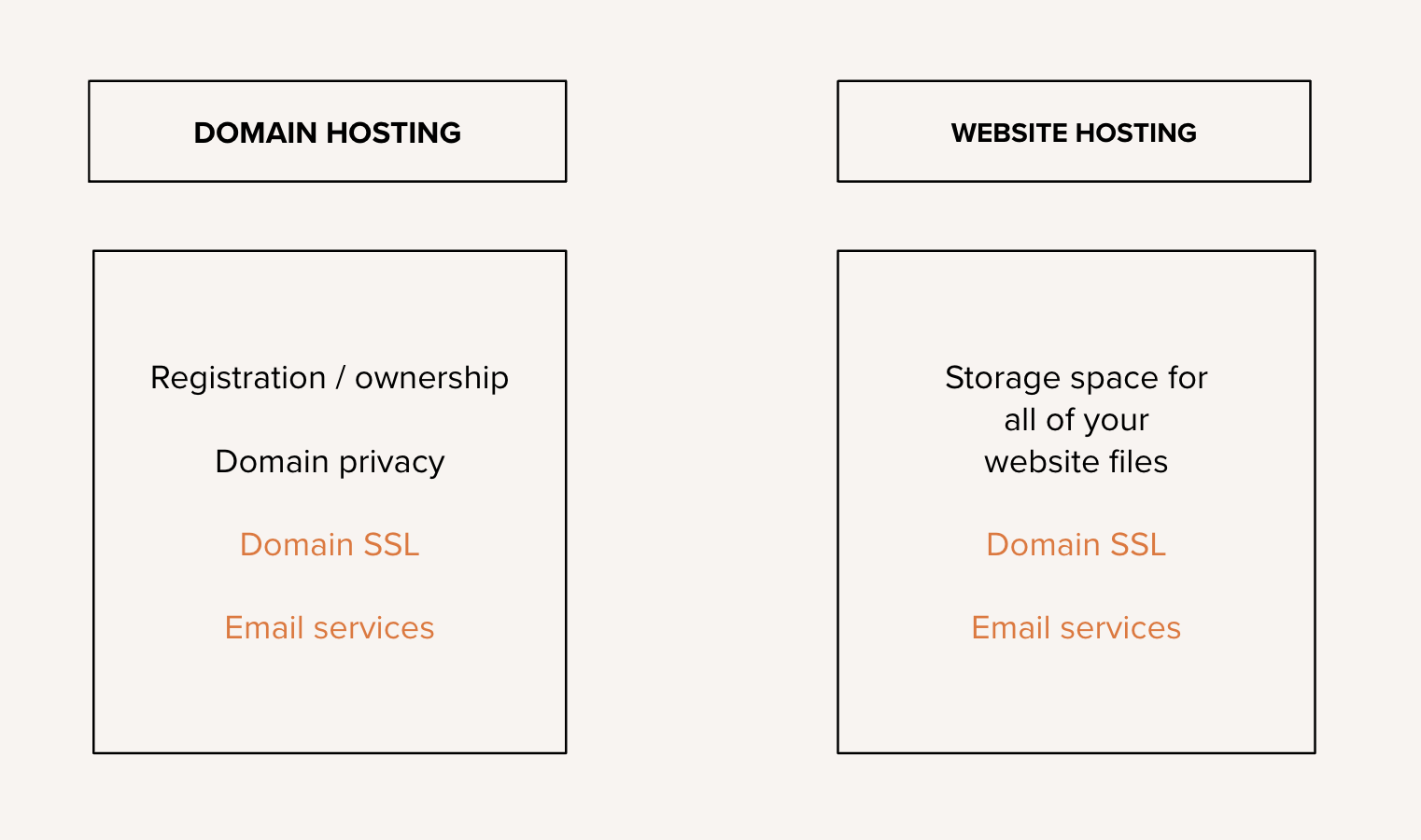
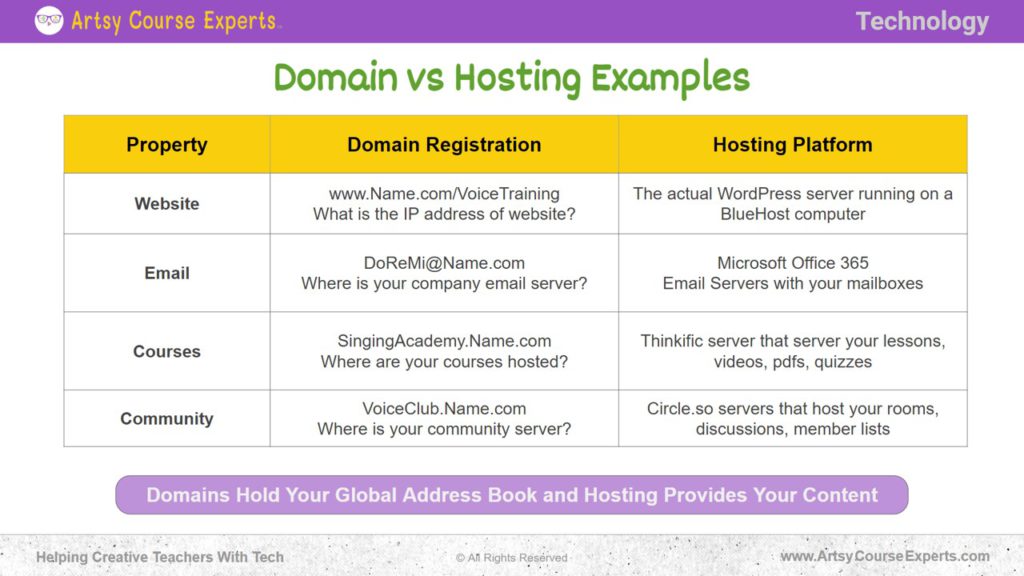
Web hosting keeps your site on the internet. It stores all your files. Domain is the site’s name. People use it to find your site. Hosting and domain work together. Hosting is like a house. Domain is the address. Both are needed for a website.
Web hosting involves servers. It provides storage and bandwidth. Domain involves names. It uses registrars and DNS settings. Hosting has more technical parts. Domains are simpler. Hosting deals with data. Domains deal with names.
Hosting stores your site’s files. It helps people see your site. A domain gives your site an easy name. Both are needed to create a site. Hosting makes your site visible. The domain makes it easy to find.
Credit: www.artsycourseexperts.com
Choosing The Right Services
Understanding web hosting and domain differences is crucial. Web hosting is the service storing your website files online, while a domain is your website’s address on the internet. Both are essential for a functional website.
Factors To Consider For Web Hosting
Speed is very important. Fast websites make visitors happy. Choose a reliable host. Check their uptime guarantee. This means the website is always up. Look at customer support. You need help if something breaks. Cost is another factor. Some hosts are cheap. Some are expensive. Find a balance between cost and quality.
Choosing A Suitable Domain
A domain is your website’s name. It should be easy to remember. Keep it short. Avoid complex words. Use keywords in your domain. This helps search engines. Check availability before you decide. Some names are taken. Choose wisely.
Integrating Hosting And Domain
Connect your domain to hosting. This makes your site live. DNS settings help in the process. Sometimes, hosting companies offer free domain. This can save money. Make sure both services work well together. Ask for help if needed. Most hosts give easy guides.
Common Misconceptions
Many confuse web hosting and domain names. Web hosting stores your website’s files. A domain name is your site’s address on the internet. Both are essential for a functioning website, yet serve distinct purposes. Understanding this difference helps in managing your online presence effectively.
Misunderstanding Hosting And Domain
People often mix up web hosting and domain names. Hosting is where your website lives online. It stores all your site’s files. Domains are like your site’s address on the web. They help users find your website easily.
Many think buying a domain means they have hosting. This is not true. Domains and hosting are separate services. You need both for a website to work. Domains direct users to your hosting server.
Clarifying Technical Terms
Technical terms can confuse people. Hosting relates to the server space you rent. It is like renting a house for your site. Domains are like street addresses. They point visitors to your house, or website.
Domains end with extensions like .com or .org. Hosting does not include this. To make a website, you must connect your domain to your hosting. Both are essential for a functioning site.
Future Trends
Innovations in Web Hosting are bringing exciting changes. New technologies are making websites faster. Cloud hosting is becoming more popular. It makes websites more reliable. Many companies are using green hosting. This helps the environment. Hosting is also getting cheaper. This is good news for small businesses. Security is improving too. Hackers find it harder to break into sites. People want their sites safe and fast.
Evolving Domain Strategies are also interesting. New domain extensions are available now. These help people find the right name for their site. Businesses can choose unique names. This helps them stand out online. Shorter domain names are in demand. They are easy to remember. Buying and selling domains is common now. Some domains are worth a lot of money. Companies focus on protecting their domain names. This helps keep their brand safe.
Credit: blog.templatetoaster.com
Frequently Asked Questions
Are Domain And Web Hosting The Same?
No, domain and web hosting are not the same. A domain is your website’s address, while web hosting stores your website’s files. Both are essential for a functional website. Domains direct users to your site, while hosting ensures content is accessible online.
They work together to make your site visible.
Do You Need Hosting If You Have A Domain Name?
Yes, hosting is necessary to make your website accessible online. A domain name alone won’t display your site. Hosting stores your website’s files and serves them to visitors. Choose a reliable hosting service to ensure fast loading times and website security.
Is Godaddy A Host Or Domain?
GoDaddy is both a web hosting provider and a domain registrar. It offers services for purchasing domain names and hosting websites, catering to various online needs. With GoDaddy, users can manage domains and host their sites on a single platform.
What Is An Example Of A Domain And Hosting?
A domain example is “example. com,” which is your website’s address. Hosting refers to a service like Bluehost, where your website’s files reside. Together, they make your website accessible online.
Conclusion
Understanding web hosting and domains is crucial for your website. Domains serve as your website’s address. Web hosting provides the space for your site to live online. Each plays a unique role in your website’s presence. Without a domain, users can’t find your site.
Without hosting, your site won’t exist online. It’s important to choose wisely. Both need careful selection for success. Ensuring both are optimized can boost your site’s performance. Make informed choices for a solid online foundation. Keep these differences in mind as you build or maintain your website.


