
Have you ever wondered why your website sometimes slows down or even crashes? If so, you’re not alone.
Choosing the right hosting solution is crucial for your website’s performance, and that’s where understanding the difference between web hosting and cloud hosting comes into play. These two terms might sound similar, but they can have a big impact on how your website functions.
By the end of this article, you’ll have a clear understanding of these hosting options and be able to decide which one is the best fit for your needs. Imagine a world where your website runs smoothly, loads quickly, and never lets you down. Let’s dive into the details and explore which hosting solution can turn that vision into reality.
Credit: www.educba.com
Web Hosting Basics
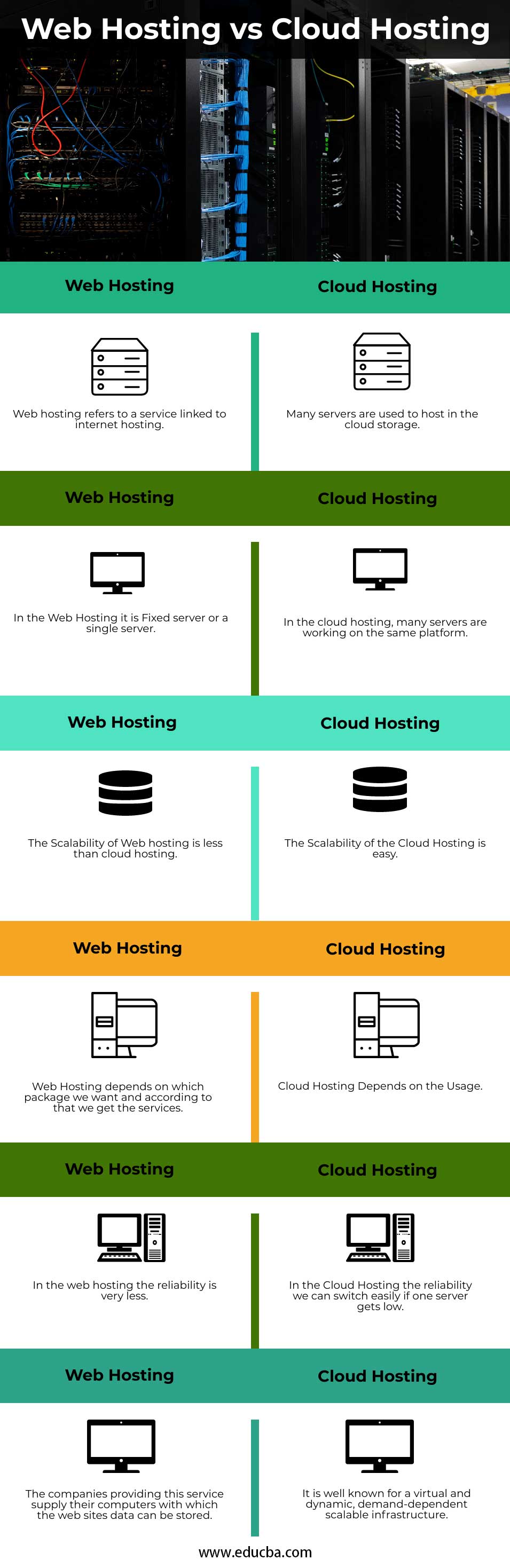
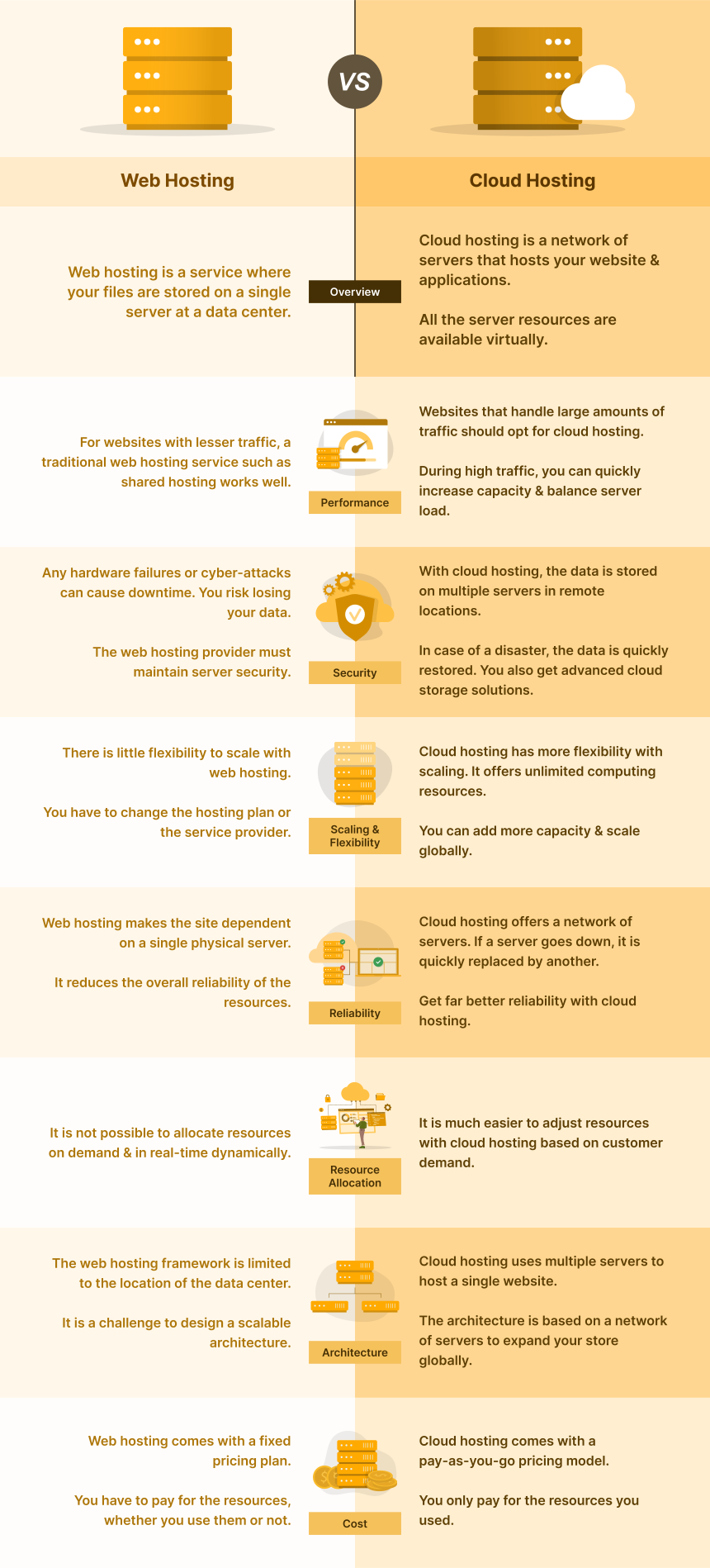
Web hosting stores your website on a single server, while cloud hosting uses multiple servers to balance traffic. Cloud hosting offers flexibility and scalability, adapting to varying demands. Web hosting is often more affordable for small businesses with consistent traffic.
Definition And Functionality
Web hosting is a service that lets you put your website online. It stores your website’s files on special computers called servers. These servers are always on, so your website is always available. People can visit your site anytime. Web hosting makes your site visible to everyone. It is like renting space for your website on the internet.
Types Of Web Hosting
Web hosting comes in different types. Shared hosting means many websites share one server. It is usually cheaper. Dedicated hosting gives you a whole server just for your website. It costs more but offers better performance. VPS hosting is a mix of both. It gives you a private space on a shared server. Cloud hosting uses many servers to host websites. It is flexible and can handle lots of traffic.
Cloud Hosting Basics
Cloud hosting stores data on many servers. These servers work together. This setup is called a cloud. It is not like traditional hosting. In traditional hosting, there is one server only. Cloud hosting offers high reliability. If one server fails, others keep the site running. This makes it very safe. It also scales easily. When traffic increases, more servers can help. This ensures fast loading times. Businesses often choose cloud hosting for this reason.
Cloud hosting is known for its scalability. Users can add or remove resources as needed. It offers high performance and fast speeds. Data is kept safe with strong security measures. Many users like its flexibility. It can be customized to fit different needs. Costs are often based on usage. This can save money. Companies can grow without worries. They can add more space or power anytime. Cloud hosting is a smart choice for many.
Cost Considerations
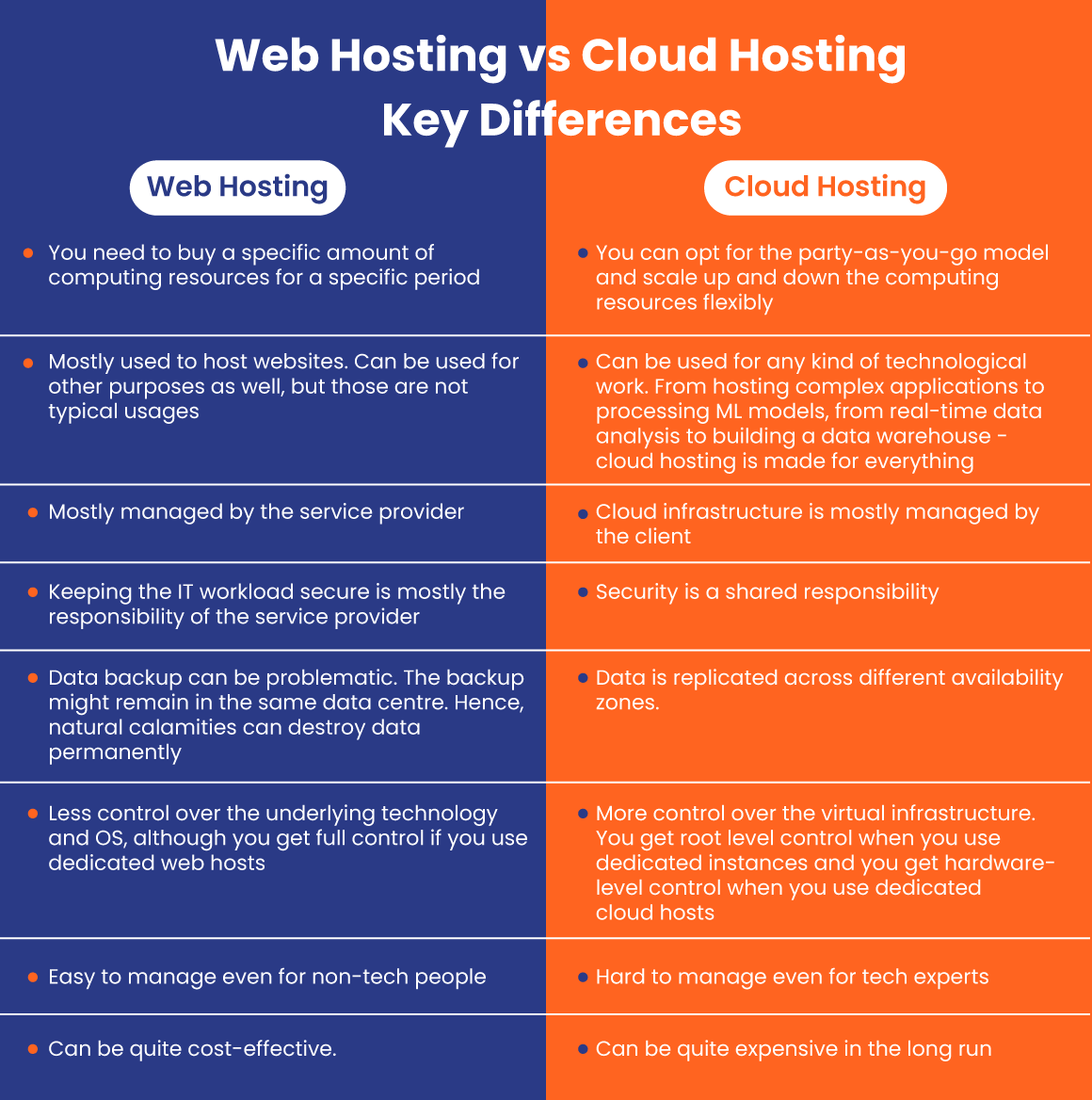
Web hosting often uses a fixed monthly fee. You pay this every month. Cloud hosting uses a pay-as-you-go model. You pay for what you use. This can be cheaper or more costly. It depends on your usage.
Some services have hidden fees. Web hosting may charge for extra bandwidth. Cloud hosting might have extra costs for storage or data transfer. Always check for these costs. They can add up quickly.
Performance Comparison
Web hosting relies on a single server, offering limited resources and potential downtime. Cloud hosting uses multiple servers, ensuring better uptime and scalability. This approach makes cloud hosting more flexible and reliable for growing businesses.
Speed And Uptime
Web hosting usually offers consistent speed for small websites. Cloud hosting can handle more visitors without slowing down. It uses many servers to keep the site fast. This means better uptime. Websites stay online more with cloud hosting. Web hosting might struggle during traffic spikes. Cloud hosting is more reliable for busy sites.
Scalability
Web hosting has limits. It can only handle a set amount of traffic. To grow, you might need to upgrade plans. Cloud hosting is more flexible. It can easily scale with your needs. You pay for what you use. Cloud hosting is good for growing businesses. It adjusts resources automatically. This ensures smooth performance.
Security Aspects
Data protection is vital for hosting services. Web hosting uses physical servers. These servers have limited backup options. Cloud hosting uses virtual servers. It offers better data safety. Data is stored in multiple locations. This reduces the risk of data loss. Encryption adds another layer of security. It keeps data safe from hackers.
Risk mitigation is crucial for safe hosting. Web hosting faces risks like hardware failure. This can lead to downtime. Cloud hosting spreads data across many servers. This minimizes downtime risks. It ensures better service availability. Regular updates in cloud hosting enhance security. They protect against new threats.
Flexibility And Control
Web hosting offers basic control. Users manage accounts and settings. Cloud hosting provides advanced control. It allows multiple users and custom roles. Each role has its specific permissions. This gives better security and flexibility. Users can easily collaborate. Teams work together without issues. It supports growth. As a business grows, so does its needs.
Web hosting has limited customization. Users often choose from preset options. Cloud hosting offers extensive customization. Tailor settings to suit individual needs. Change configurations as required. You get more resources and tools. It adapts to changing demands. Perfect for dynamic environments. This makes operations efficient. It’s like a box of endless possibilities.
Use Cases And Suitability
Small businesses usually have limited budgets. They need cost-effective solutions. Web hosting is often cheaper. It provides a simple setup. Easy to manage for beginners. Suitable for sites with low traffic. Basic features meet their needs. Cloud hosting can be more expensive. Offers scalability and flexibility. Best for growing businesses.
Large enterprises handle vast amounts of data. Need high performance and security. Cloud hosting is ideal. Offers advanced features. Can handle heavy traffic. Reliable and fast. Web hosting might not meet their demands. Often lacks necessary resources. Scalability is crucial for large operations. Cloud hosting adapts quickly. Provides custom solutions for complex tasks.
Credit: www.silvertouch.com
Future Trends
Technological advancements change web hosting and cloud hosting. New tools make hosting faster. More secure too. Cloud hosting uses smart systems. They learn and adapt. This makes cloud hosting better. Web hosting also improves. Faster connections. Better servers. Both hosting types grow. They help websites work better.
Market Predictions
Experts predict big changes. Cloud hosting grows fast. More businesses choose it. It’s flexible and reliable. Web hosting stays strong. It offers simple solutions. Both hosting types will improve. More features will come. Prices may change. Hosting becomes more affordable. More people use it. Websites grow bigger and faster.
Credit: www.cloudpanel.io
Frequently Asked Questions
What Is The Difference Between Web Hosting And Cloud Hosting?
Web hosting uses a single server for site storage. Cloud hosting distributes data across multiple servers for better reliability and scalability.
What Is The Difference Between Cloud And Web Server?
Cloud servers are virtual and scalable, providing on-demand resources. Web servers host websites and serve web pages. Cloud servers offer flexibility, while web servers are more static, dedicated to specific hosting tasks. Both are essential for online operations but serve different purposes in the digital infrastructure.
What Are The Three Types Of Web Hosting?
The three types of web hosting are shared hosting, VPS hosting, and dedicated hosting. Shared hosting is cost-effective, ideal for beginners. VPS hosting offers more resources and flexibility. Dedicated hosting provides complete control over a server, suitable for high-traffic websites.
What Is The Difference Between Cloud Hosting And Local Hosting?
Cloud hosting stores data on remote servers accessed via the internet. Local hosting keeps data on physical servers on-site. Cloud offers scalability and flexibility, while local hosting provides control and security. Cloud hosting requires internet access, whereas local hosting operates independently.
Conclusion
Web hosting and cloud hosting offer distinct benefits. Web hosting is traditional and straightforward. It suits small websites with limited traffic. Cloud hosting, on the other hand, provides flexibility. It adapts to traffic spikes easily. Businesses requiring scalability often choose cloud hosting.
Cost considerations also differ. Web hosting generally costs less. Cloud hosting charges based on usage. Choose based on your website’s needs and budget. Understanding these differences helps in making informed decisions. Whether you’re a business or individual, select the best fit for your online presence.
Your choice impacts performance, cost, and growth potential.


