
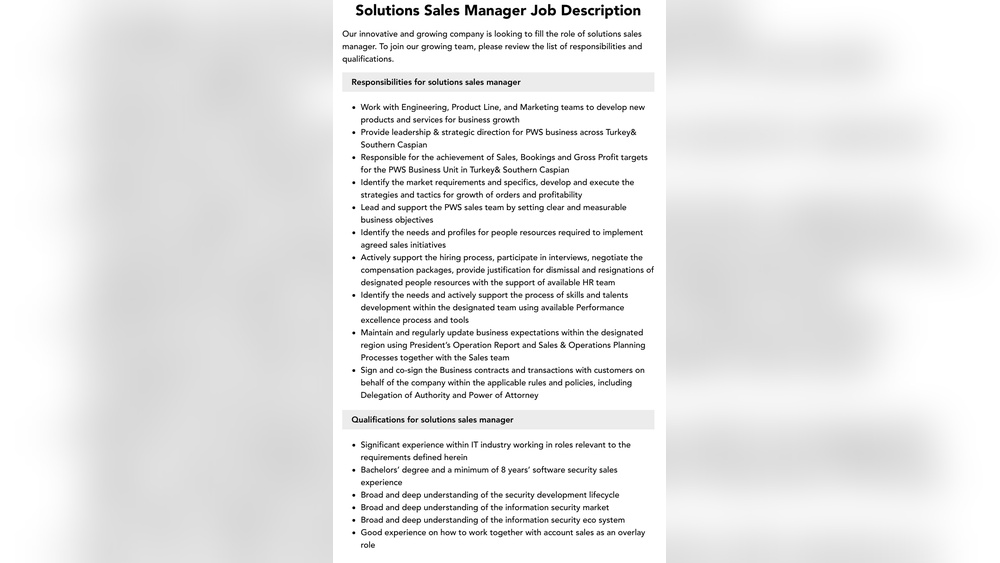
Are you curious about what a Solution Sales Manager does and why this role is crucial for businesses aiming to grow? Imagine having someone on your team who doesn’t just sell products but crafts tailored solutions that perfectly match your customers’ unique needs.
That’s exactly what a Solution Sales Manager brings to the table. If you want to understand how this role bridges the gap between complex products and client success—and how it could impact your business or career—keep reading. This article will break down the key responsibilities, skills, and benefits of a Solution Sales Manager in a clear and simple way, helping you see why mastering this role can be a game-changer.
Role Of A Solution Sales Manager
The role of a Solution Sales Manager is vital in connecting client needs with effective business solutions. They guide projects from idea to delivery, ensuring every step aligns with client goals and company capabilities. Their work blends sales, project management, and technical knowledge to create tailored solutions that solve real problems.
Solution Sales Managers build strong relationships with clients and internal teams. They manage expectations, communicate clearly, and keep projects on track. Their role demands a clear understanding of both the customer’s business and the products or services offered by their company.
Client And Stakeholder Management
Solution Sales Managers act as the main contact for clients. They listen carefully to client needs and translate them into clear project goals. They keep stakeholders informed and involved throughout the process. This ensures everyone agrees on the direction and expected results.
Solution Development Process
They work closely with clients to define the project scope. This includes identifying specific challenges and desired outcomes. They then collaborate with technical teams to design solutions that meet these needs. The goal is to deliver practical and effective answers to client problems.
Project And Implementation Oversight
Solution Sales Managers oversee the entire project lifecycle. They plan resources, set timelines, and manage risks. They monitor progress and ensure milestones are met. Their focus is on delivering the solution on time and within budget.
Cross-functional Collaboration
They collaborate with sales, product, engineering, and marketing teams. This teamwork ensures the solution is complete and viable. Sharing knowledge and feedback helps improve the final product. It also aligns efforts across departments for better results.
Performance Measurement
After implementation, Solution Sales Managers measure how well the solution works. They collect data and feedback to evaluate success. This helps identify areas for improvement. Continuous monitoring ensures the solution continues to meet client needs.

Credit: www.velvetjobs.com
Essential Skills And Qualifications
A Solution Sales Manager plays a vital role in connecting client needs with effective business solutions. This position demands a unique blend of skills and qualifications. These abilities ensure the manager can navigate technical details and business strategies smoothly.
Strong skills help in managing projects and leading teams toward success. Clear communication and sharp analytical thinking are key. Below are the essential skills and qualifications that define a successful Solution Sales Manager.
Technical Expertise
Understanding the product and its technical aspects is critical. A Solution Sales Manager must grasp how solutions work and how they solve client problems. This knowledge builds trust and helps explain complex ideas simply.
Business Acumen
Knowing business operations and market trends is necessary. The manager must align solutions with business goals and client needs. This skill supports better decision-making and drives sales success.
Project Management
Managing timelines, resources, and tasks keeps projects on track. A Solution Sales Manager coordinates multiple teams and ensures smooth delivery. Strong project management avoids delays and meets client expectations.
Communication Skills
Clear and effective communication is a must. This role involves speaking with clients, teams, and stakeholders regularly. Explaining ideas clearly and listening carefully helps build strong relationships.
Analytical And Problem-solving Abilities
Analyzing data and client needs leads to better solutions. The manager must identify challenges quickly and find practical answers. Strong problem-solving skills improve client satisfaction and project outcomes.
Leadership And Influence
Guiding teams and influencing decisions is part of the role. A Solution Sales Manager motivates others and drives collaboration. Leadership skills help in managing conflicts and inspiring success.
Career Path And Progression
The career path of a Solution Sales Manager offers a clear route for growth and skill development. It starts with gaining foundational experience and moves toward leadership roles. Understanding this progression helps set realistic goals and prepare for future opportunities.
Typical Entry Points
Many begin as sales representatives or account managers. Others start in technical roles like product specialists or customer support. A background in business, marketing, or technology often helps. Entry-level roles focus on learning client needs and company products.
Advancement Opportunities
After gaining experience, professionals can move to senior sales or solution architect roles. Leadership positions include sales manager or director of sales. Some advance to product management or business development roles. Growth depends on skills in communication, strategy, and client management.
Industry Variations
Career paths vary by industry. Technology sectors may require more technical knowledge. Healthcare or finance industries often demand specific compliance expertise. Each field offers unique challenges and opportunities. Adaptability is key for success across industries.
Certifications And Training
Certifications boost knowledge and credibility. Popular options include sales management and project management certificates. Training in specific technologies or solutions is valuable. Continuous learning helps keep skills current and competitive. Employers often support professional development efforts.

Credit: www.solution-sales.ch
Salary And Market Demand
The role of a Solution Sales Manager is vital in many industries. Understanding the salary and market demand helps professionals plan their careers. This section explores earnings and job opportunities for Solution Sales Managers. It highlights what affects pay and how the job market changes over time.
Average Compensation
Solution Sales Managers earn competitive salaries. The average pay usually ranges from $80,000 to $130,000 per year in the United States. Bonuses and commissions often increase total earnings. Experience and company size can push salaries higher. Entry-level managers may start at lower pay, but growth is steady.
Factors Affecting Salary
Several factors influence salary levels for Solution Sales Managers. Experience plays a major role; more years usually mean higher pay. Industry type also matters—technology and software sectors tend to pay more. Education and certifications can boost salary potential. Performance and sales success often lead to bonuses and raises.
Job Market Trends
The demand for Solution Sales Managers has grown steadily. Businesses focus on tailored solutions, increasing the need for experts in this role. Digital transformation drives demand in many fields. Companies seek managers who can bridge customer needs and product offerings. Job openings are expected to rise in coming years.
Geographical Considerations
Salaries and demand vary by location. Urban areas and tech hubs offer higher pay and more jobs. Cities like Austin, Texas show strong growth in this field. Smaller towns may have fewer opportunities and lower salaries. Cost of living also affects compensation packages offered by employers.
Challenges And Opportunities
The role of a Solution Sales Manager comes with both challenges and opportunities. Navigating complex client needs and coordinating multiple teams demand strong skills. Yet, these hurdles open doors to growth and innovation. Understanding these aspects helps in building a successful career in solution sales.
Common Obstacles
Solution Sales Managers often face unclear client requirements. Miscommunication can delay project delivery and affect satisfaction. Balancing technical knowledge with sales skills proves difficult. Managing expectations between clients and internal teams adds pressure. Time management becomes tough with overlapping responsibilities. Market competition also challenges the ability to stand out.
Strategies For Success
Clear communication with clients ensures better understanding. Regular updates keep all stakeholders aligned and informed. Building strong relationships inside and outside the company helps. Continuous learning improves both sales and technical expertise. Prioritizing tasks prevents burnout and missed deadlines. Using data and feedback guides solution improvements effectively.
Emerging Trends In Solution Sales
Technology integration drives the demand for smarter solutions. Artificial intelligence helps personalize client offerings. Cloud-based tools improve collaboration and project tracking. Remote selling expands market reach beyond local areas. Data analytics supports better decision-making and forecasting. Sustainability becomes a key factor in client choices.
Future Outlook
Solution Sales Managers will play a bigger role in business growth. The need for custom solutions will increase across industries. Skills in technology and communication will remain vital. Adapting to new tools and market changes will be essential. Those who embrace change can find many career opportunities. The future promises exciting challenges and rewards.
Credit: resumeworded.com
Frequently Asked Questions
What Is A Solutions Sales Manager?
A Solutions Sales Manager identifies client needs, develops tailored solutions, and drives sales by aligning products with business goals. They manage projects, collaborate with teams, and ensure customer satisfaction throughout the sales process.
How Much Do Solution Sales Managers Make?
Solution sales managers earn between $70,000 and $130,000 annually, depending on experience and location. Bonuses and commissions often increase earnings.
What Is The Role Of A Solution Manager?
A solution manager develops and implements tailored solutions by understanding client needs. They manage projects, communicate with stakeholders, and collaborate with teams to ensure successful delivery and continuous improvement.
What Is A Solutions Sales Job Description?
A solutions sales job involves understanding client needs and offering tailored products or services. It requires strong communication, problem-solving, and collaboration skills to drive sales and build lasting customer relationships.
Conclusion
A Solution Sales Manager connects client needs with the right products. They guide projects from start to finish. Strong communication and teamwork skills are essential. This role blends technical knowledge with business sense. Understanding this position helps businesses improve sales strategies.
It also ensures customers get tailored, effective solutions. Knowing what a Solution Sales Manager does aids career choices. This role plays a key part in driving company success.


