
Have you ever found yourself lost in the labyrinth of your WordPress site? Imagine if navigating through your pages could be as simple as flipping through a well-organized book.
This is where child pages come into play. These nifty little features can transform your site’s structure and make it more intuitive for your visitors—and for you! By understanding the concept of child pages, you’re not just improving your site’s layout; you’re enhancing the user experience.
Curious to learn how this can simplify your web management and potentially boost your site’s performance? Stick around, because this article will unravel the mystery of child pages and show you how they can be a game-changer for your WordPress site.
WordPress Page Hierarchy
In WordPress, pages can have a hierarchy. This means one page can be the parent, while another is the child. Child pages are like sub-pages. They help group related content.
Creating a parent page is simple. Set the parent page in the page editor. This builds a clear structure. It helps users find information easily. It also helps search engines understand your site better.
Page structure is very important. It makes websites more organized. Organized sites are easier to navigate. Users find information faster. Search engines rank organized sites higher. This boosts visibility.
A good structure improves user experience. It also makes the site look professional. People trust well-structured sites. Better trust leads to more visits. More visits can lead to more sales or followers.
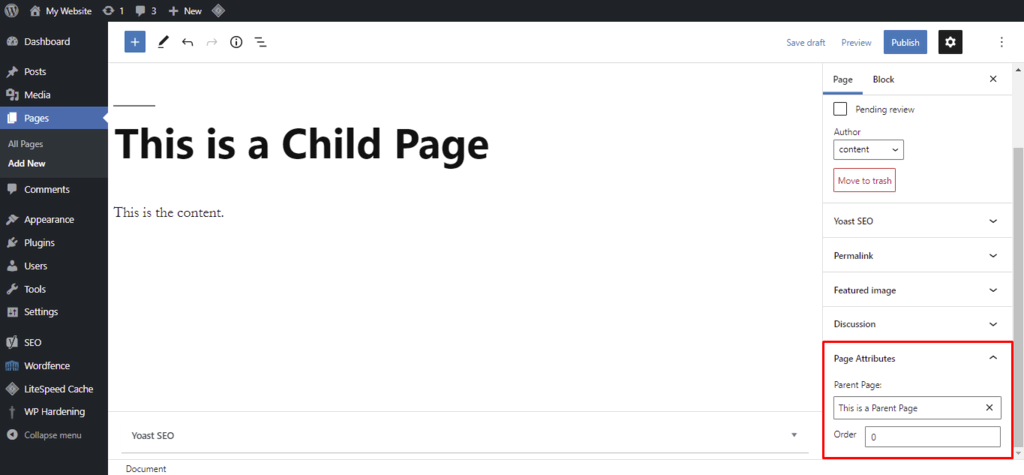
Credit: www.hostinger.com
Defining A Child Page
A child page is a web page that belongs to a parent page. It helps organize content in a clear way. Child pages are under a main page. They create a hierarchical structure in WordPress. This structure helps users find information easily. Parent pages are like main chapters. Child pages are like sub-chapters. They offer more details or related topics.
- Child pages have a parent page.
- They are linked to the main page.
- They help in organizing content.
- Child pages make navigation easy.
- They can be in menus.
- Child pages have a logical order.
Child pages keep content organized. They help users find information quickly. They improve the user experience. Child pages support better SEO. They make it easy to manage lots of content. They can show specific topics clearly. Child pages help in building a structured website.
Creating A Child Page
First, go to your WordPress dashboard. Find the “Pages” menu on the left. Click on “Add New” to make a new page. Write a title for your page. Add your content in the big box below. Content can be text, images, or anything you like. Now, look for the “Page Attributes” section on the right. This part helps you set your page as a child.
In the “Page Attributes,” find the “Parent” dropdown. This is where you choose a parent page. Click the dropdown to see a list. Pick the parent page you want. A parent page is like a main page. After choosing, click “Publish” or “Update.” Your child page is now linked to the parent.
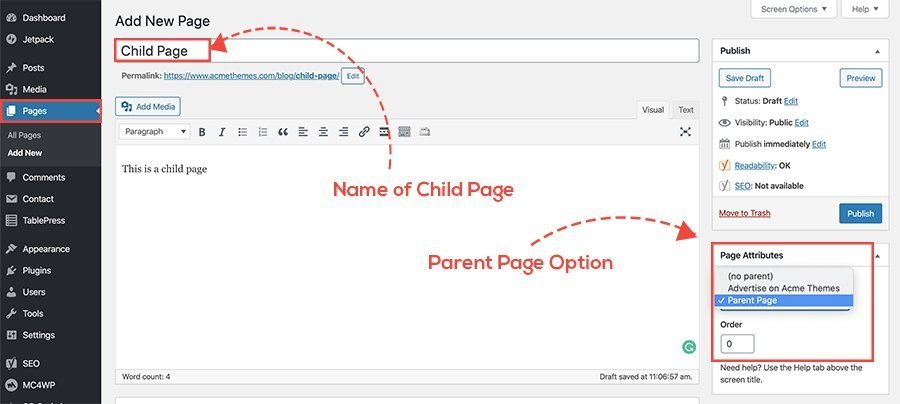
Credit: www.acmethemes.com
Managing Child Pages
Child pages help organize content. They make navigation easy. To edit a child page, go to the WordPress dashboard. Select Pages and find the child page. Click on Edit. Make changes as needed. Save changes after editing. Use simple text for better understanding. Add images if needed. Images help explain ideas. Always check spelling and grammar. This keeps the page neat.
Page hierarchy is important. It shows how pages connect. To reorganize, go to the page list. Find the Parent page option. Change it to a new parent. This changes the hierarchy. Make sure child pages fit well. Check if links work. Broken links confuse readers. Keep pages tidy. Tidy pages are easy to read. Ensure all pages have a purpose.
Seo Advantages
Improved Site Navigation helps users find things easily. Child pages group similar content together. This makes it simple to explore. Users don’t feel lost. They know where to go next. This boosts your site’s visibility. Search engines love well-organized sites. They rank them higher. Better ranks bring more visitors.
Enhanced User Experience is key to keeping visitors happy. Child pages offer clear paths. Users enjoy visiting pages that are easy to read. They stay longer on sites they understand. Engaged visitors often become loyal fans. They return again and again. A happy visitor shares your site with friends. This spreads your content further.

Credit: wordpress.com
Common Mistakes
Child pages in WordPress often confuse users. Mistakes happen when linking them incorrectly, causing navigation issues. Proper parent-child structure helps in organizing content effectively.
Overcomplicating Structure
Many people make a child page when it’s not needed. This can make the website hard to use. A simple structure is often better. Too many child pages can confuse visitors. They might not find what they need quickly. A clear and easy layout helps everyone.
Ignoring Seo Best Practices
Some forget to use SEO best practices for child pages. This is a mistake. Good SEO helps people find your page on search engines. Use keywords in titles and content. Make sure links work well. A child page should have a clear purpose. This helps both users and search engines understand it.
Tips For Effective Use
Balancing content distribution is crucial. It helps in organizing information. Child pages should relate to their parent pages. This keeps the site neat and user-friendly. Too many child pages can confuse visitors. Aim for a clear and simple structure. Visitors should find content easily.
Regularly updating page hierarchy is important. Content can grow and change over time. Adjust the hierarchy to keep it relevant. This ensures users find the latest information. An outdated page can mislead or confuse. Check your site structure often. Make changes as needed.
Frequently Asked Questions
What Is A Child Page In WordPress?
A child page in WordPress is a sub-page of a parent page. It helps organize content hierarchically. Child pages are used to create structured content and improve navigation. They are beneficial for websites with multiple related topics. This feature enhances SEO by creating clear content organization and improving user experience.
How Do You Create A Child Page?
To create a child page, go to your WordPress dashboard. Navigate to “Pages” and click “Add New. ” In the “Page Attributes” section, select a parent page. Publish the page to complete the process. This organizes your pages hierarchically, improving site structure and user navigation.
Why Use Child Pages In WordPress?
Child pages help organize content logically, improving user navigation. They create a hierarchical structure beneficial for SEO. This organization enhances readability and user experience. For websites with related topics, child pages ensure information is easily accessible. They play a crucial role in creating a well-structured website.
Can Child Pages Improve Seo?
Yes, child pages improve SEO by structuring content hierarchically. This aids search engines in understanding your site structure. Well-organized content enhances user experience, reducing bounce rates. It also increases time spent on your site. All these factors contribute positively to your site’s SEO performance.
Conclusion
Child pages enhance website organization. They provide structure and clarity. This helps visitors find information easily. Creating child pages in WordPress is straightforward. It improves navigation and user experience. Useful for managing related content. Ideal for websites with complex topics.
Child pages keep content organized. They are essential for a clean site layout. Implementing child pages boosts website efficiency. Your site becomes user-friendly. Visitors appreciate easy navigation. This leads to more engagement. Understanding child pages is key. This knowledge helps create better websites.
Start organizing your WordPress site today. Enjoy improved site functionality.


