
Ever feel overwhelmed while organizing content on your WordPress site? You’re not alone.
Understanding and using tags effectively can transform your website from a cluttered mess into a streamlined, user-friendly hub. Tags are more than just simple labels; they are powerful tools that can enhance your site’s usability, boost SEO, and keep your readers engaged.
Imagine a website where visitors can effortlessly find relevant content, leading to longer visits and increased interaction. Curious about how to achieve this? Dive into the world of WordPress tags and discover how they can elevate your site’s performance and user experience.
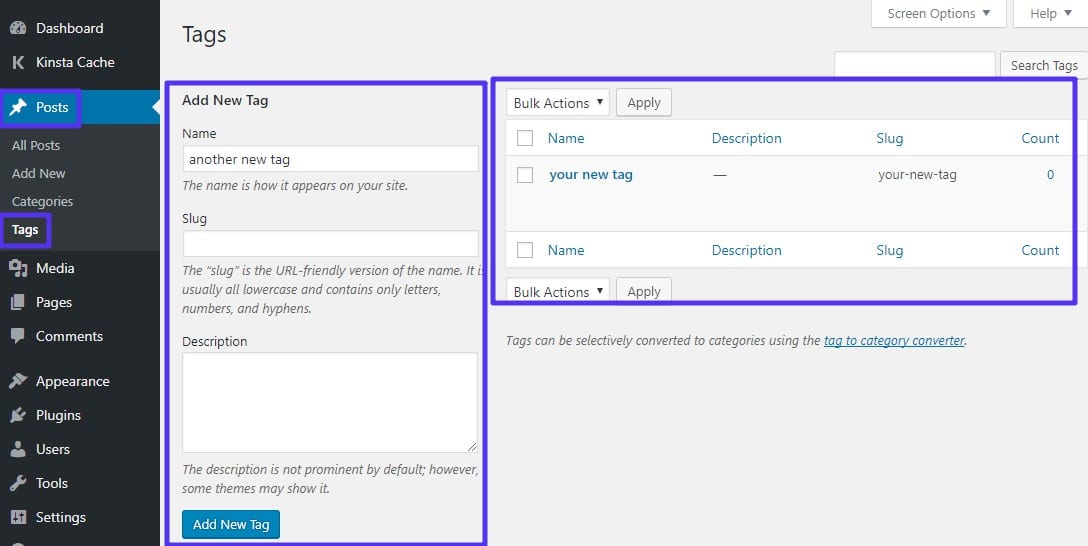
Credit: kinsta.com
Purpose Of Tags
Tags help organize content on WordPress sites. They are like labels. These labels make it easy to find posts. Tags improve the site’s navigation. Readers can find related posts quickly. This boosts user engagement. Tags are different from categories. Categories are broader. Tags are more specific. Use tags wisely. Too many tags can confuse users. Too few tags limit search. Balance is key for effective tagging. Tags also aid SEO. Search engines understand your site’s content better. This can increase visibility. It might bring more visitors to your site.
Tags Vs Categories
Tags and categories help organize your WordPress site. Tags are like labels. They describe specific details. Categories group your posts into broad topics. Think of them as folders. Each post needs a category. Tags are optional.
Use tags to highlight important words. They can be many. Categories should be few. They create structure for your site. They help users find content. Tags add extra information. Both improve user experience.
How Tags Improve Seo
Tags help to organize content on a website. They connect related posts together. This makes it easier for visitors to find similar topics. Search engines use tags to understand the content better. This can improve search results and increase visibility. Tags can boost the SEO of your site. They create a network of related articles. This can lead to more traffic.
Using tags correctly is important. Too many tags can confuse search engines. Too few tags might miss connections. It is best to use clear and specific tags. This makes it easy for readers and search engines. Tags should be relevant to the content. Avoid using tags that have no connection. Choose tags wisely to improve SEO.
Organizing Content With Tags
Tags help sort your content. They act like labels. Readers find related posts easily. Tags are short and specific. They describe main ideas. Each post can have many tags. This makes searching simpler. Tags boost site navigation. Readers stay longer on your site. They explore more topics. SEO benefits from tags too. They improve search results. Tags also link similar posts. This keeps content organized. Using tags wisely helps both users and SEO.
Best Practices For Tagging
Tags help organize content on your site. They create connections between posts. This makes it easier for visitors to find related content. Use tags wisely. Tags should be relevant to the post topic. Avoid too many tags. Too many can confuse readers.
Choose tags that describe the main ideas in your post. Keep tags short and simple. Use common words that people understand. Avoid using long phrases as tags. Long phrases are harder to search.
- Do not use tags that are too broad.
- Avoid using tags that are too specific.
- Do not repeat words in tags.
Proper tagging improves site navigation. It helps search engines understand your content. Tags can increase visibility. They can bring more visitors to your site. Tags enhance user experience by guiding them to relevant posts.
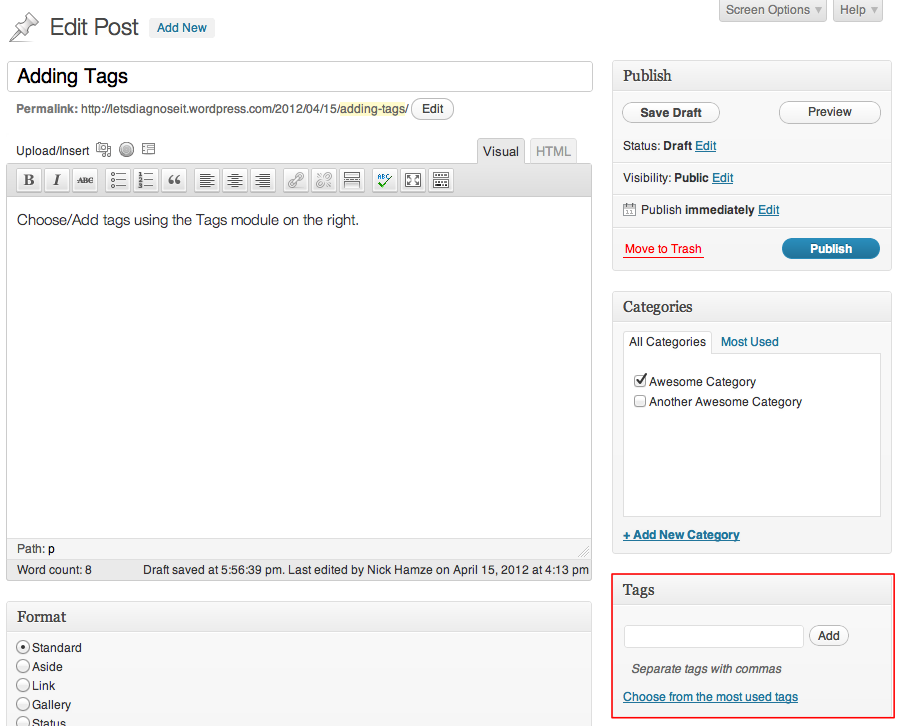
Credit: make.wordpress.org
Common Mistakes With Tags
Tags in WordPress help organize content, making it easier for users to find related posts. A common mistake is using too many tags or irrelevant ones, which can confuse readers and reduce SEO effectiveness. Ensure tags accurately reflect the content to enhance navigation and search engine visibility.
Using Too Many Tags
Many people use too many tags on posts. This makes the site messy. It can confuse readers. It can also affect search engines. Use fewer tags to keep the site clean. Choose tags that fit the content well.
Tags Too Similar To Categories
Tags should not be the same as categories. Categories group broad topics. Tags are for specific details. Using them wrongly makes navigation hard. Keep tags unique and clear.
Ignoring Tag Management
Some ignore managing their tags. Old tags pile up. They become useless over time. This clutters the site. Review and update tags often. Remove the ones you don’t need.
Not Linking Tags Properly
Tags should link to related posts. This helps users find more content. Unlinked tags miss this chance. Make sure all tags connect to content.
Tools For Managing Tags
Many plugins help to manage tags in WordPress. These plugins are simple to use. Tag Manager is a popular tool. It helps to add, edit, and delete tags easily. Another tool is Simple Tags. It offers features like tag cloud and auto-linking. Yoast SEO also supports tags. It improves how search engines see your tags. Tags can be organized with these tools.
Tag Groups is another useful plugin. It sorts tags into groups. This makes finding tags easier. Ultimate Tag Cloud Widget displays tags in a cloud format. It shows which tags are used most. These tools make tag management easy and efficient. They help keep your site organized.

Credit: blog.hubspot.com
Tags For Enhanced User Experience
Tags in WordPress help people find what they want. They act like labels. With tags, you can group similar topics. This makes your site easier to explore. Visitors can click a tag. Then, they see all posts with that tag. It’s like a shortcut.
Using clear tags helps users a lot. It makes the content more organized. This way, users spend more time on your site. They find related content fast. It’s a win-win for everyone. Users get a better experience. Your site gets more views.
Frequently Asked Questions
What Are Tags Used For In WordPress?
Tags in WordPress help organize content by topic. They allow users to find related posts easily. Tags improve site navigation and enhance SEO by linking similar content. This makes it easier for search engines to index your site. Use relevant tags to boost your content’s discoverability and user experience.
How Do WordPress Tags Improve Seo?
WordPress tags improve SEO by creating internal links between related posts. This helps search engines understand your site’s structure and content connections. Tags also enhance user experience by making content easier to find. Properly used tags can increase page views and improve your site’s visibility in search results.
Can I Use Too Many Tags In WordPress?
Using too many tags in WordPress can be counterproductive. It may confuse users and dilute SEO efforts. Stick to relevant and specific tags that accurately describe your content. Over-tagging can lead to cluttered navigation and reduced user engagement. Aim for a concise and focused tagging strategy to optimize your site.
How Are Tags Different From Categories In WordPress?
Tags and categories both organize content, but they serve different purposes. Categories are broader, grouping posts into main topics. Tags are more specific, highlighting particular aspects of content. While categories provide structure, tags offer flexibility in linking related posts. Use both effectively to enhance site navigation and SEO.
Conclusion
Tags in WordPress help organize your content effectively. They improve user experience by making your site easier to navigate. Visitors find related posts quickly. Tags also enhance your site’s SEO by providing keyword-rich context. This boosts search engine visibility. Remember, use relevant and specific tags.
Avoid overloading posts with too many. Keep them concise and descriptive. This maintains clarity and relevance. Proper tagging is a simple yet powerful tool. It benefits both users and search engines. Use it wisely to optimize your WordPress blog. Your readers and site performance will thank you.


