
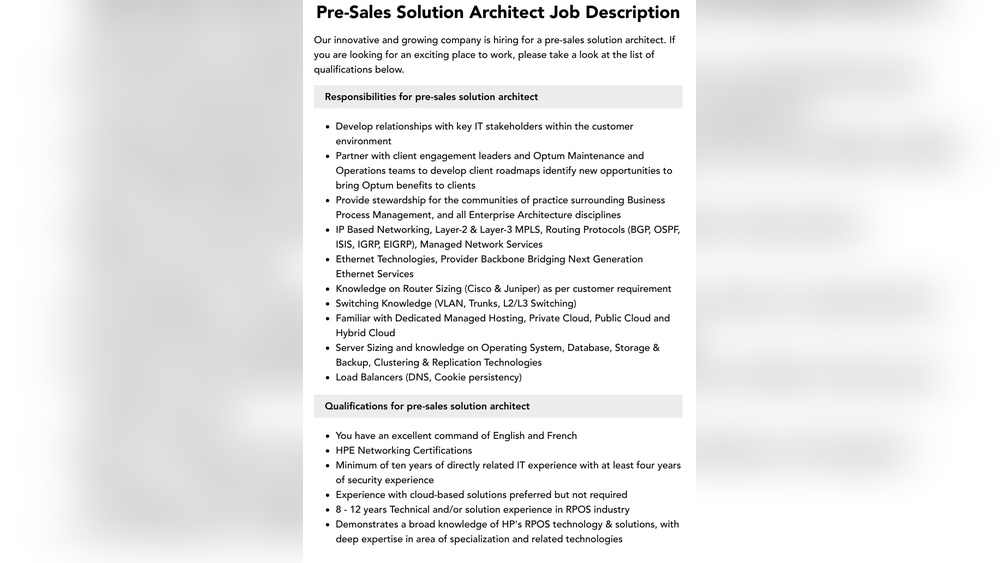
Are you wondering if a Solutions Architect role is actually a sales job? You’re not alone.
Many people assume that because Solutions Architects work closely with sales teams, their job is all about selling. But is that really the case? If you want to understand what a Solutions Architect truly does, how much sales is involved, and whether this role fits your skills and career goals, keep reading.
This article will clear up the confusion and give you a clear picture of what to expect from a Solutions Architect role—so you can decide if it’s the right path for you.
Role Of A Solutions Architect
A Solutions Architect plays a vital role in bridging technology and business needs. This role requires a mix of technical skills and client understanding. They help design solutions that fit client requirements and support sales efforts. Solutions Architects work closely with sales teams but focus mainly on the technical side. Their involvement extends beyond just selling; they ensure the product meets the client’s needs.
Understanding the role clarifies why a Solutions Architect is not just a sales job. Their work involves deep technical knowledge and ongoing client support. They help translate complex technology into clear, useful solutions. This makes them essential in winning and maintaining business.
Technical Expertise
Solutions Architects have strong technical skills related to their products. They know how products work and how to connect them with client systems. This expertise allows them to solve complex technical challenges. They stay updated on new technologies and trends to provide the best solutions.
Solution Design
Designing solutions is a key part of the job. Solutions Architects create plans that show how products meet client needs. They consider client systems, goals, and challenges. Their designs ensure the solution is practical and effective. Clear solution design helps clients understand the value of the product.
Client Interaction
Clients rely on Solutions Architects for technical advice and guidance. Architects explain how solutions work in simple terms. They answer questions and address concerns. Building trust with clients is important. This interaction helps clients feel confident in their decisions.
Post-sales Involvement
Solutions Architects do not stop after the sale. They often help with implementation and support. This ensures the solution runs smoothly and meets expectations. Their role may include training or troubleshooting. Post-sales work strengthens client relationships and satisfaction.
Solutions Architect Vs Sales Job
The role of a Solutions Architect often raises questions about its connection to sales. While it shares some goals with sales jobs, it involves unique responsibilities. Understanding the differences between a Solutions Architect and a traditional sales role clarifies this question.
Differences From Traditional Sales
Solutions Architects focus on technical design, not direct selling. They analyze client needs and craft custom solutions. Sales jobs usually focus on closing deals and negotiating contracts. Solutions Architects support the technical side of the sales process. They do not push for sales but provide expertise to ensure the product fits the client’s needs.
Supporting The Sales Team
Solutions Architects work closely with sales representatives. They help explain complex technical details to customers. Their role is to make the sales team’s job easier and more effective. By answering technical questions, they build trust with potential clients. This support helps sales teams gain confidence and close deals faster.
Value Communication
Communicating value is a key task for Solutions Architects. They translate technical features into business benefits. This helps customers understand how the solution solves their problems. Instead of selling, they educate and inform the client. Clear communication increases the chances of customer approval and satisfaction.
Pre-sales Engineer Connection
A Solutions Architect often works closely with Pre-Sales Engineers during the sales cycle. This connection blends technical skill with customer interaction. Solutions Architects help shape the sales strategy by offering expert knowledge. They ensure the product fits the client’s technical needs. Pre-Sales Engineers provide essential technical support to the sales team. Their combined efforts improve customer understanding and trust.
This section explores the link between Solutions Architects and Pre-Sales Engineers. It highlights how their roles overlap and collaborate throughout the sales process.
Overlap With Sales Engineers
Solutions Architects and Sales Engineers share many responsibilities. Both must understand the product’s technical details deeply. They explain these details clearly to clients. Their goal is to show how the solution solves client problems. Both roles require strong communication and technical skills. The main difference is focus: Solutions Architects design solutions, while Sales Engineers focus on technical demos.
Collaboration During Sales Process
Solutions Architects and Pre-Sales Engineers work as a team during sales. They prepare technical presentations and proposals together. Solutions Architects design the solution based on client needs. Pre-Sales Engineers support by answering detailed technical questions. This teamwork helps clients see the product’s value clearly. The collaboration increases the chance of closing the deal.
Credit: www.revenue.io
Impact On Sales Outcomes
The role of a Solutions Architect has a direct effect on sales outcomes. Their technical knowledge helps sales teams communicate product benefits clearly. Solutions Architects ensure clients understand how a product fits their needs. This understanding boosts customer trust and smooths the sales process.
Building Customer Confidence
Solutions Architects answer detailed technical questions from clients. Clear and honest explanations reduce doubts and worries. This builds strong confidence in the product and the company. Customers feel assured they are making the right choice. Confidence leads to stronger relationships and repeat business.
Closing Deals With Technical Insight
Solutions Architects design solutions tailored to client requirements. Their insights show how products solve specific problems. This clarity helps sales teams present convincing proposals. Demonstrations of real-world use cases make offers more attractive. Technical insight often turns interest into signed contracts.
Common Misconceptions
Many people confuse the role of a Solutions Architect with a sales position. This confusion leads to misunderstandings about the job’s real nature. It is important to clear up these common misconceptions to better understand what the role truly involves.
Not A Pure Sales Role
A Solutions Architect does not focus only on selling. The role is not about pushing products or closing deals alone. Instead, it involves designing technical solutions that fit customer needs. They work closely with sales teams but are not the primary salespeople. Their job is to explain complex technical details in simple terms to customers. This helps clients see how the product solves their problems.
Technical Vs Sales Responsibilities
The main duty of a Solutions Architect is technical, not sales. They must understand the technology deeply and how it integrates with other systems. Their expertise helps create tailored solutions for clients. Sales tasks like negotiating prices or contracts are usually handled by the sales team. Solutions Architects support sales by offering technical advice and demonstrations. This balance shows that their role bridges technology and sales but leans heavily on technical skills.
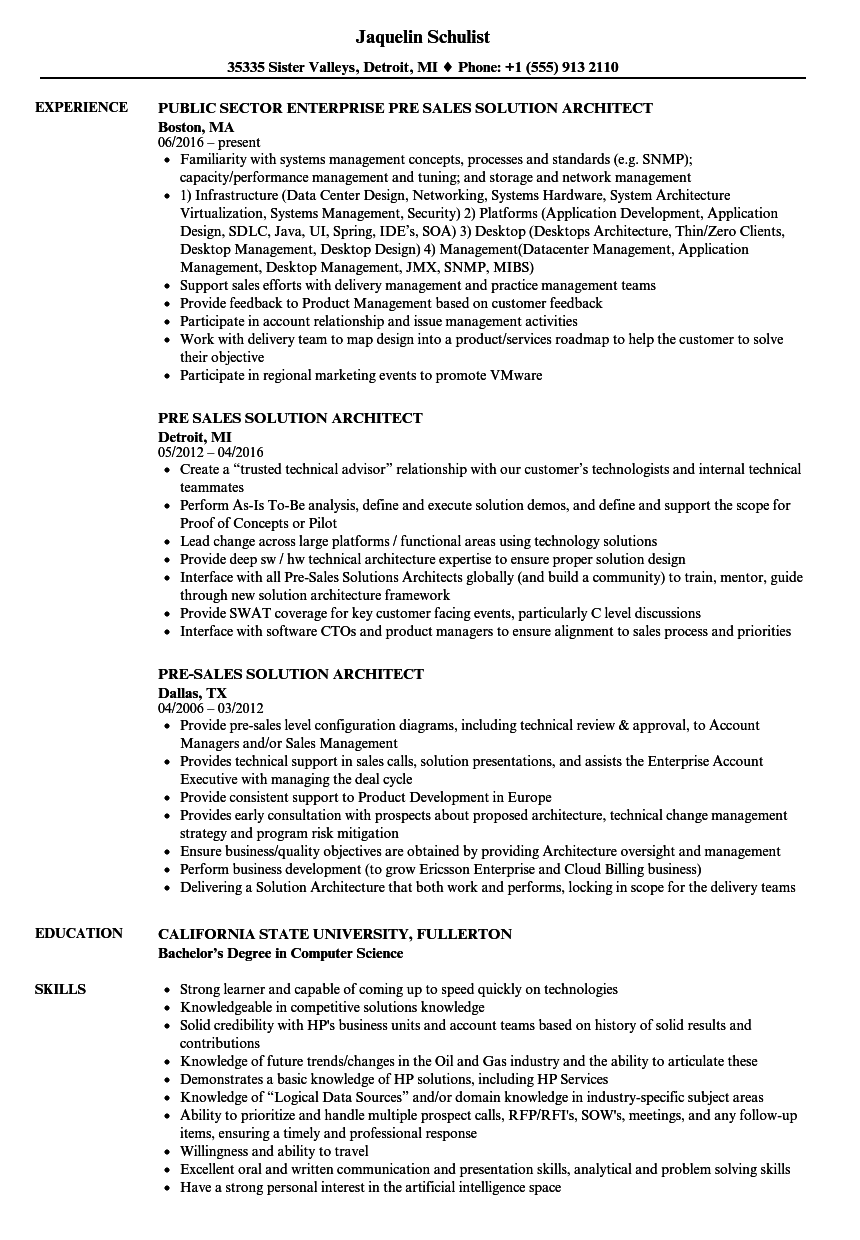
Credit: www.velvetjobs.com
Career Path And Salary Insights
The career path of a Solutions Architect blends technical skills with business understanding. This role bridges the gap between complex technology and customer needs. Solutions Architects often start in IT or software development roles. Gaining experience in system design and client interaction is common before moving into this position.
Advancing in this career can lead to senior architect roles or management positions. Some professionals shift toward product management or sales engineering. The role demands continuous learning to keep up with new technologies and industry trends.
Earnings Overview
Solutions Architects enjoy competitive salaries that reflect their expertise. Entry-level positions typically offer moderate pay but grow quickly with experience. In the United States, average salaries range from $90,000 to $130,000 per year. Senior architects or those in high-demand industries can earn over $150,000 annually. Bonuses and commissions may apply, especially if they support sales teams directly. Geographic location and company size also impact earnings significantly.
Job Titles And Variations
Several job titles relate closely to the Solutions Architect role. Common variants include Pre-Sales Engineer, Technical Architect, and Systems Architect. Some organizations use titles like Cloud Architect or Application Architect for specialized roles. Each title emphasizes different skills or focus areas but shares a core requirement for technical and client-facing abilities. Understanding these variations helps job seekers find roles that match their skills and career goals.

Credit: www.velvetjobs.com
Frequently Asked Questions
Is Solutions Architect A Sales Role?
A Solutions Architect is not a traditional sales role. They provide technical expertise to support sales teams and design client solutions.
Is Solutions Engineer A Sales Role?
A solutions engineer supports sales by providing technical expertise and designing tailored solutions. They are not traditional salespeople but play a crucial pre-sales role.
What Is Another Job Title For A Solution Architect?
Another job title for a Solution Architect is Pre-Sales Engineer, Platform Architect, or Application Architect. These roles focus on designing technical solutions.
How Much Do Sales Solutions Architects Make?
Sales Solutions Architects earn between $124,000 and $180,000 annually in the U. S. , depending on experience and location.
Conclusion
A Solutions Architect blends technical skills with sales support. They do not sell directly but help sales teams succeed. Explaining complex products in simple terms is key. They design solutions tailored to client needs. Building trust with customers requires clear communication.
This role sits between engineering and sales teams. It demands both technical know-how and people skills. Understanding this helps clarify the role’s purpose. It is a unique, vital part of many sales processes.


