
Have you ever wondered what exactly happens when you shake up your salad dressing and then watch it separate again? Is salad dressing a solution, where everything blends perfectly, or a suspension, where ingredients float and settle apart over time?
Understanding this might sound like a science lesson, but it actually affects how your dressing tastes, looks, and even how you store it. You’ll discover the surprising answer to whether salad dressing is a solution or suspension—and why that matters for your next salad.
Keep reading, because the way your dressing behaves could change how you enjoy your meals forever.
Types Of Mixtures
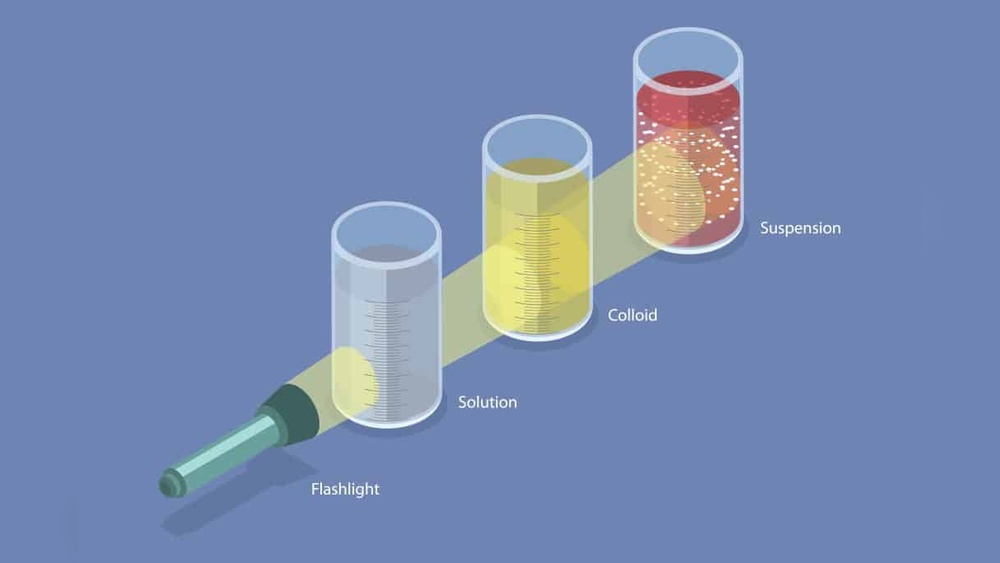
Understanding the types of mixtures helps clarify whether salad dressing is a solution or a suspension. Mixtures are combinations of two or more substances. They differ based on particle size and how well the parts blend together. Three main types are solutions, suspensions, and colloids. Each type has unique traits. Knowing these traits makes it easier to identify the nature of salad dressing.
Solutions
Solutions are mixtures where one substance dissolves completely in another. The particles are very small, usually ions or molecules. They cannot be seen or separated by filtering. A classic example is sugar dissolved in water. Solutions appear uniform and clear. The particles stay evenly spread out and do not settle over time.
Suspensions
Suspensions have larger particles that do not dissolve. These particles float in the liquid but will settle if left alone. The mixture looks cloudy or grainy. An example is muddy water. Over time, the solid particles sink to the bottom. Suspensions are not uniform and need stirring to mix again.
Colloids
Colloids are mixtures with particles larger than solutions but smaller than suspensions. The particles do not settle quickly and are too small to see easily. Milk is a common colloid. It looks uniform but contains tiny fat droplets suspended in water. Colloids often appear cloudy or milky.
Credit: www.gauthmath.com
Composition Of Salad Dressing
Understanding the composition of salad dressing helps clarify whether it is a solution or suspension. Salad dressings combine several ingredients that influence their texture and stability. These ingredients interact in ways that affect how the dressing behaves over time. Examining the components reveals why some dressings separate and others stay mixed.
Common Ingredients
Salad dressings often include oil, vinegar, herbs, spices, and sometimes mustard or honey. Oil and vinegar form the base, giving the dressing its characteristic flavor. Herbs and spices add aroma and taste. Additional ingredients like salt or sugar enhance the flavor profile.
Role Of Oil And Vinegar
Oil and vinegar do not mix naturally. Oil is less dense and floats on top of vinegar. This separation creates two visible layers. Without help, the oil droplets remain separate, causing the dressing to separate quickly. This layering shows the dressing acts more like a suspension than a solution.
Effect Of Emulsifiers
Emulsifiers help blend oil and vinegar into a stable mixture. Common emulsifiers include egg yolk, mustard, or lecithin. They coat oil droplets, preventing them from joining back together. This creates a smooth, uniform dressing that does not separate easily. Emulsifiers turn the mixture closer to a colloid than a suspension.
Salad Dressing As A Suspension
Salad dressing often acts as a suspension rather than a true solution. In this state, tiny particles of oil and other ingredients float throughout the vinegar or liquid base. These particles are large enough to settle or separate over time. Understanding this helps explain why many dressings require shaking before use.
Separation Of Layers
One key sign of a suspension is the clear separation of layers. In salad dressing, oil usually rises above the vinegar because oil is lighter. If left still, the dressing splits into two parts. This happens because the particles do not dissolve completely. The visible layers show the mixture is not uniform.
Particle Size And Visibility
The particles in salad dressing suspensions are bigger than those in solutions. These particles are often visible as tiny droplets or specks. They do not dissolve but stay floating in the liquid. Their size causes the mixture to look cloudy or uneven rather than clear.
Examples Without Emulsifiers
Many simple salad dressings lack emulsifiers, which help blend oil and vinegar. Without these, the oil and vinegar separate quickly. Classic oil and vinegar dressings are common examples. The oil floats on top and must be mixed again before pouring over salad.

Credit: www.youtube.com
Salad Dressing As A Colloid
Salad dressing is more than just a tasty addition to your greens. It is a fascinating example of a colloid. A colloid is a mixture where tiny particles spread throughout another substance. These particles are bigger than in a true solution but too small to settle out like in a suspension. Many salad dressings show this property by staying mixed without separating quickly.
Emulsified Dressings
Many salad dressings are emulsions. This means they mix oil and water-based ingredients. Oil and vinegar do not blend naturally. Emulsifiers help keep these two liquids together. Without emulsifiers, the oil and vinegar separate into layers. An emulsified dressing looks smooth and uniform. It stays mixed longer than a simple oil and vinegar blend.
Use Of Egg Proteins
Egg proteins are common emulsifiers in salad dressings. They help oil and vinegar mix well. Proteins in eggs surround tiny oil droplets. This prevents the droplets from joining together and separating. Egg yolk acts as a natural stabilizer. It keeps the dressing thick and creamy. Dressings with egg proteins need careful handling. They must be fresh and kept cold to stay safe.
Stability And Refrigeration
Salad dressings that are colloids need stability. They should not separate quickly. Refrigeration slows down the movement of particles. It helps maintain the mixture’s uniform look. Cold temperatures prevent spoilage, especially in dressings with egg. Proper storage extends the life of emulsified dressings. Always keep them in the fridge and shake before use.
Why Salad Dressing Is Not A Solution
Salad dressing is often mistaken for a solution because it looks mixed at first. Yet, it does not fit the scientific definition of a solution. Understanding why salad dressing is not a solution helps clarify its true nature. The key lies in how its ingredients interact at the molecular level and their physical behavior over time.
Lack Of Molecular Dissolving
In a true solution, one substance dissolves evenly in another at the molecular level. This means the particles break down into tiny pieces that spread out completely. Salad dressing does not do this. The oil and vinegar remain as separate particles. They do not dissolve into each other. Instead, they float and form layers. This shows that the mixture is not molecularly uniform. The particles are too large to mix on a molecular scale.
Oil And Vinegar Immiscibility
Oil and vinegar do not mix well because they are immiscible liquids. Immiscible means they cannot blend into a single liquid phase. Oil is non-polar, and vinegar is polar. These differences cause them to repel each other. When left standing, they separate into two layers. This separation proves the mixture is not a solution. Solutions must remain stable and uniform over time. Salad dressing, with oil and vinegar, clearly does not meet this rule.
Practical Tips For Keeping Dressings Mixed
Salad dressings tend to separate because oil and vinegar do not naturally mix well. Keeping them combined improves flavor and texture. Here are practical tips to help keep your dressing well mixed for better taste and appearance.
Shaking And Stirring
Shaking your dressing in a sealed jar blends the oil and vinegar quickly. Stirring with a fork or whisk also helps mix ingredients evenly. Repeat these actions before serving to maintain a smooth texture. Simple movement keeps the dressing from separating into layers.
Using Emulsifiers
Emulsifiers help oil and vinegar stay mixed longer. Common emulsifiers include mustard, honey, or egg yolk. These ingredients create a stable mixture by binding oil and water molecules. Adding a small amount of emulsifier improves the dressing’s consistency and prevents separation.
Storage Recommendations
Store dressings in a cool place to slow separation. Refrigeration is best for homemade dressings with fresh ingredients. Use airtight containers to keep air out and maintain freshness. Before using, give the dressing a quick shake or stir for best results.
Credit: www.gauthmath.com
Frequently Asked Questions
Is Salad Dressing A Suspension?
Salad dressing is a suspension because oil and vinegar separate into layers over time. Large particles do not dissolve uniformly.
Is Salad Dressing A Solution Or Mixture?
Salad dressing is a suspension because its oil and vinegar separate over time. It is not a true solution.
What Is Salad Dressing Classified As?
Salad dressing is classified as a suspension. It contains large particles that separate over time, like oil and vinegar layers.
What Is Salad Dressing Considered?
Salad dressing is considered a suspension because its oil and vinegar separate over time. It contains large particles that do not dissolve uniformly. This makes it a heterogeneous mixture, not a true solution or colloid.
Conclusion
Salad dressing mostly acts as a suspension. Oil and vinegar separate over time. Tiny particles do not dissolve fully. Some dressings with emulsifiers stay mixed longer. This means they form colloids, not true solutions. Understanding this helps with storage and use.
Shake well before pouring your salad dressing. This simple step mixes the layers again. Now you know why your dressing looks that way. Enjoy your salad with a well-mixed dressing!


