
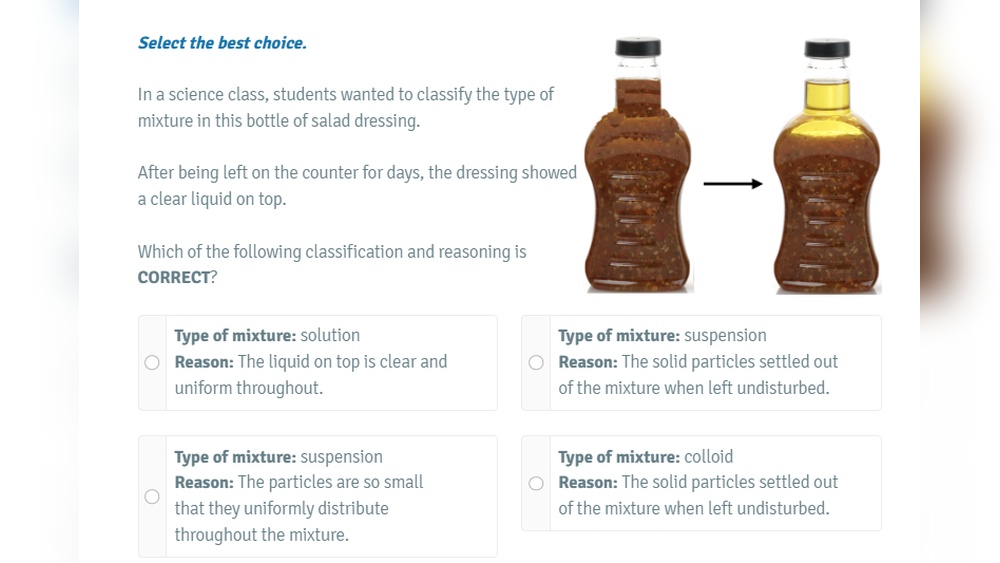
Have you ever wondered what kind of mixture salad dressing really is? When you pour that tangy oil and vinegar blend over your greens, are you enjoying a solution or something else?
Understanding this might seem simple, but it actually reveals a lot about how ingredients interact—and why your dressing sometimes separates into layers. If you want to know whether salad dressing is a true solution, a suspension, or an emulsion, keep reading.
This knowledge will change the way you think about your favorite salads and even help you make dressings that stay perfectly mixed longer. Let’s dive into the science behind your salad dressing and uncover the answer together!
Types Of Salad Dressings
Salad dressings come in different types and flavors. Each type has a unique way of mixing ingredients. Understanding these types helps to know if the dressing is a solution or a mixture.
Some dressings separate into layers over time, while others stay smooth. This behavior depends on the ingredients and how they combine.
Oil And Vinegar Dressings
Oil and vinegar dressings are the simplest type. They combine oil and vinegar without blending them fully. Oil floats on top of vinegar because it is less dense. These dressings separate quickly and need shaking before use.
This type is a classic example of a mixture called a suspension. The oil and vinegar stay as separate parts, showing they do not form a solution.
Creamy And Emulsified Dressings
Creamy dressings mix oil and vinegar with an emulsifier like egg yolk or mustard. The emulsifier holds oil and vinegar together in tiny droplets. This creates a smooth and thick texture.
These dressings look like a single liquid and do not separate easily. They are called emulsions, a type of mixture where one liquid disperses in another.
Credit: www.chegg.com
Solutions Vs Mixtures
Understanding the difference between solutions and mixtures helps us answer if salad dressing is one or the other. Both solutions and mixtures involve combining substances. They differ in how those substances mix and behave over time.
Salad dressing often looks like a single liquid. Yet, its components may not fully combine at the molecular level. This distinction matters in science and cooking alike.
Characteristics Of Solutions
Solutions are uniform throughout. They have one phase, usually liquid. The solute dissolves completely in the solvent. The particles are very small and cannot be seen. Solutions do not separate over time. Saltwater is a classic example of a solution. The salt dissolves fully, creating a clear liquid.
Characteristics Of Mixtures
Mixtures contain two or more substances physically combined. Their components keep their own properties. The particles are larger and may be visible. Mixtures can be homogeneous or heterogeneous. They often separate when left to stand. Salad dressing with oil and vinegar is a heterogeneous mixture. The oil floats on top because it does not dissolve in vinegar.
Suspensions In Salad Dressings
Salad dressings often contain ingredients that do not fully dissolve in each other. This creates a special type of mixture called a suspension. Suspensions have solid or liquid particles spread throughout a liquid. These particles are large enough to be seen and can settle over time. Understanding suspensions in salad dressings helps explain why some dressings separate if left standing.
Visible Particle Separation
In suspensions, particles do not mix evenly. Over time, these particles settle at the bottom or float on top. This makes the layers in salad dressings visible. For example, oil droplets in vinegar-based dressings gather and form a separate layer. Shaking the dressing mixes these particles temporarily. But if you leave it alone, the particles separate again. This visible change is a key sign of a suspension.
Examples In Common Dressings
Many salad dressings are suspensions. Oil and vinegar dressings show clear separation after resting. Italian dressing often contains herbs and spices that sink or float. Ranch dressing may have solid spices and dairy particles suspended in a liquid base. These solids make the mixture uneven and cause settling. Suspensions need shaking before use to mix the particles evenly again.
Emulsions And Colloids
Salad dressing often puzzles people when classifying it as a solution or mixture. Understanding the science behind emulsions and colloids helps clarify this. Emulsions and colloids describe how tiny particles mix or separate in liquids. These concepts explain why salad dressing looks uniform sometimes and separates at other times.
Emulsions occur when two liquids that normally do not mix, like oil and vinegar, are combined. Colloids have particles larger than in solutions but small enough to stay suspended without settling quickly. Salad dressings often fall into these categories depending on their ingredients and preparation method.
Temporary Mixing Of Oil And Vinegar
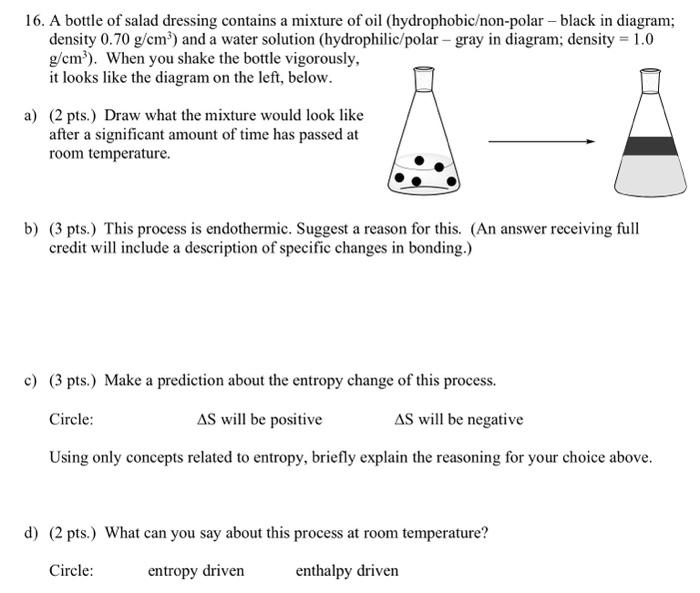
Oil and vinegar naturally separate because they have different properties. Oil is non-polar and vinegar is polar. When mixed, they form a temporary blend, but the liquids soon separate into layers. This happens because oil droplets float on vinegar due to their lower density.
This separation shows that simple salad dressing is not a true solution. It behaves like a suspension, with oil droplets floating and eventually settling. Shaking the bottle mixes them temporarily. But without help, the liquids will not stay mixed for long.
Role Of Emulsifiers
Emulsifiers help keep oil and vinegar mixed for longer periods. They contain molecules with two ends: one that loves water and one that loves oil. This dual nature allows them to surround oil droplets and prevent them from joining back together.
Common emulsifiers in salad dressings include mustard and egg yolk. These ingredients stabilize the mixture by creating a barrier between oil and vinegar. The result is a smooth, creamy dressing that stays blended longer than simple oil and vinegar alone.
Why Salad Dressing Is Not A Solution
Salad dressing is often mistaken for a solution because its ingredients appear mixed. The truth is, it does not meet the criteria of a true solution. Understanding why salad dressing is not a solution helps clarify its nature as a mixture. This knowledge is useful for anyone curious about food science or chemistry basics.
Lack Of Uniform Composition
A solution has the same composition throughout. Each part of a solution looks and acts the same. Salad dressing usually contains oil and vinegar. These two liquids do not mix evenly. You can often see tiny droplets of oil floating in the vinegar. This uneven mix shows salad dressing does not have a uniform composition. Therefore, it cannot be called a solution.
Separation Over Time
One key sign of a solution is stability. Solutions do not separate after standing still. Salad dressing separates into layers after a short time. The oil floats on top while the vinegar sinks below. This happens because oil and vinegar have different densities and do not blend permanently. The separation shows salad dressing is a mixture, not a solution. It needs shaking before use to mix again.
Factors Affecting Salad Dressing Stability
Salad dressing stability depends on several key factors. These affect how well the ingredients stay mixed without separating. Understanding these elements helps in making dressings that last longer and taste better.
Stability is important because most dressings are mixtures of oil and water-based ingredients. Without proper balance, they quickly split into layers. Below are the main factors that influence this stability.
Ingredient Ratios
The balance between oil and water ingredients affects stability. More oil than water often causes quick separation. Equal or proper ratios help ingredients stay mixed longer.
Too much vinegar or lemon juice can break the mixture. Using the right amount keeps the dressing smooth and consistent.
Use Of Emulsifiers
Emulsifiers help oil and water blend together. Common emulsifiers include mustard, egg yolk, or honey. They create a stable mix by preventing ingredients from separating.
Without emulsifiers, oil and vinegar separate quickly. Adding these agents improves texture and extends shelf life.
Storage Conditions
Temperature affects dressing stability. Cold storage slows separation and keeps dressings fresh. Warm temperatures cause oil and water to separate faster.
Shaking the dressing before use also helps maintain consistency. Proper containers with tight lids prevent contamination and spoilage.
Practical Tips For Mixing Dressings
Mixing salad dressings is both an art and a science. Understanding how to combine ingredients properly creates a tasty and balanced dressing. Practical tips help achieve the right texture and flavor. These methods also prevent separation and improve consistency.
Small changes in mixing techniques can make a big difference. Knowing the best tools and ingredient choices leads to better results. This section explains simple ways to mix dressings effectively.
Shaking And Stirring Methods
Shaking is a quick way to blend oil and vinegar. Use a jar with a tight lid and shake vigorously for 20-30 seconds. This mixes ingredients temporarily but they may separate later.
Stirring with a fork or whisk is gentler. It helps combine ingredients slowly and evenly. Stir in a circular motion until the dressing looks smooth and slightly thickened.
For creamy dressings, use a blender or immersion blender. This method creates a stable emulsion that lasts longer without separating.
Choosing The Right Ingredients
Pick fresh ingredients for the best flavor. Use good quality oils like extra virgin olive oil. Choose vinegar types that suit your taste, such as balsamic or apple cider vinegar.
Add emulsifiers like mustard or honey to help mix oil and vinegar. These ingredients keep the dressing from separating quickly. Fresh herbs and spices also enhance taste and texture.
Measure ingredients carefully. Too much oil or vinegar can unbalance the mixture. Start with a simple ratio, like three parts oil to one part vinegar, then adjust to taste.

Credit: ngsmagnified.com

Credit: www.youtube.com
Frequently Asked Questions
Is Salad Dressing A Solution?
Salad dressing is not a solution. It is a suspension or emulsion with particles that separate over time, showing a heterogeneous mix.
Is Salad Dressing A Mixture?
Yes, salad dressing is a mixture. It is usually a suspension or emulsion where oil and vinegar separate over time.
Is Salad Dressing A Compound Or Mixture?
Salad dressing is a heterogeneous mixture, often a suspension or emulsion. Its oil and vinegar separate over time, showing it’s not a compound.
Is A Salad A Solution Or Mixture?
A salad is a heterogeneous mixture, not a solution. Its ingredients remain physically combined and can separate over time.
Conclusion
Salad dressing is mostly a mixture, not a solution. The oil and vinegar separate over time. This shows it is a suspension, a type of mixture with visible layers. Some dressings with egg or mustard act like emulsions and stay blended longer.
Still, they are mixtures, not true solutions. Understanding this helps explain why shaking salad dressing is needed before use. This simple fact makes salad dressing interesting and practical in everyday life.


