
Have you ever wondered what exactly salad dressing is—a mixture or a solution? When you pour that tangy, flavorful dressing over your fresh greens, you might not realize there’s some interesting science in your bowl.
Understanding whether salad dressing is a mixture or a solution can change how you think about your food and even how you prepare it. You’ll discover why your favorite dressing separates into layers, what makes it different from a true solution, and how simple ingredients come together in fascinating ways.
Keep reading, and you’ll never look at salad dressing the same again!
Credit: glitterinthird.com
Types Of Mixtures In Salad Dressing
Salad dressings contain different types of mixtures. Understanding these mixtures helps explain why dressings sometimes separate or stay blended. The main types of mixtures found in salad dressings are heterogeneous mixtures, suspensions, and emulsions.
Each type has unique features based on how the ingredients mix and interact. Recognizing these types clarifies how dressings behave and how they can be improved.
Heterogeneous Mixture
A heterogeneous mixture has visibly different parts. In salad dressings, you can see oil droplets separate from vinegar or other liquids. The ingredients do not mix evenly. This uneven mixing causes layers or clumps to form. Examples include simple oil and vinegar dressings without any stabilizers.
Suspension Characteristics
Suspensions have particles large enough to settle over time. In salad dressings, oil droplets float in vinegar but separate after sitting. The particles do not dissolve but remain spread out temporarily. You must shake the dressing before use to mix the layers again. This property shows that many salad dressings act like suspensions.
Emulsions In Dressings
Emulsions are mixtures where two liquids combine evenly. Salad dressings use emulsifiers like mustard or egg yolk to blend oil and vinegar. This mixing creates a smooth, stable dressing that does not separate quickly. Emulsions look uniform and creamy. They improve taste and texture while keeping ingredients mixed longer.

Credit: www.teacherspayteachers.com
Oil And Vinegar Interaction
Oil and vinegar are common ingredients in many salad dressings. Their interaction is interesting because they do not mix evenly. Understanding this helps explain why salad dressing behaves as a mixture, not a solution.
Immiscibility Explained
Oil and vinegar are immiscible liquids. This means they do not mix well together. Oil is non-polar, while vinegar is mostly water and polar. These differences cause the two to repel each other.
Because of this repulsion, oil forms droplets in vinegar instead of dissolving. This creates a mixture where both liquids remain separate, rather than a uniform solution.
Layer Separation Phenomenon
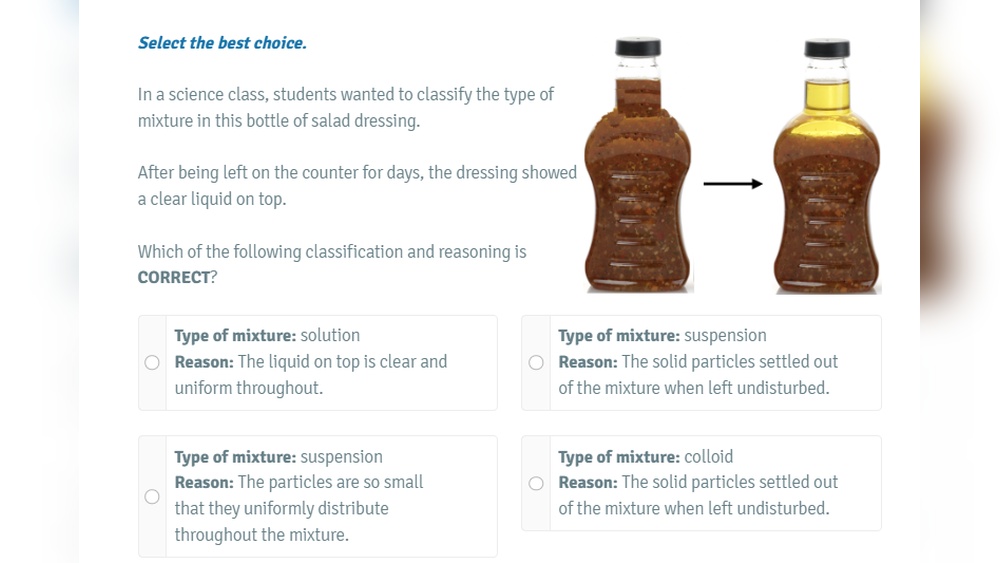
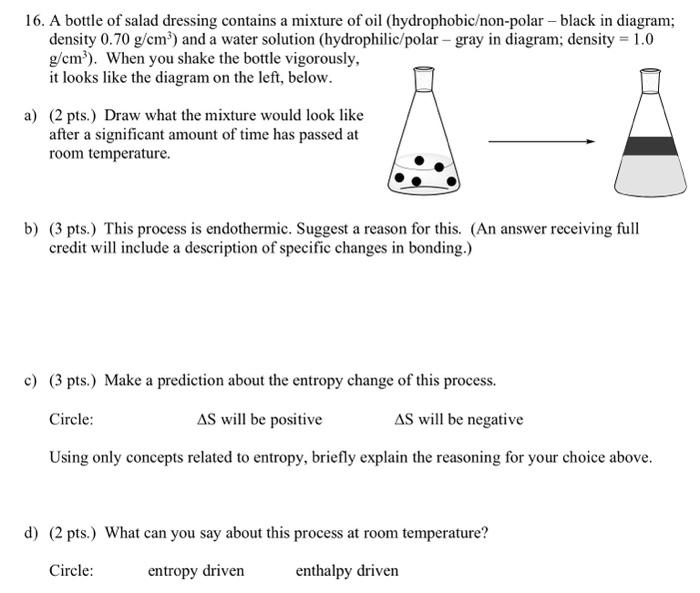
When oil and vinegar are left still, they separate into layers. Oil floats on top because it is less dense than vinegar. This visible separation shows salad dressing is a heterogeneous mixture.
Shaking the dressing mixes the two temporarily. But over time, the oil droplets gather and rise again. This natural layering is a key sign of a suspension, not a solution.
Role Of Emulsifiers
Emulsifiers play a key role in salad dressings by helping oil and water mix. Without emulsifiers, oil and vinegar separate quickly. They allow the dressing to stay smooth and creamy. Understanding how emulsifiers work clarifies whether salad dressing is a mixture or a solution.
How Emulsifiers Work
Emulsifiers have molecules with two ends. One end likes water, the other likes oil. This helps oil droplets stay suspended in water. Emulsifiers surround oil droplets, stopping them from joining together. This creates a stable blend that does not separate easily. They act as a bridge between oil and water.
Common Emulsifiers In Dressings
Many salad dressings use natural or added emulsifiers. Egg yolk is a natural emulsifier often found in classic dressings. Mustard is another common ingredient that helps blend oil and vinegar. Lecithin, found in egg yolk and soy, is a powerful emulsifier. Commercial dressings may also contain added emulsifiers for longer shelf life.
Stability Of Emulsions
Emulsions are mixtures where oil droplets stay spread out in water. Stability means the dressing stays mixed without separating. Emulsifiers improve stability by coating each oil droplet. This stops droplets from merging and floating to the top. A stable emulsion means the dressing looks uniform and tastes consistent.
Differences Between Solutions, Colloids, And Suspensions
Understanding the differences between solutions, colloids, and suspensions helps clarify what salad dressing really is. These three types of mixtures vary mainly by the size of their particles and how evenly these particles spread. This affects how the mixture looks and behaves over time. Knowing these differences also explains why some mixtures separate while others stay uniform.
Particle Size Impact
Solutions have very small particles, usually ions or molecules. These particles are less than 1 nanometer in size. Colloids contain bigger particles, ranging from 1 to 1000 nanometers. Suspensions have the largest particles, bigger than 1000 nanometers. The particle size controls how the mixture behaves. Small particles in solutions dissolve completely. Larger particles in colloids scatter light but do not settle. In suspensions, big particles settle over time.
Homogeneity Vs Heterogeneity
Solutions are homogeneous, meaning they look the same throughout. You cannot see the different parts in a solution. Colloids are also uniform to the naked eye but have tiny particles suspended evenly. Suspensions are heterogeneous; you can see different parts or layers. Over time, suspensions separate because their particles are heavy. Homogeneous mixtures stay blended without shaking. Heterogeneous mixtures need stirring to mix again.
Examples In Food
Salt dissolved in water is a common solution. Milk is an example of a colloid with tiny fat droplets spread evenly. Salad dressing made of oil and vinegar is a suspension. Oil droplets are large and separate from vinegar when left still. Mayonnaise is a colloid because it stays mixed with tiny droplets. These examples show how particle size and mixture type affect food texture and appearance.
Homemade Vs Commercial Dressings
Salad dressings vary widely between homemade and commercial types. Each has unique properties that affect their texture and stability. Understanding these differences helps explain whether dressings are mixtures or solutions.
Homemade dressings often rely on natural ingredients and simple processes. Commercial dressings usually contain additives to improve consistency and shelf life. These factors influence how well the components mix and stay combined.
Blended Dressings With Eggs
Homemade dressings sometimes use eggs to create a smooth texture. Eggs act as natural emulsifiers, helping oil and vinegar blend. This creates a creamy, consistent dressing that looks uniform.
Egg proteins surround oil droplets, preventing them from separating. The result is a stable mixture that stays combined longer. These dressings are thicker and richer than simple oil and vinegar blends.
Natural Emulsification
Natural emulsification occurs when ingredients mix without added chemicals. Ingredients like mustard, honey, or egg yolk help oil and vinegar stay together. They form a temporary bond that slows separation.
Homemade dressings rely on this natural process. Without strong emulsifiers, oil and vinegar separate quickly. This makes the dressing a suspension, not a true solution.
Shelf Life And Storage
Commercial dressings last longer due to preservatives and stabilizers. These ingredients keep the dressing uniform and safe for weeks or months. They prevent the natural ingredients from spoiling fast.
Homemade dressings, especially those with eggs, need refrigeration. They spoil faster and separate if left standing. Proper storage is essential to maintain quality and safety.
Credit: www.chegg.com
Scientific Experiments With Salad Dressing
Scientific experiments reveal fascinating facts about salad dressing. They help explain its nature as a mixture or solution. Simple tests show how ingredients behave together over time.
These experiments highlight the science behind everyday foods. They show how oil, vinegar, and other components interact. Understanding this helps us see why salad dressing separates or stays mixed.
Observing Separation
Place salad dressing in a clear glass and let it sit still. Watch how the oil and vinegar form distinct layers. This separation happens because oil is less dense and does not mix well with vinegar.
The larger particles in the dressing slowly rise or settle. This shows salad dressing is a heterogeneous mixture, not a true solution. The clear division between layers proves the ingredients do not dissolve fully.
Testing Emulsion Stability
Shake the salad dressing vigorously and observe the changes. The oil droplets break into smaller pieces, spreading throughout the vinegar. This creates an emulsion, a type of mixture where one liquid is dispersed in another.
Over time, the emulsion may break, and layers reappear. Adding emulsifiers like mustard or egg yolk can keep the mixture stable longer. These additives help oil and vinegar blend better, delaying separation.
Frequently Asked Questions
Is Salad Dressing A Mixture?
Yes, salad dressing is a mixture. It is a heterogeneous mixture where oil and vinegar separate into layers over time.
Is Salad Dressing A Solution?
Salad dressing is not a solution. It is a heterogeneous mixture or suspension with oil and vinegar separating over time.
Is Salad Dressing A Compound Or Mixture?
Salad dressing is a heterogeneous mixture, often a suspension, where oil and vinegar separate over time. It is not a compound.
Is A Salad A Solution Or Mixture?
A salad is a mixture, not a solution. Its ingredients remain separate and do not dissolve uniformly.
Conclusion
Salad dressing shows clear signs of being a mixture, not a solution. Oil and vinegar separate into layers when left still. This separation proves it is a suspension, a type of heterogeneous mixture. The particles are large enough to settle out over time.
Unlike solutions, salad dressing is not uniform throughout. Understanding this helps explain why shaking dressing mixes it temporarily. Next time you pour dressing, remember it’s a simple mixture, not a true solution.


