
Choosing the right AI sales solution for enterprise forecasting can feel overwhelming. You want a tool that not only fits your business needs but also boosts your sales accuracy and helps you make smarter decisions.
But how do you cut through the noise and find a solution that truly delivers? This guide will walk you through the key factors to consider, so you can confidently evaluate AI sales tools and pick the one that drives real results for your enterprise.
Keep reading to discover what really matters when it comes to forecasting success.
Ai In Sales Forecasting
AI in sales forecasting changes how enterprises predict future revenue. It uses data and algorithms to find patterns and trends. This process helps companies plan better and make smarter decisions.
AI can analyze large amounts of sales data quickly. It also adjusts forecasts based on new information. This makes predictions more reliable than traditional methods.
Impact On Accuracy
AI improves forecast accuracy by reducing human errors. It learns from past sales results and market changes. This helps spot risks and opportunities early. Enterprises can trust AI to provide clearer sales outlooks. Better accuracy leads to smarter resource allocation and goal setting.
Common Machine Learning Models
Several machine learning models power AI sales forecasting. Regression models predict sales based on historical data. Decision trees help classify sales outcomes by various factors. Neural networks capture complex patterns in large datasets. Each model suits different types of sales data and forecasting needs. Choosing the right model enhances forecast quality.
Pipeline Strategy Enhancements
AI improves pipeline strategies by analyzing deal stages and probabilities. It identifies which deals are likely to close and which may stall. Sales teams get alerts to focus on high-value opportunities. AI also suggests the best actions to move deals forward. This leads to a more efficient and predictable sales pipeline.
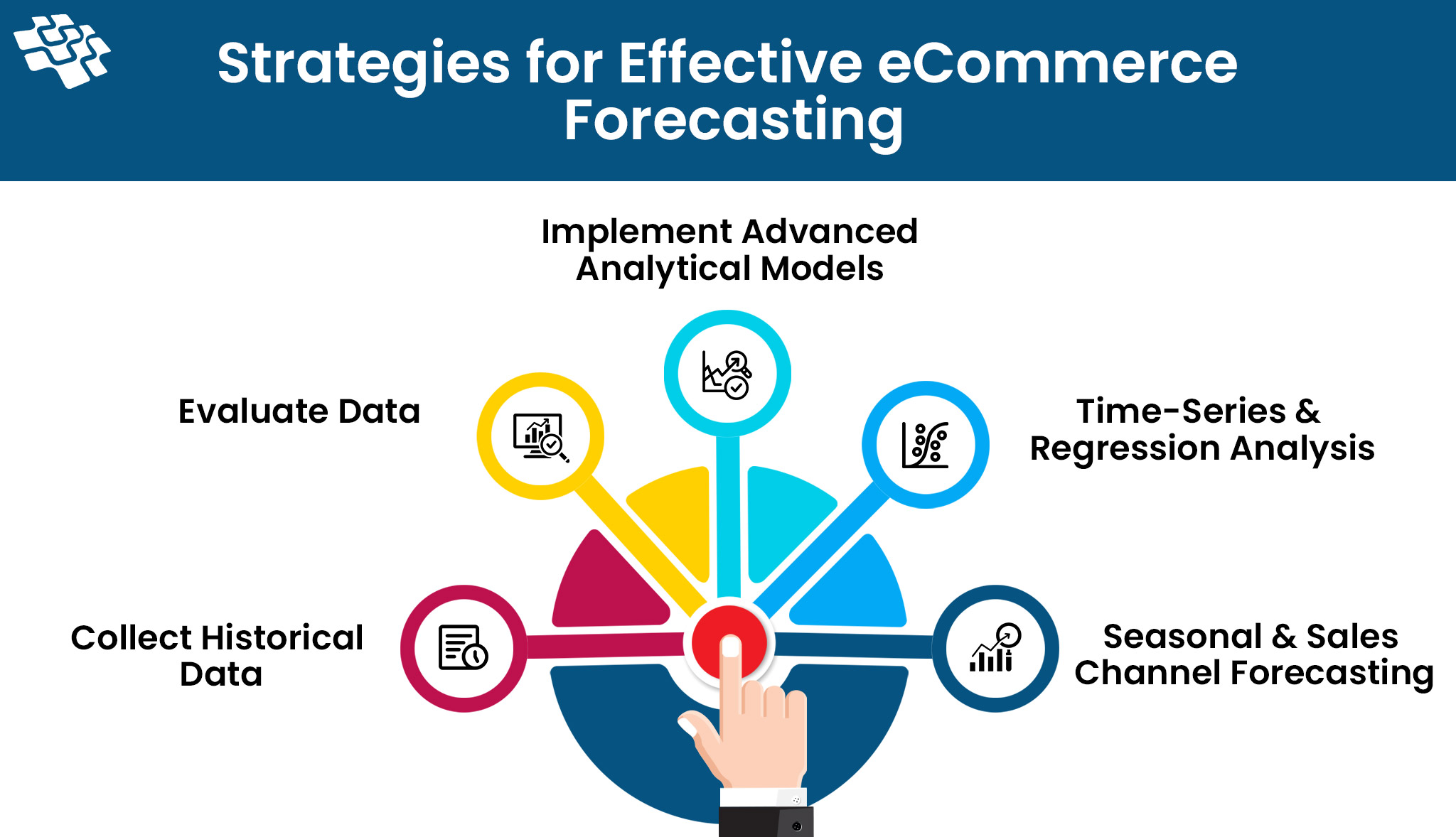
Credit: nextgeninvent.com
Key Features To Evaluate
Choosing the right AI sales solution for enterprise forecasting requires careful analysis. Key features help determine if a tool fits your business needs. Focus on aspects that impact performance, security, and long-term value. Evaluate each feature to ensure the solution supports your sales goals efficiently and securely.
Scalability And Integration
The solution must grow with your business demands. It should handle increasing data and user loads smoothly. Seamless integration with existing CRM and ERP systems is essential. This avoids disruptions and keeps workflows efficient. Check if APIs and connectors support your current software stack.
User Interface And Usability
A simple, clear interface reduces training time and errors. Users should navigate the platform easily and find insights quickly. Look for customizable dashboards and visual reports. The tool must suit different roles, from sales reps to managers. Good usability boosts adoption and daily use.
Data Security And Compliance
Security protects sensitive sales and customer data. Verify encryption standards for data storage and transmission. The solution should comply with industry regulations like GDPR or CCPA. Role-based access controls help limit data exposure. Regular security audits and updates are vital to prevent breaches.
Total Cost And Roi
Consider all costs: licensing, implementation, training, and support. Calculate the expected return on investment over time. Factor in potential savings from improved forecast accuracy and efficiency. Avoid hidden fees or expensive upgrades. Choose a solution that delivers clear financial benefits.
Vendor Support And Reliability
Reliable vendor support ensures smooth operation and quick problem resolution. Look for 24/7 customer service and multiple contact options. Check vendor reputation and user reviews for trustworthiness. Regular software updates and feature improvements reflect commitment. Strong support reduces downtime and improves user satisfaction.
Assessing Current Sales Processes
Assessing current sales processes is the first step in choosing the right AI sales solution for enterprise forecasting. Understanding how your sales team works and where challenges lie helps find a suitable tool. This review also reveals gaps that AI can fill to improve accuracy and efficiency.
Careful analysis of existing workflows, data, and forecasting methods creates a clear picture. This picture guides decision-making about adopting AI technology. The goal is to improve forecasts without disrupting operations.
Identifying Pain Points
Start by spotting problems in your sales process. Look for delays in closing deals or errors in data entry. Notice where your team spends too much time on manual tasks. These issues often lower forecast accuracy and slow decision-making.
Ask your sales staff about challenges they face daily. Their feedback highlights areas where AI can help the most. Common pain points include poor lead tracking and inconsistent follow-ups.
Data Quality And Availability
Good AI depends on good data. Check how complete and accurate your sales data is. Missing or outdated information can lead to wrong forecasts. Ensure your CRM and other systems store reliable data.
Also, verify how easy it is to access this data. AI tools need seamless integration with existing databases. Data must be updated regularly for real-time insights.
Existing Forecasting Methods
Review how your company currently predicts sales outcomes. Identify the tools and techniques used. Some teams rely on spreadsheets, while others use basic software.
Understand the strengths and weaknesses of these methods. This helps compare them with AI solutions. Look for limitations like lack of automation or poor scalability.
Comparing Ai Sales Solutions
Choosing the right AI sales solution for enterprise forecasting requires careful comparison. Enterprises must assess various tools to find one that fits their specific needs. This involves looking at features, customization options, and overall flexibility. A clear understanding helps in selecting a solution that supports accurate forecasting and sales growth.
Top Tools For Enterprises
Several AI sales solutions stand out for enterprise use. These tools offer powerful forecasting capabilities and data analysis. Examples include Salesforce Einstein, Microsoft Dynamics 365 AI, and HubSpot Sales Hub. Each tool targets large businesses with complex sales processes and large data volumes.
Choosing among them depends on how well they handle enterprise-scale data and integrate with existing systems. Reliability and vendor support also matter for long-term success.
Feature Comparison
Key features to compare include predictive accuracy, data integration, and reporting capabilities. Some tools excel in real-time data updates, while others offer deep historical trend analysis. Look for AI models that adapt to changing market conditions automatically.
Also consider user interface simplicity and the ability to generate actionable insights. Tools that provide clear dashboards and alerts help sales teams react faster. Data security features are critical, especially for enterprises handling sensitive information.
Customization And Flexibility
Enterprises need AI sales solutions that adapt to unique business processes. Customizable forecasting models allow better alignment with sales cycles and product lines. Flexible platforms support integration with various CRM and ERP systems.
Look for options to tailor algorithms or add new data sources without heavy technical work. Scalability is crucial as the business grows or changes. A flexible solution reduces implementation time and improves user adoption across teams.
Integrating Ai With Crm Systems
Integrating AI with CRM systems transforms how enterprises forecast sales. It allows businesses to analyze customer data deeply and predict trends more accurately. This integration helps sales teams access insights within their existing workflow. It reduces manual data handling and speeds up decision-making. Understanding this integration is key to choosing the right AI sales solution.
Data Visualization Skills
AI tools generate complex sales data that needs clear presentation. Visual dashboards make data easy to understand for all team members. Look for AI solutions that offer intuitive charts and graphs. Good visualization helps spot patterns and sales opportunities quickly. It supports better communication within the sales team and with management.
Real-time Insight Application
Sales environments change fast, so real-time data is vital. AI integrated with CRM should update forecasts instantly as new information arrives. This keeps sales strategies flexible and accurate. Real-time insights help teams react to customer behavior and market shifts immediately. Choose AI solutions that provide live updates and alerts for best results.
Improving Sales Team Adoption
New technology succeeds only if the sales team uses it well. AI tools must fit naturally into the CRM to avoid disruption. Easy-to-use interfaces and clear benefits encourage adoption. Training and ongoing support also boost confidence in the system. Prioritize AI solutions designed with user experience and team collaboration in mind.
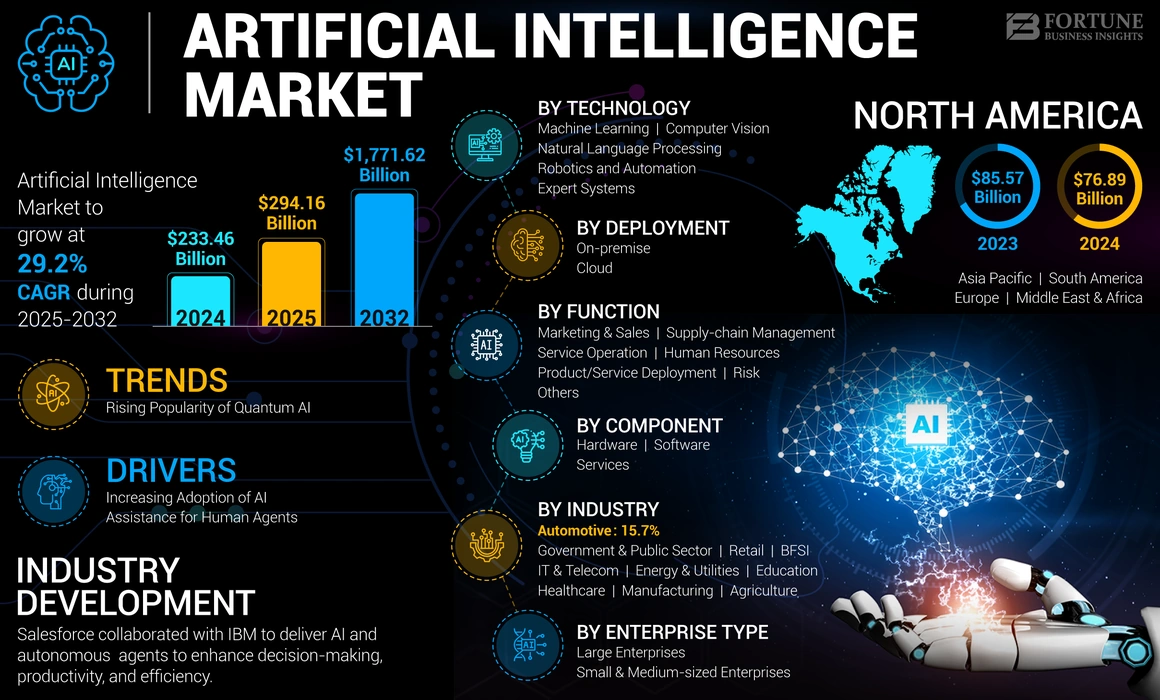
Credit: www.fortunebusinessinsights.com
Handling Complex Sales Cycles
Handling complex sales cycles requires precise tools. AI sales solutions help enterprises navigate these challenges effectively. They analyze many factors that affect forecasting accuracy. Complex sales cycles often involve shifts in demand, multiple decision-makers, and evolving deal probabilities. AI systems can adapt to these conditions, providing reliable forecasts for better decision-making.
Managing Seasonal Fluctuations
Seasonal changes impact sales volumes significantly. AI tools track historical sales data across seasons. They identify patterns and adjust forecasts accordingly. This helps businesses prepare for high and low demand periods. Enterprises avoid stockouts or excess inventory by anticipating shifts. Accurate seasonal forecasting improves resource allocation and revenue prediction.
Multi-stakeholder Approvals
Complex deals often need approval from many stakeholders. AI sales solutions map the approval process and key influencers. They monitor engagement levels and communication timelines. This insight helps forecast deal progress more realistically. Enterprises can spot potential delays and risks early. AI-driven forecasts reflect the true status of multi-approval sales cycles.
Dynamic Probability Scoring
Sales opportunities change over time and need updated evaluation. AI systems assign probability scores based on real-time data. These scores adjust as new information arrives, such as customer behavior or market trends. Dynamic scoring offers a clearer view of deal likelihood. It improves forecast accuracy by reflecting current deal conditions. Enterprises benefit from timely insights to prioritize sales efforts.
Evaluating Forecast Accuracy
Evaluating forecast accuracy is essential for choosing the right AI sales solution. Accurate forecasts help enterprises plan better and reduce risks. This section explains how to measure forecast performance, tackle common challenges, and improve continuously.
Measuring Performance
Measure forecast accuracy using clear metrics. Common metrics include Mean Absolute Error (MAE), Root Mean Square Error (RMSE), and Mean Absolute Percentage Error (MAPE). These numbers show how close forecasts are to actual sales.
Compare predicted sales against real outcomes regularly. Track trends over weeks or months to spot consistent errors. Use dashboards to visualize data and identify patterns easily.
Common Challenges
Forecast accuracy faces many obstacles. Data quality problems like missing or outdated information can reduce accuracy. Sales cycles often change, making past data less useful. External factors such as market shifts or economic changes also affect results.
AI models may overfit or underfit data. Overfitting means the model is too tailored to past data and fails on new data. Underfitting means it misses important patterns. Both reduce forecast reliability.
Continuous Improvement
Improving forecast accuracy is a continuous task. Regularly retrain AI models with fresh data. Monitor performance and adjust model parameters as needed. Incorporate new data sources to enrich predictions.
Gather feedback from sales teams to understand real-world impacts. Use this feedback to refine algorithms. Continuous testing and updating keep forecasts aligned with changing conditions.
Future Trends In Ai Sales Forecasting
AI sales forecasting is evolving quickly. Enterprises must keep up with new trends. These trends help improve accuracy and efficiency. Understanding future developments guides better solution choices.
Exploring advances in AI shows how pattern recognition is improving. Adoption rates in large companies reveal how AI is becoming standard. New use cases emerge, expanding AI’s role in sales forecasting.
Advances In Pattern Recognition
Pattern recognition in AI uses data to find hidden trends. New algorithms analyze large data sets faster and more accurately. This helps predict sales outcomes with less error. AI can detect subtle shifts in customer behavior early. It improves forecasting models by learning from past sales cycles. These advances reduce risks in decision-making.
Ai Adoption In Enterprises
More enterprises are adopting AI for sales forecasting. They use AI to automate data analysis and reduce manual work. AI helps teams focus on strategy instead of data entry. Integration with CRM systems is becoming common. AI tools support collaboration among sales, marketing, and finance. This leads to more aligned and realistic forecasts.
Emerging Use Cases
AI sales forecasting expands beyond traditional predictions. Companies use AI to identify new market opportunities. AI models help prioritize leads and tailor sales pitches. Forecasting now includes customer lifetime value and churn risks. AI also supports scenario planning for better resource allocation. These use cases drive smarter sales strategies.

Credit: www.grandviewresearch.com
Frequently Asked Questions
What Are Key Features Of Ai Sales Forecasting Tools?
AI sales forecasting tools offer features like data integration, real-time analytics, and predictive modeling. They analyze historical data and sales trends to improve forecast accuracy. Scalability and user-friendly interfaces are also important for enterprise use.
How Does Ai Improve Enterprise Sales Forecasting Accuracy?
AI enhances accuracy by processing large datasets and identifying patterns humans might miss. Machine learning models adapt over time, refining predictions based on new data. This leads to more reliable and timely sales forecasts.
Which Criteria Should Enterprises Use To Evaluate Ai Sales Solutions?
Enterprises should assess scalability, data security, integration capabilities, and ease of use. Evaluating vendor support, total cost of ownership, and ROI is also crucial for long-term success.
Can Ai Sales Solutions Integrate With Existing Crm Systems?
Yes, most AI sales forecasting tools offer seamless integration with popular CRM platforms. This allows for real-time data synchronization and enhances sales process efficiency.
Conclusion
Choosing the right AI sales solution is key for enterprise forecasting success. Focus on accuracy, ease of use, and how well it fits your business needs. Evaluate data security, integration options, and vendor support carefully. Test solutions with real sales data to see performance firsthand.
Clear insights help your team plan better and make smart decisions. Keep improving your forecast by reviewing results often. Good tools make sales predictions simpler and more reliable. This approach helps your company stay competitive and prepared for the future.


