
Choosing the right web hosting service is crucial for your online success. You want a provider that’s reliable, affordable, and easy to use.
But with so many options out there, how do you decide? Today, we’re diving into three popular choices: GoDaddy, Bluehost, and Namecheap. Each offers unique benefits that could be perfect for your needs. Whether you’re launching a personal blog or a business website, understanding the strengths and weaknesses of these providers can save you time, money, and headaches.
Stick around to find out which one might be your ideal match, and why making the right choice could be the key to unlocking your website’s full potential. Let’s get started!
Company Background
Choosing the right hosting provider is crucial for your website’s success. Understanding the background of each company helps in making an informed decision. Here, we delve into the histories of GoDaddy, Bluehost, and Namecheap. Each has its unique journey and offerings.
Godaddy Overview
GoDaddy started its journey in 1997. It was founded by Bob Parsons. The company is based in Scottsdale, Arizona. GoDaddy focuses on domain registration and web hosting services. It is known for its extensive marketing campaigns. Over the years, GoDaddy has acquired millions of customers. It boasts a user-friendly interface and diverse hosting options.
Bluehost Overview
Bluehost was established in 2003. Matt Heaton and Danny Ashworth founded it. The company is located in Provo, Utah. Bluehost is a part of the Endurance International Group. It is a preferred choice for WordPress hosting. Many recommend it for its reliability and performance. Bluehost offers a range of hosting plans suitable for different needs.
Namecheap Overview
Namecheap entered the market in 2000. Richard Kirkendall founded the company. It is headquartered in Los Angeles, California. Namecheap focuses on affordable domain registration and hosting services. It is popular among budget-conscious users. Namecheap is known for its commitment to privacy and security. It provides efficient customer support and straightforward pricing.
Pricing Structures
Understanding the pricing structures of hosting providers is crucial. It helps in choosing the right service for your needs. Godaddy, Bluehost, and Namecheap offer different pricing plans. Each has its own unique features and benefits. Let’s dive into their pricing structures to see which suits you best.
Godaddy Pricing
Godaddy offers competitive pricing plans. Their basic plan starts at a low monthly rate. This makes it affordable for beginners. They also offer discounts for longer commitments. Additional features may cost extra. It’s important to review these before committing.
Bluehost Pricing
Bluehost provides several pricing tiers. The basic plan is budget-friendly. It includes a free domain for the first year. They offer a 30-day money-back guarantee. This provides peace of mind for new users. Advanced plans come with more resources. Perfect for growing businesses.
Namecheap Pricing
Namecheap is known for its low-cost plans. Their basic plan is very affordable. This makes it ideal for small websites. They offer a free domain with some plans. Renewal rates are transparent. You will know what to expect in the future. They also provide various add-ons at reasonable prices.
Hosting Features
Godaddy offers flexible plans with easy-to-use tools. Bluehost stands out with robust security and 24/7 support. Namecheap provides affordable pricing and free domain registration. Each hosting provider presents unique features tailored to different needs and budgets.
Web hosting plays a crucial role in determining your website’s performance and user experience. Whether you’re a seasoned blogger or a business owner, selecting the right hosting service can be overwhelming. Godaddy, Bluehost, and Namecheap are popular options, each with unique hosting features. Understanding these features can help you make an informed decision and optimize your website’s functionality.Godaddy Hosting Features
Godaddy is known for its user-friendly interface and flexible hosting options. One standout feature is its comprehensive website builder, which simplifies the creation process for beginners. Their hosting plans come with unmetered bandwidth, ensuring your website handles traffic spikes without a hitch. They also offer daily backups, which can be a lifesaver when your site faces unexpected glitches. Another noteworthy aspect is their 24/7 customer support. This ensures you have help available whenever you encounter technical issues. Have you ever found yourself stuck at midnight trying to fix a website issue? Godaddy’s support might be the knight in shining armor you need.Bluehost Hosting Features
Bluehost is renowned for its seamless WordPress integration. If you’re a WordPress enthusiast, this feature can streamline your website management. They offer a free domain for the first year, which can be a cost-saving perk for startups. Additionally, their enhanced security features, including free SSL certificates, ensure that your website is safe from cyber threats. Their resource protection feature is particularly useful for shared hosting plans. It helps ensure that your site’s performance remains stable even if other sites on the same server experience high traffic. It’s like having a reliable neighbor who respects your space!Namecheap Hosting Features
Namecheap stands out for its affordability without compromising on quality. They offer free website migration, which can be a game-changer if you’re switching from another host. Their hosting plans come with a 100% uptime guarantee, promising that your website will always be accessible to your audience. This is crucial for maintaining your site’s credibility and user trust. The inclusion of cPanel in their hosting plans makes managing your website easier and more intuitive. If you’re someone who loves having control over every aspect of your website, Namecheap’s features might pique your interest. Have you considered how much control you want over your site’s backend? Choosing the right hosting features depends on your specific needs and goals. Which of these features resonates most with your website’s vision?
Credit: themeisle.com
Domain Services
Godaddy offers versatile domain services with easy management tools. Bluehost provides reliable hosting packages and domain services. Namecheap excels in affordability, offering competitive domain registration prices.
Choosing the right domain service is crucial for your online presence. Your domain name is not just an address; it’s your brand’s identity on the web. Whether you’re a small business owner, a blogger, or launching an e-commerce platform, understanding the domain services offered by popular providers like GoDaddy, Bluehost, and Namecheap can help you make an informed decision. ###Godaddy Domain Services
GoDaddy is renowned for its extensive range of domain services. With over 84 million domains under management, it’s a giant in the industry. The platform offers a user-friendly interface that makes searching for and registering domains straightforward. You can also benefit from GoDaddy’s domain backordering service, which allows you to attempt to acquire a domain when it becomes available. Their domain appraisal tool helps you understand the value of your domain. Additionally, GoDaddy provides domain privacy protection to keep your personal information secure. ###Bluehost Domain Services
Bluehost primarily shines in web hosting, but their domain services are solid and reliable. When you purchase hosting, they often include a free domain for the first year. This can be a great money-saving feature for newcomers. Bluehost’s domain management is straightforward, allowing easy updates to DNS settings and domain renewal management. They also offer add-ons like domain privacy and protection, which keep your information private from WHOIS database searches. One downside, however, is the limited domain extension options compared to others. ###Namecheap Domain Services
Namecheap stands out for its affordability and transparent pricing. With Namecheap, you get free WHOIS privacy protection for life, which is a notable bonus. This is a valuable feature that many other providers charge for. The platform has an intuitive interface, making it easy for anyone to manage domains. Namecheap also offers a wide variety of TLDs (Top-Level Domains), giving you more creative freedom in selecting your web address. Their domain transfer service is efficient and often comes with promotional discounts. So, what’s essential for your domain needs? Is it the cost, the range of services, or the user experience? Your choice might hinge on these factors. Whatever your priority, understanding each provider’s strengths can guide you to the best decision for your online venture.Customer Support
When choosing a hosting provider, one of the most critical factors is customer support. Imagine you’re launching your website, and suddenly, things go wrong. It’s crucial to have a reliable support system to help you navigate these challenges. Let’s dive into how Godaddy, Bluehost, and Namecheap measure up in terms of customer support.
Godaddy Support
Godaddy offers customer support through various channels, including phone and live chat. You might appreciate their 24/7 availability, ensuring help is always just a call away. Many users find their phone support particularly effective, with representatives ready to assist you with technical issues. However, some have experienced longer wait times during peak hours.
Their online help center is quite comprehensive. It’s packed with articles and tutorials that can guide you through common problems. If you’re the type who prefers solving issues independently, you might find this resource valuable.
Bluehost Support
Bluehost is known for its responsive support team. They offer 24/7 support through live chat, phone, and email. Many users praise their live chat for being quick and efficient. Imagine needing immediate assistance; their chat option can be a lifesaver.
One unique aspect of Bluehost’s support is their focus on WordPress. If your site runs on WordPress, their experts are well-equipped to assist with specific WordPress-related issues. This specialized support can be a game-changer for you if WordPress is your platform of choice.
Namecheap Support
Namecheap stands out with its detailed knowledge base and ticketing system. While they offer live chat, their primary support channel is through tickets. This might be ideal for you if you prefer detailed, written communication. You can expect thorough answers with this method.
Their live chat isn’t available 24/7, which might be a downside if you need immediate help during odd hours. However, many users find their support team to be knowledgeable and patient. If you’re new to hosting, you might appreciate their willingness to guide you through complex issues.
Have you ever wondered how much support quality impacts your overall hosting experience? Your choice can make a difference between a smooth online journey and a frustrating one. Consider your preferences and needs when evaluating these providers.

Credit: www.youtube.com
Performance And Reliability
When choosing a web hosting provider, performance and reliability are key. Your website needs to load quickly and stay online. Slow speeds or downtime can hurt your site’s success. Let’s compare the performance of three popular hosts: GoDaddy, Bluehost, and Namecheap.
Godaddy Performance
GoDaddy promises fast loading times with its robust infrastructure. They offer a 99.9% uptime guarantee. This ensures your site remains accessible. Their servers are globally distributed for better speed. GoDaddy uses solid-state drives (SSDs) for quicker data access. This enhances overall site performance.
Bluehost Performance
Bluehost is known for its reliable performance. Their servers deliver consistent speed. They also offer a 99.9% uptime guarantee. Bluehost uses advanced technologies to optimize loading times. SSD storage is standard, improving data retrieval speed. Their platform is built for WordPress, ensuring smooth operation.
Namecheap Performance
Namecheap provides a balance between speed and cost. They maintain a 100% uptime guarantee, promising high reliability. Namecheap’s data centers use modern technology. This includes SSDs for faster site performance. Their servers are strategically located for reduced latency.
User Experience
Godaddy, Bluehost, and Namecheap offer varied user experiences. Godaddy provides a straightforward interface. Bluehost excels with its intuitive design. Namecheap stands out with its user-friendly navigation. Each platform caters to different user needs, making it essential to consider individual preferences.
When choosing a web hosting provider, user experience is a crucial factor that can significantly impact your website’s success. A smooth and intuitive user experience ensures you spend less time navigating complex interfaces and more time focusing on your website’s content and growth. Let’s break down how GoDaddy, Bluehost, and Namecheap stack up in terms of user experience.Godaddy User Experience
GoDaddy offers a user-friendly interface that caters well to both beginners and seasoned professionals. The dashboard is clean and intuitive, making it easy for users to manage their domains and hosting services without getting overwhelmed. Have you ever tried setting up a website at midnight, half-asleep, and found yourself grateful for a simple interface? That’s the GoDaddy experience. Their customer service is available 24/7, which is a lifesaver when you encounter unexpected issues. However, some users might find their upselling tactics a bit too frequent. This can be distracting if you’re just looking to manage your website without additional services being pushed.Bluehost User Experience
Bluehost’s user interface is straightforward and integrates seamlessly with WordPress, making it a top choice for bloggers and small business owners. The setup process is quick, helping you get your site live without unnecessary delays. Imagine finishing your website setup in the time it takes to brew a cup of coffee—Bluehost makes it possible. Their customer support is responsive, and the knowledge base is comprehensive, providing solutions to common issues. Yet, some users have noted that the interface could benefit from a modern refresh to enhance the overall feel and navigation.Namecheap User Experience
Namecheap prides itself on its simplicity and affordability, offering an uncluttered interface that is easy to navigate. It’s perfect for users who prefer a no-frills approach to managing their domains and hosting. Have you ever appreciated a minimalist design that just works? Namecheap embodies that philosophy. Their customer support is commendable, with a live chat feature that resolves queries efficiently. However, the absence of phone support might be a downside for those who prefer speaking directly to a support representative. How important is phone support to you when troubleshooting a problem? In choosing between GoDaddy, Bluehost, and Namecheap, your personal preferences and priorities will guide you toward the best user experience. Consider what matters most to you: simplicity, support, or seamless integration.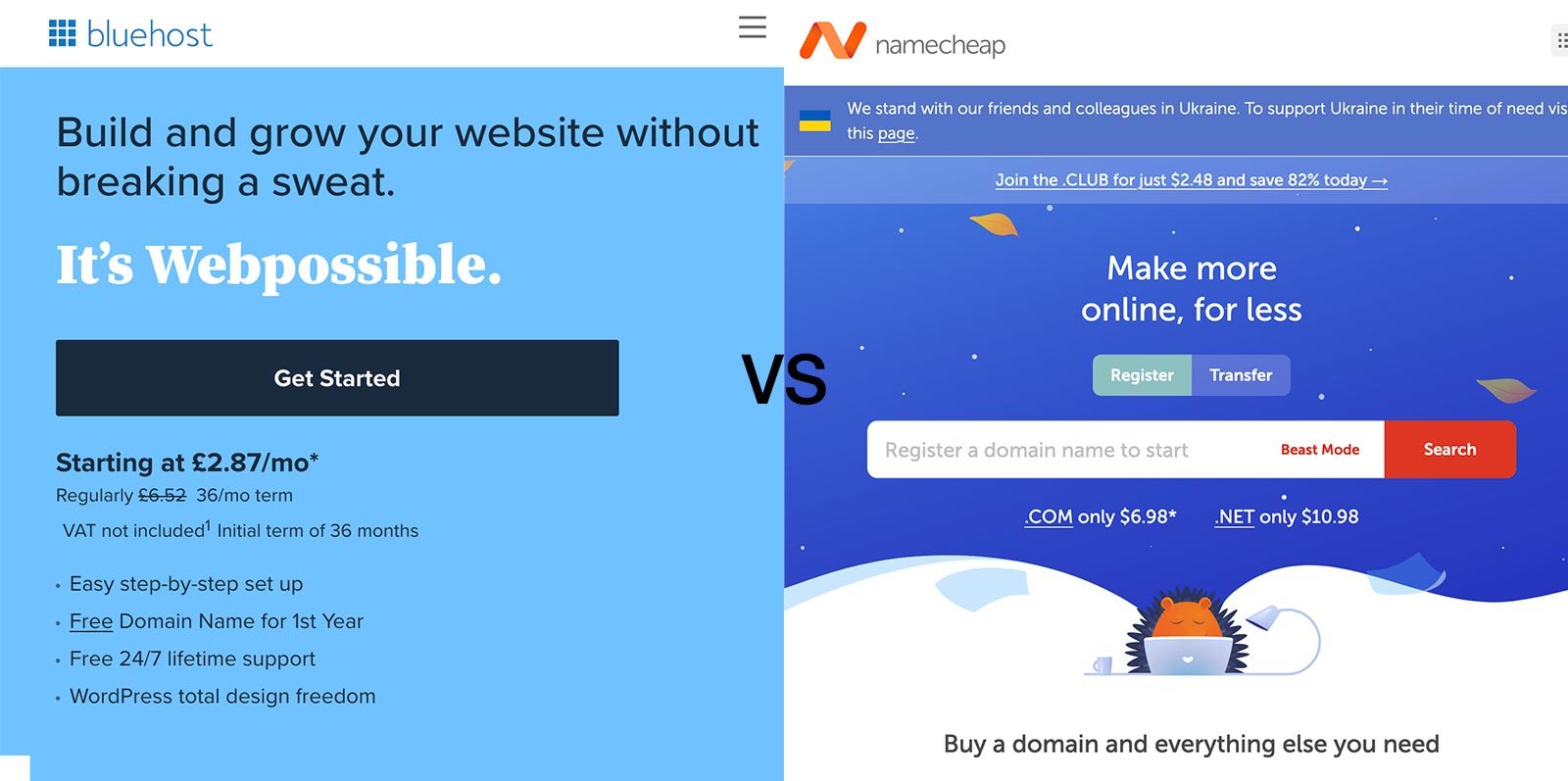
Credit: winningwp.com
Security Measures
Godaddy, Bluehost, and Namecheap prioritize protecting customer data. Each offers SSL certificates and advanced firewall systems. Strong encryption and regular security updates ensure safe online experiences.
Security is crucial for any online business. Protecting your website ensures data safety. Choosing a hosting provider with strong security features is essential. In this comparison, we look at Godaddy, Bluehost, and Namecheap. Understand their security measures to make an informed choice.Godaddy Security
Godaddy offers robust security features. It provides SSL certificates to encrypt data. This keeps information safe from hackers. Their SiteLock feature scans for malware daily. It detects threats early and acts swiftly. Godaddy also has DDoS protection. This safeguards against traffic overload attacks. With a security team available 24/7, Godaddy ensures constant monitoring. Regular backups are part of their service, adding extra safety.Bluehost Security
Bluehost prioritizes user security. They offer free SSL certificates with hosting plans. This encrypts data between the server and visitor. Bluehost employs advanced firewalls for protection. These firewalls block malicious access attempts. Their CodeGuard feature provides automatic backups. It allows easy restoration if data loss occurs. Bluehost also uses SpamExperts for email protection. This stops spam before it reaches your inbox. Security experts are available round-the-clock for assistance.Namecheap Security
Namecheap focuses on keeping websites secure. They offer free SSL certificates to secure connections. This ensures data remains private. Their domain privacy feature protects personal information. Namecheap also provides WhoisGuard for added privacy. Their PremiumDNS service offers reliable DNS protection. Namecheap employs two-factor authentication to secure accounts. Regular security updates keep vulnerabilities in check. Their support team is always ready to assist with security concerns.Pros And Cons
Godaddy offers strong customer support but can be pricey. Bluehost provides reliable hosting and is beginner-friendly. Namecheap is budget-friendly with solid domain services but lacks advanced hosting features. Each platform has unique strengths and weaknesses, making them suitable for different needs.
Choosing the right web hosting service can be a game changer for your website. As you weigh your options between Godaddy, Bluehost, and Namecheap, understanding their pros and cons is crucial. Each platform has unique offerings that cater to different needs, and knowing these can help you make a more informed decision. Whether it’s pricing, performance, or customer support, consider what aligns with your goals and budget.Godaddy Pros And Cons
Pros: – Wide Range of Services: Godaddy offers more than just hosting. You can register domains, use their website builder, and access marketing tools all in one place. This can save you time and streamline your online presence. – User-Friendly Interface: If you’re new to website management, Godaddy’s interface is easy to navigate. You can quickly find what you need, making the setup process less daunting. Cons: – Pricing: Godaddy’s initial prices are attractive, but renewal rates can be high. Be sure to check the long-term costs to avoid surprises. – Performance Variability: Some users report inconsistent performance, particularly with shared hosting plans. If your site requires high uptime, this could be a concern.Bluehost Pros And Cons
Pros: – Strong WordPress Integration: Bluehost is officially recommended by WordPress. If you plan to use WordPress, this seamless integration could be beneficial. – 24/7 Customer Support: You get reliable support whenever you need it. This can be a lifesaver if you encounter technical issues. Cons: – Add-ons: Bluehost’s basic plans might seem cheap, but essential features often come as add-ons. This can increase your overall cost unexpectedly. – Limited Customization: Advanced users might find Bluehost restrictive. If you need specific configurations, you might feel limited.Namecheap Pros And Cons
Pros: – Affordable Pricing: Namecheap is known for competitive pricing. If budget is your priority, Namecheap offers quality hosting without breaking the bank. – Domain Services: They excel in domain registration and management. If you’re looking to manage multiple domains, Namecheap makes it simple. Cons: – Basic Features: Namecheap’s hosting features might be too basic for some users. If you need advanced functionalities, you might need to look elsewhere. – Customer Support: While their support is generally good, response times can vary. If you encounter an urgent issue, this might be frustrating. How important are these factors for you? Consider your priorities and how each service aligns with them. Reflect on your experiences, or imagine future scenarios. Are you willing to pay more for better performance? Or do you prefer sticking to a budget with fewer features? Your choice will shape your online journey.Final Verdict
Choosing the right domain and hosting provider is crucial. It impacts your website’s performance and security. Godaddy, Bluehost, and Namecheap are popular choices. Each has unique strengths and challenges. Let’s evaluate them to reach a final verdict.
Godaddy: Comprehensive Offerings
Godaddy provides a wide range of services. This includes domain registration and hosting solutions. Their user-friendly interface appeals to beginners. They offer strong customer support. Pricing can be higher compared to others. It suits those seeking an all-in-one platform.
Bluehost: Reliable Performance
Bluehost is known for reliability and performance. It is recommended by WordPress. This makes it ideal for bloggers and small businesses. They offer competitive pricing and solid uptime. Customer service is responsive. Some users may find their control panel complex.
Namecheap: Cost-effective Choice
Namecheap is famous for affordable domain registration. Their hosting services are budget-friendly. They provide free domain privacy protection. This appeals to security-conscious users. The interface is straightforward. Some features are limited compared to others. It’s ideal for cost-sensitive individuals.
Evaluating Your Needs
Assess your specific requirements. Consider your budget and technical skills. Determine the level of support you need. Each provider excels in different areas. This will guide your decision.
Final Thoughts
Godaddy suits those seeking comprehensive offerings. Bluehost is perfect for reliability and WordPress integration. Namecheap is best for budget-conscious users. Choose based on your priorities and needs.
Frequently Asked Questions
Is Bluehost Or Godaddy Better?
Bluehost is better for WordPress hosting and customer support. GoDaddy offers versatile services and domain registration. Choose Bluehost for WordPress-focused needs. Opt for GoDaddy if you need a wider range of services. Both have competitive pricing and reliable uptime. Evaluate based on your specific requirements.
Which Is Better, Namecheap Or Bluehost?
Namecheap offers affordable domain registration and decent hosting plans. Bluehost is known for reliable hosting and excellent customer support. Choosing between them depends on specific needs like budget and features. Both are popular and reputable, but Bluehost often suits beginners seeking comprehensive support.
Which Is Better, Godaddy Or Namecheap?
GoDaddy offers extensive services and 24/7 support, ideal for diverse needs. Namecheap excels in affordable domains and user-friendly interface. Choose based on budget and specific requirements. Both are popular and reliable in the domain and hosting market.
Conclusion
Choosing the right hosting provider is crucial. GoDaddy, Bluehost, and Namecheap each offer unique features. GoDaddy excels in domain registration and has a broad range of services. Bluehost provides excellent support and is great for WordPress. Namecheap is known for affordability and straightforward services.
Consider your needs and budget. Are you looking for ease of use? Or perhaps strong customer support? Each option has strengths. Weigh your priorities carefully. The right choice boosts your website’s success. Make an informed decision and ensure your website thrives.


