
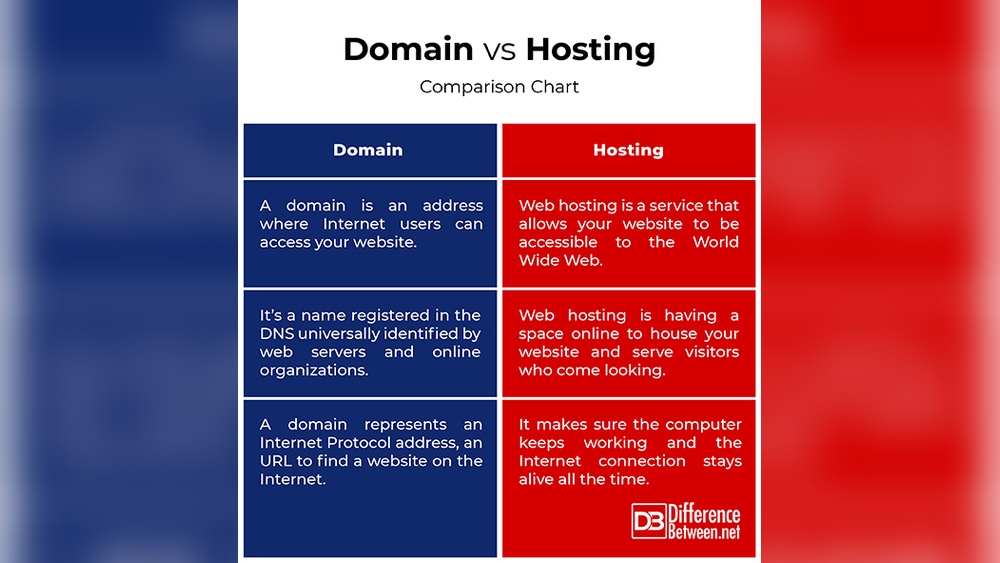
Are you confused about what makes domain registration different from domain hosting? You’re not alone.
Many people mix these two up, but understanding the difference is key to getting your website up and running smoothly. Knowing how domain registration and domain hosting work will save you time, money, and frustration. Keep reading, and by the end, you’ll have a clear picture of what each does—and how they work together to put your website online.
Domain Registration Basics
Understanding domain registration is key to building a website. It is the first step to having your own online address. This process lets you claim a unique name on the internet. Without domain registration, visitors cannot find your site easily. Let’s explore the basics of domain registration and how it works.
Purpose Of Domain Registration
Domain registration gives you the right to use a specific website name. It helps people find your website by typing that name in their browser. This name replaces complex IP numbers, making your site easier to remember. Registering a domain shows that you own that name for a set time.
How Domain Registration Works
You choose a domain name and check if it is available. If free, you register it through a domain registrar. This process links your chosen name to your contact information. The registrar updates a central database called the WHOIS directory. This ensures your domain name points to your website’s location.
Choosing A Domain Name
Pick a name that is short, simple, and easy to spell. Use words related to your business or topic. Avoid numbers and special characters to reduce confusion. Consider popular extensions like .com or .net for better recognition. A clear domain name helps visitors remember and trust your site.
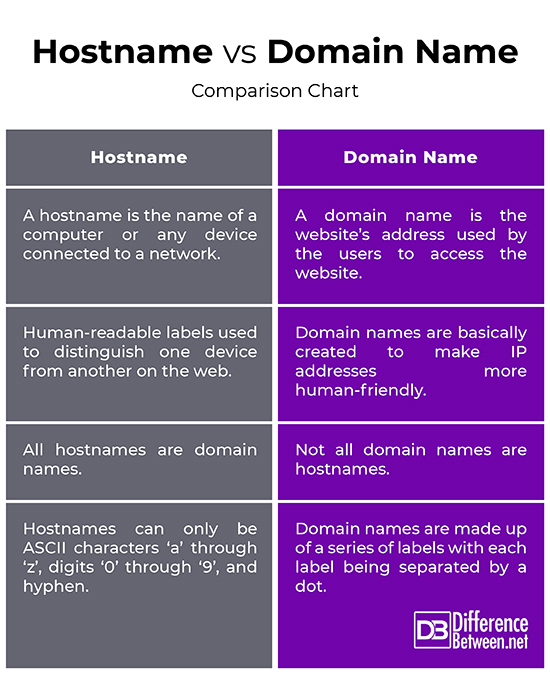
Credit: www.differencebetween.net
Domain Hosting Essentials
Understanding domain hosting is key to running a website. It is different from domain registration. Domain hosting is about where your website lives online. Without hosting, your website cannot be seen on the internet.
Domain hosting provides the space and technology needed to make your website accessible. It stores all your website files and data. Hosting keeps your site running and reachable 24/7.
Role Of Domain Hosting
Domain hosting stores your website’s files on special computers called servers. These servers connect your site to the internet. Hosting ensures your website loads fast and works properly.
It also manages the traffic your site receives. Good hosting keeps your site safe from hackers and technical problems. Without hosting, your domain name would not show any website content.
Types Of Hosting Services
There are different hosting types for different needs. Shared hosting means many websites share one server. It is affordable but may be slower if traffic is high.
VPS hosting gives you a virtual private server. It offers more power and control than shared hosting. Dedicated hosting means you have a whole server for your site. It is best for large websites with many visitors.
Cloud hosting uses many servers to keep your site online. It offers flexibility and can handle traffic spikes easily.
How Hosting Supports Websites
Hosting keeps your website live and available anytime. It delivers your web pages to visitors quickly. Hosting also stores your site’s databases and emails.
Good hosting provides backup and security features. It helps your website load smoothly on all devices. Hosting companies often offer tools to manage your website easily.
Key Differences Between Domain Registration And Hosting
Understanding the key differences between domain registration and hosting helps in managing a website better. Both are essential but serve different purposes. Domain registration involves securing a website name. Hosting provides the space where the website lives online.
Ownership Vs Service
Domain registration gives you ownership of a website name. You control the domain and decide how to use it. Hosting is a service that stores your website files. It makes your site accessible on the internet. You do not own the hosting space; you rent it.
Duration And Renewal
Domain registration lasts for a set period, usually one year. You must renew the domain to keep ownership. Hosting also requires regular renewal, often monthly or yearly. If you stop paying for hosting, your website goes offline. Both need timely renewal to avoid losing access.
Cost Structures
Domain registration costs vary by domain type and registrar. It is usually a fixed annual fee. Hosting costs depend on the type of service and resources needed. Shared hosting is cheaper; dedicated hosting costs more. Budget for both to keep your website live and secure.

Credit: pediaa.com
How Domain Registration And Hosting Work Together
Domain registration and hosting are two parts of building a website. They work closely to make your site visible online. Domain registration gives your website a name. Hosting provides the space where your website lives. Both must connect for your site to appear on the internet.
Linking Domain To Hosting
After registering a domain, you link it to your hosting account. This connection tells browsers where to find your website. Without this link, your domain name won’t show your web pages. Linking involves updating settings at your domain registrar.
Dns And Its Function
DNS stands for Domain Name System. It acts like an address book for the internet. DNS matches your domain name to your hosting server’s IP address. This way, when someone types your domain, the DNS guides them to your website.
Managing Both Services Efficiently
Keep your domain registration and hosting details organized. Use strong passwords and keep contact info updated. Monitor renewal dates to avoid service interruptions. Managing both well ensures your website stays online without issues.
Common Misconceptions
Many people confuse domain registration with domain hosting. These are two separate services but often thought to be the same. This confusion can lead to wrong decisions when setting up a website. Clearing these misunderstandings helps in managing websites better.
Domain Registration Equals Hosting
Some believe buying a domain means hosting comes with it. This is false. Domain registration only reserves your website name. Hosting stores your website files online. You must buy hosting separately to make your site visible.
Free Hosting And Domain Offers
Offers of free hosting and domains seem attractive. Usually, these offers have limitations like slow speeds or ads. Free hosting may not support important features. Paid services provide better reliability and security.
Impact On Website Performance
Many think domain registration affects website speed. It does not. Hosting quality controls site performance. A good host ensures fast loading and uptime. Poor hosting leads to slow, unreliable websites.
Tips For Choosing Providers
Choosing the right providers for domain registration and hosting is important. It affects your website’s performance and security. Some providers offer better support and features than others. Use these tips to find the best fit for your needs.
Evaluating Domain Registrars
Check the registrar’s reputation and customer reviews. See how easy it is to manage your domain. Look for features like domain privacy and transfer options. Compare prices but avoid the cheapest if quality is low. Good registrars offer clear policies and strong security.
Selecting Reliable Hosting Providers
Choose hosts with high uptime and fast servers. Read user feedback about their support team. Consider the types of hosting they offer, like shared or VPS. Make sure they provide backups and security measures. Reliable hosts keep your website online without issues.
Bundled Services Pros And Cons
Some companies sell domain registration and hosting together. This can be easy for beginners to manage. Bundles often come with discounts or simple setup. But, if one service fails, both can be affected. Separate providers give more flexibility and control.
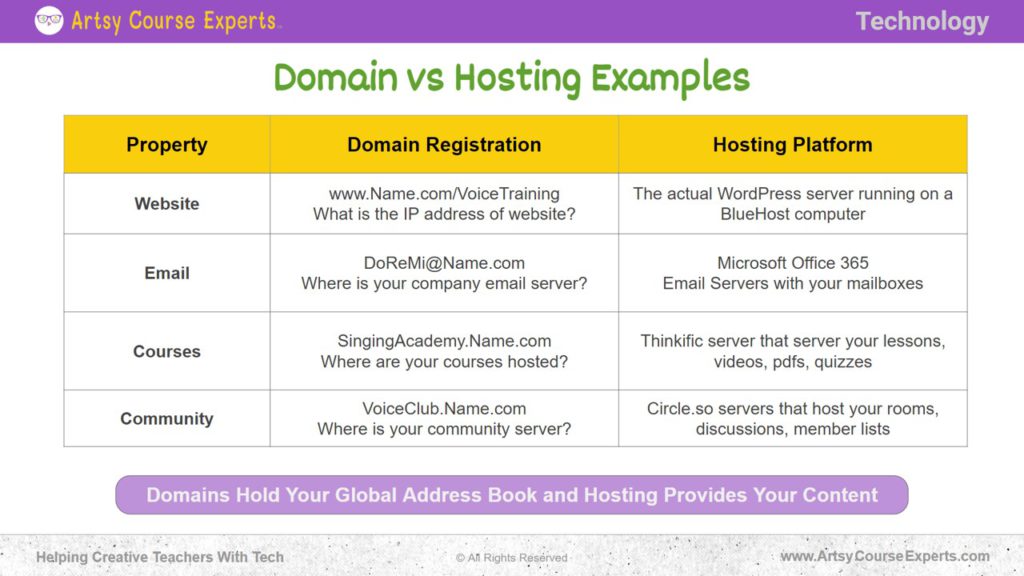
Credit: www.artsycourseexperts.com
Frequently Asked Questions
What Is Domain Registration In Simple Terms?
Domain registration is the process of reserving a website name. It allows you to own a unique web address like example. com. This is done through a domain registrar and is essential before launching a website.
How Does Domain Hosting Differ From Domain Registration?
Domain hosting stores your website’s files on servers, making your site accessible online. Domain registration only reserves the website name. Hosting is required to display your website content to visitors.
Can I Register A Domain Without Hosting?
Yes, you can register a domain without hosting. Registration secures your website name. However, without hosting, your site will not be accessible on the internet.
Is Domain Hosting Mandatory For Website Operation?
Yes, hosting is mandatory to run a website. It provides server space for your website files. Without hosting, your domain name cannot display content online.
Conclusion
Domain registration and domain hosting serve different roles in your website’s life. Domain registration gives your website a unique name on the internet. Domain hosting stores your website’s files and makes them visible online. Both are needed to build a website that people can visit.
Understanding this difference helps you make smarter choices for your site. Choose your domain name carefully and pick reliable hosting. This way, your website will be easy to find and fast to load. Simple steps, big results.


