
Are you looking to host your website but feeling overwhelmed by the choices? You’re not alone.
With terms like “cloud hosting” and “web hosting” thrown around, it can be confusing to figure out what’s best for your needs. These two types of hosting sound similar but offer very different benefits. Understanding the distinctions between them can be the key to making a smart decision for your online presence.
We’ll break down the differences in simple terms, helping you to make an informed choice. Stick around, because this could be the pivotal moment that propels your website to new heights.
Cloud Hosting Basics
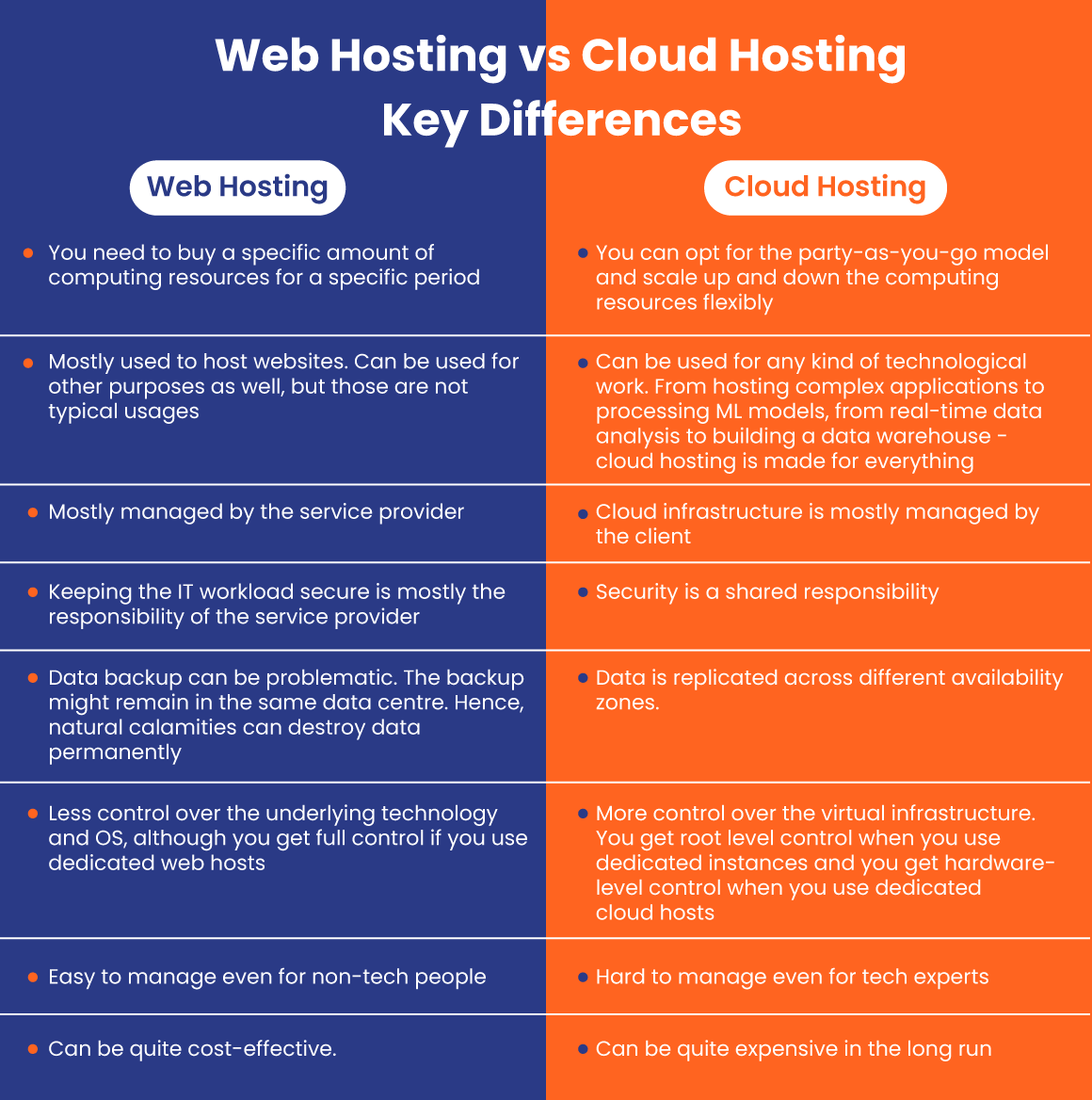
Cloud hosting uses many servers to keep websites working. It spreads the load so that if one server fails, others help. This makes websites faster and more reliable. Cloud hosting scales easily. Users can add more resources when needed. It is also cost-effective. You only pay for what you use. Data is stored in different places. This keeps it safe. Security is a big part of cloud hosting. Many providers offer extra protection for data.
Websites are stored on multiple servers. These servers are connected. When you visit a site, the network picks the best server. This server sends the website to your computer. If one server is busy, another helps. This keeps sites running smoothly. Cloud servers can grow or shrink. This depends on what the site needs. If a site gets busy, it uses more servers. If it is quiet, it uses less. This makes cloud hosting flexible.
Credit: www.silvertouch.com
Web Hosting Essentials
Web hosting makes your website visible online. It provides storage space for your website’s files. Web hosting includes bandwidth, which lets people see your site. You also get a domain name. This is your web address. Most web hosts offer technical support. They help you solve website issues. Hosting plans can be shared or dedicated. Shared hosting means you share a server with others. Dedicated hosting gives you a private server. Each type has different features and costs. Choose the one that fits your needs best.
A web host stores your files on a server. This server connects to the internet. When someone types your domain, the server shows your site. Web hosting uses different software to manage this. The software keeps your site secure and fast. It also manages traffic. More traffic can slow your site. Good hosts handle traffic well. They make sure your site stays online. They also provide backups. Backups help recover your site if it crashes. Web hosting is like renting space online. It keeps your website live and working.
Performance And Reliability
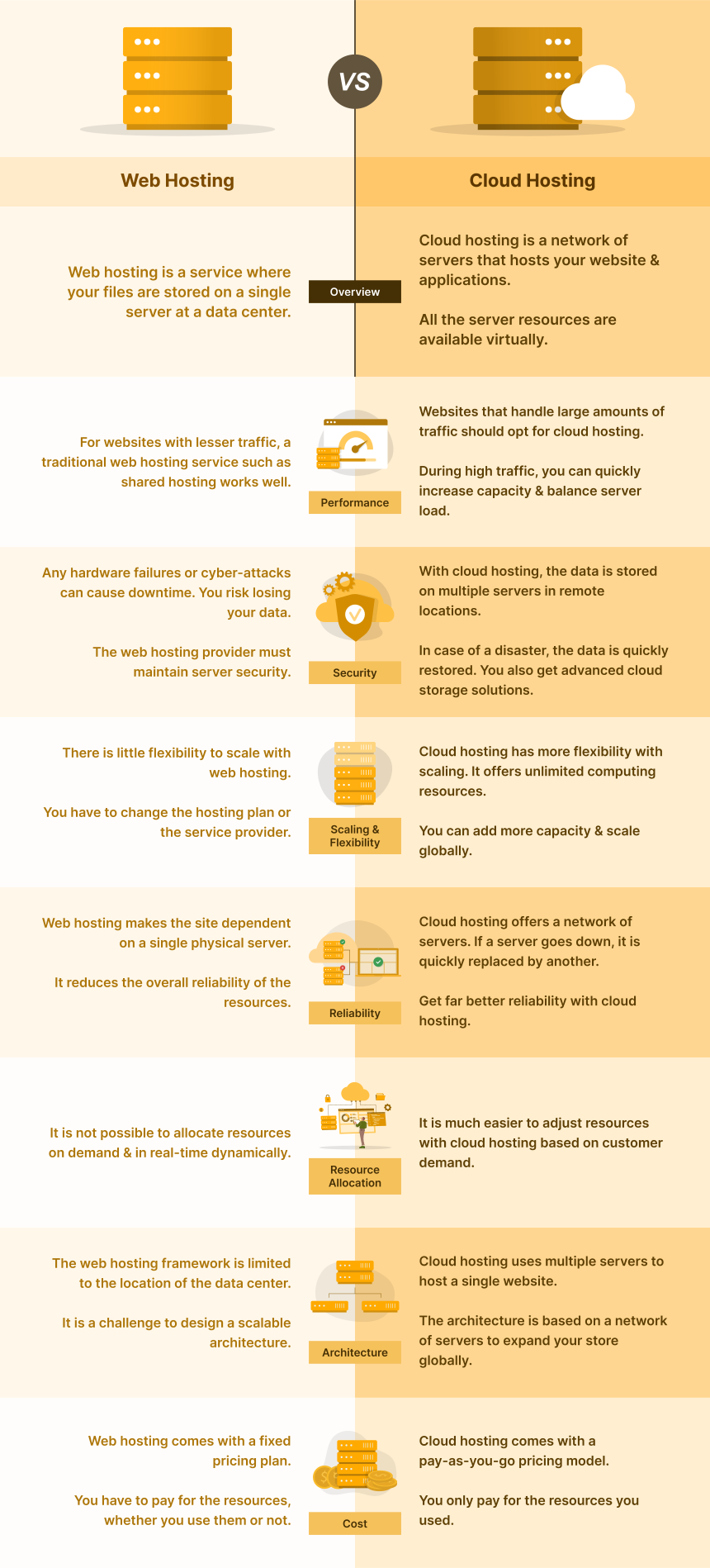
Cloud hosting grows easily with your needs. Add more resources anytime. Web hosting has fixed limits. You might need to switch plans. Cloud hosting is flexible. It adjusts to traffic changes. Web hosting can struggle with high traffic. Performance might drop.
Cloud hosting reduces downtime. It uses multiple servers. If one fails, others keep working. Web hosting depends on one server. If it fails, your site goes down. Cloud backup is automatic. Your data stays safe. Web hosting often needs manual backups. You must remember to do it.
Credit: www.cloudpanel.io
Cost Comparison
Cloud hosting often uses a pay-as-you-go model. You pay for what you use. This can be cheaper for small sites. But, it can become costly for big sites. Web hosting usually has fixed monthly fees. This makes it easy to budget. Predictable costs can be helpful. Yet, you pay even if you don’t use all resources.
Over time, costs can add up. Cloud hosting might seem cheap at first. But, costs can increase with more data. Web hosting offers fixed rates. So, you know what to expect. No surprise bills. Choosing the right one depends on your needs. Consider growth and traffic. Think about future expenses too.
Security Measures
Cloud hosting often has strong data protection. It uses encryption to keep data safe. Web hosting might not offer the same level of protection. Data is stored in one place in web hosting. This makes it easier to target. Cloud hosting spreads data across many servers. This makes it harder for hackers. Both types need firewalls and antivirus for safety.
Cloud hosting has a backup system. This helps in case of a failure. It can restore data quickly. Web hosting may have limited backup. Risk management is crucial for any hosting type. Regular updates help reduce risks. Strong passwords are important. Employees should know about security practices.
Management And Control
Cloud hosting stores data on multiple servers, offering scalability and flexibility. Web hosting uses a single server, providing basic services. Both have unique advantages, depending on business needs and budget.
User Interface
Cloud Hosting offers a simple interface. Users find it easy to manage servers. Changes can be made with few clicks. It saves time and effort. Web Hosting has a traditional interface. It can be complex for beginners. Users need more technical skills to manage settings. Learning takes time.
Customization Options
Cloud Hosting is flexible. Users can customize many features. Choose tools and apps that suit needs. Web Hosting is less adaptable. Limited options for changes. Users may need to work with defaults. Cloud Hosting allows easy scaling. More control over resources. Web Hosting scaling can be slow and limited. Users must follow provider’s rules.
Use Cases And Suitability
Cloud hosting offers flexibility by using multiple servers, ensuring high reliability. Web hosting relies on a single server, suitable for smaller websites with predictable traffic. Businesses needing scalability often prefer cloud hosting, while individuals or small companies may choose web hosting for cost-effectiveness.
Ideal Scenarios For Cloud Hosting
Cloud hosting fits businesses with changing needs. Growing websites love its flexibility. It can handle traffic spikes easily. Startups often choose it for low initial costs. Teams working remotely benefit from its access. E-commerce sites use it for reliability. It offers scalability at any time. It’s good for those needing high uptime. Businesses wanting to store large data prefer it. It’s great for global reach and speed. Companies needing regular backups find it useful.
Ideal Scenarios For Web Hosting
Web hosting suits small businesses with steady needs. Personal websites often use it. It’s good for simple blogs. Small e-commerce stores find it sufficient. Newbies in web design like its simplicity. It’s best for tight budget needs. Websites with low traffic prefer it. Good for local businesses. It’s great for static websites. People wanting fixed costs choose it. It offers easy setup for beginners.
Future Trends
Cloud hosting uses multiple servers for flexibility and reliability, while web hosting relies on a single server. Cloud hosting is more scalable, offering resources as needed, whereas web hosting provides fixed resources. Understanding these differences helps in choosing the right solution for your needs.
Technological Advancements
Cloud hosting grows faster. Artificial intelligence plays a big role. AI helps in managing servers. Machine learning improves performance. Automation reduces errors. Security becomes stronger. Blockchain is introduced for safety. Serverless computing is trending. It reduces costs. Edge computing is spreading. It brings data closer. Virtual reality affects cloud hosting. It needs more storage and speed.
Market Predictions
Cloud hosting will expand. More businesses will use it. Costs will drop. Competition will increase. New players will enter. Innovation will drive growth. User demands will shape services. Hybrid solutions will be popular. Sustainability will be important. Green technologies will emerge. Global markets will grow. Small companies will benefit. Opportunities will be vast.

Credit: www.hostgator.com
Frequently Asked Questions
What Is The Difference Between Web Hosting And Cloud Hosting?
Web hosting uses a single server for website data. Cloud hosting uses multiple servers for better reliability and scalability.
What Is The Difference Between Cloud And Web Server?
A cloud server offers scalable resources and can host multiple virtual servers. A web server primarily hosts websites and serves content to users. Cloud servers provide flexibility and redundancy, while web servers are more static and used for website hosting.
Both play crucial roles in modern computing infrastructure.
What Is The Difference Between Cloud Hosting And Local Hosting?
Cloud hosting stores data online, offering scalability and remote access. Local hosting stores data on physical servers, providing more control and security. Cloud hosting suits dynamic needs, while local hosting is best for stable requirements. Choose based on your business’s flexibility and security preferences.
What Is Cloud Hosting?
Cloud hosting distributes your website’s resources across multiple servers. This setup enhances reliability, scalability, and performance. Users access resources on-demand, ensuring consistent uptime and flexibility. It’s ideal for businesses seeking efficient, cost-effective solutions with improved security. Cloud hosting adapts to traffic changes, making it a popular choice for modern websites.
Conclusion
Choosing between cloud hosting and web hosting depends on your needs. Cloud hosting offers flexibility and scalability. It’s great for growing businesses. Web hosting is more straightforward. It’s often cheaper and simpler. Small websites might prefer it. Evaluate your website’s requirements first.
Consider your budget too. Both have their strengths. Make an informed decision based on your goals. Remember, the right choice enhances performance. Choose wisely to match your website’s future. Stay ahead with the best hosting for you.


