
Are you considering starting a web hosting business but feeling overwhelmed by the software choices? You’re not alone.
Choosing the right software is crucial for your success, and it can make or break your business. You want tools that are reliable, user-friendly, and scalable to grow with you. We’ll uncover the top software options tailored for web hosting newbies like you.
Imagine having a seamless operation where your clients are happy, and your workload is manageable. Stick around, and we’ll guide you through selecting the perfect software to kickstart your web hosting venture with confidence and efficiency.
Essential Hosting Software
Control panels make hosting easy. They help manage websites and servers. Popular choices include cPanel and Plesk. These tools offer a simple interface. Users can create email accounts, manage files, and set up databases. Good control panels save time. They make tasks simple for everyone.
Server management tools keep servers running smoothly. They monitor performance and alert for problems. Nagios and Zabbix are popular tools. These tools help fix issues quickly. They ensure your server runs without problems. A reliable server keeps websites online and fast.
Billing software helps manage customer payments. It tracks invoices and payments. WHMCS and Blesta are popular billing tools. They automate billing tasks. This saves time and reduces errors. Customers appreciate easy payment processes. Happy customers stay longer and recommend your services.
Security Solutions
Choosing the right software is crucial for starting a web hosting business. Look for solutions that offer security features to protect client data and ensure reliable service. Consider user-friendly platforms that offer scalability for future growth.
Firewall Protection
Firewalls act as a shield for your servers. They block unwanted traffic and keep your data safe. A good firewall stops hackers from entering your system. It also protects against malware and viruses. Keeping your data safe is very important. Firewalls are the first line of defense. Make sure you have a strong one.
Ddos Mitigation
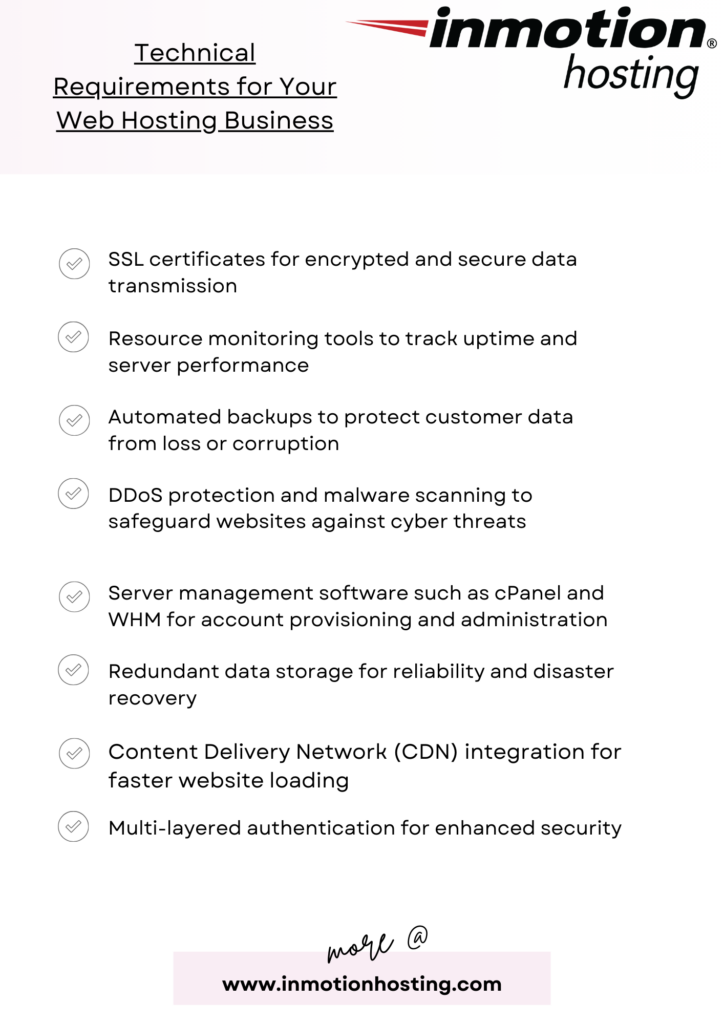
DDoS attacks can crash your website. They send too much traffic to your server. Mitigation tools help stop these attacks. They keep your website running smoothly. A good mitigation tool will spot the attack early. It will then stop the bad traffic. This keeps your site safe and online.
Ssl Certificates
SSL certificates make websites secure. They encrypt data between the user and server. This keeps personal information safe. Visitors trust websites with SSL. You will see a lock icon in the address bar. This shows the site is safe. SSL is a must for any business online.
Performance Optimization
Speed is key for web hosting. Caching stores copies of files. This makes loading faster. Website cache reduces server load. It saves time for users. Use tools like Varnish or Redis. They improve performance. Cache plugins work with websites. They are easy to set up. Caching helps with traffic spikes. It keeps things running smoothly.
Content Delivery Networks or CDNs help distribute data. They have servers around the world. This makes data travel shorter. CDNs reduce load times for users. They keep sites fast and reliable. Cloudflare is a popular CDN. It offers security too. Using a CDN is smart for global reach. Users get better experiences everywhere.
Load balancing spreads traffic evenly. It stops servers from getting too busy. Load balancers help with traffic distribution. They prevent crashes during high demand. Nginx and HAProxy are tools for this. They keep websites steady. Load balancing ensures uptime. Sites stay available always. It helps with large visitor numbers.
Monitoring And Analytics
Choosing the right software is crucial for starting a web hosting business. Monitoring and analytics tools help track server performance and user activity. Reliable software ensures smooth operations and satisfied customers.
Server Monitoring Tools
Server monitoring tools are essential for web hosting businesses. They help track server health and performance. Key metrics like CPU usage, memory, and disk space are monitored. Alerts notify you of potential issues. This ensures smooth operations and minimal downtime. Popular tools include Nagios and Zabbix. They offer real-time data and customizable alerts. These tools help maintain optimal server conditions.
Website Analytics
Website analytics provide insights into user behavior. They help track visitor numbers and page views. Bounce rates and session duration are also tracked. This data aids in understanding user preferences. Google Analytics is a popular choice. It offers detailed reports and visual dashboards. Analytics guide marketing strategies and content improvements. They are crucial for growing your web hosting business.
User Experience Tracking
User experience tracking focuses on how visitors interact. Tools like Hotjar offer heatmaps and session recordings. These show click patterns and scroll behavior. Feedback tools gather user opinions. This information helps improve website design and usability. Enhanced user experience leads to higher satisfaction and retention. Tracking ensures your services meet client expectations.
Customer Support Software
Help Desk Platforms are vital for any web hosting business. They help manage customer queries efficiently. These platforms offer ticket systems. Customers can track their issues. Many platforms provide automated responses. This saves time. Choose a platform with easy-to-use features. This improves client satisfaction.
Live Chat Solutions offer real-time support. Customers get help instantly. This reduces waiting time. It’s important for keeping clients happy. Many live chat tools have user-friendly interfaces. They are easy to navigate. Staff can handle multiple chats at once. This increases productivity. Ensure the solution you choose integrates well.
Knowledge Base Systems store helpful articles. Customers find answers quickly. They reduce support requests. These systems must be easy to update. Staff should add new information easily. A good knowledge base improves self-service options. Customers can solve problems on their own. This saves time for both parties.
Credit: www.inmotionhosting.com
Backup And Recovery
Automated backups save time. These solutions keep data safe without manual effort. They work in the background. Set it once, and it runs daily. Daily backups ensure nothing is lost. Even if there’s a mistake, you can restore data.
Disaster recovery is a plan to get systems back up. Problems happen anytime. A good plan helps in tough times. It includes steps to recover data quickly. Everyone in the team should know this plan. Practice it often.
Data redundancy means storing copies of data. This helps if the main data is lost. Have more than one backup. Store them in different places. This way, data stays safe from disasters. Make sure to update backups often.
Scalability And Growth
Choosing the right software for web hosting is crucial for scalability and growth. Reliable software ensures efficient management and adapts to increased demand. It helps maintain service quality while expanding the business.
Cloud Hosting Platforms
Cloud hosting platforms are vital for web hosting. They help in managing loads. They also allow easy resource scaling. This means adding or reducing resources is simple. Popular choices are Amazon Web Services and Google Cloud Platform. These platforms ensure reliable service. They also offer high uptime and security.
Virtualization Software
Virtualization software divides one server into many. This saves cost and improves efficiency. VMware and Hyper-V are common options. They help in isolating tasks. This makes systems run smoothly. Each client gets their own virtual space.
Resource Management Tools
Resource management tools track server usage. They help in monitoring performance. With these tools, you can see which resources are used. This helps in making smart decisions. Tools like cPanel and Plesk are popular. They are easy to use and offer great features.

Credit: www.hostingseekers.com

Credit: eliteweb.co
Frequently Asked Questions
How Do I Start My Own Web Hosting Business?
Research web hosting types and choose your niche. Invest in reliable server infrastructure and software. Develop a user-friendly website. Set competitive pricing and offer excellent customer support. Market your services effectively to attract clients.
How Do I Get Started With Web Hosting?
Choose a reliable web hosting provider. Select a suitable hosting plan. Register a domain name. Set up your account and configure your website. Install necessary software or CMS, like WordPress, to manage your site.
Which Web Hosting Is Best For Beginners?
Bluehost offers excellent hosting solutions for beginners. It provides user-friendly interfaces and 24/7 customer support. They offer affordable plans, a free domain for the first year, and easy WordPress installation. Bluehost is recommended by WordPress. org, ensuring reliability and top-notch performance for new users.
Are Web Hosting Companies Profitable?
Web hosting companies can be profitable. They generate revenue through hosting plans, add-ons, and domain registrations. Competition and operational costs affect profitability. Efficient management and diverse service offerings enhance their financial success.
Conclusion
Starting a web hosting business requires the right software. Choosing reliable software ensures smooth operations and satisfied clients. Consider features like scalability, security, and user-friendliness. Explore options like cPanel, Plesk, or DirectAdmin. Each offers unique benefits. Compare them based on your business needs.
Focus on customer support and integration capabilities. Remember, good software simplifies management tasks. It also boosts efficiency. Start small, then expand as your business grows. Invest in software that fits your budget and goals. With the right tools, your web hosting business can thrive.
Keep learning and stay updated on industry trends.


