
Are you confused about the difference between cloud hosting and web hosting? You’re not alone.
Many people find these terms baffling, yet understanding them can be crucial for making informed decisions about your website needs. Imagine having the perfect hosting solution that scales effortlessly as your site grows, or one that keeps your data secure and accessible at all times.
Knowing which type of hosting to choose can save you time, money, and headaches down the road. We’ll break down the key differences between cloud hosting and web hosting, making it crystal clear which option might be best for you. Stick around to discover which hosting solution aligns with your goals and how it can impact your online presence.

Credit: www.hostgator.com
Defining Cloud Hosting
Cloud hosting uses many servers to host websites. Unlike traditional hosting, it does not rely on just one server. This means your website can grow easily. Scalability is a big advantage. If one server fails, others take over. So, your site stays online. This makes cloud hosting very reliable.
Cloud hosting can be cost-effective. You pay for what you use. No need to buy extra resources you don’t need. It is good for businesses of all sizes. You get flexibility and control. Cloud hosting is a smart choice for many website owners.
Defining Web Hosting
Web hosting is like renting a space on the internet. It keeps your website files safe and ready for visitors. Think of it as a home for your website. Servers store your data and deliver it to users. There are different types of web hosting. Shared hosting means many websites live on one server. It’s like sharing a room with others. Dedicated hosting gives you a whole server for just your site. You have more control and privacy. VPS hosting is a mix of shared and dedicated hosting. It’s like having your own apartment in a building. Each hosting type has its pros and cons. Choose what suits your needs best.
Infrastructure Comparison
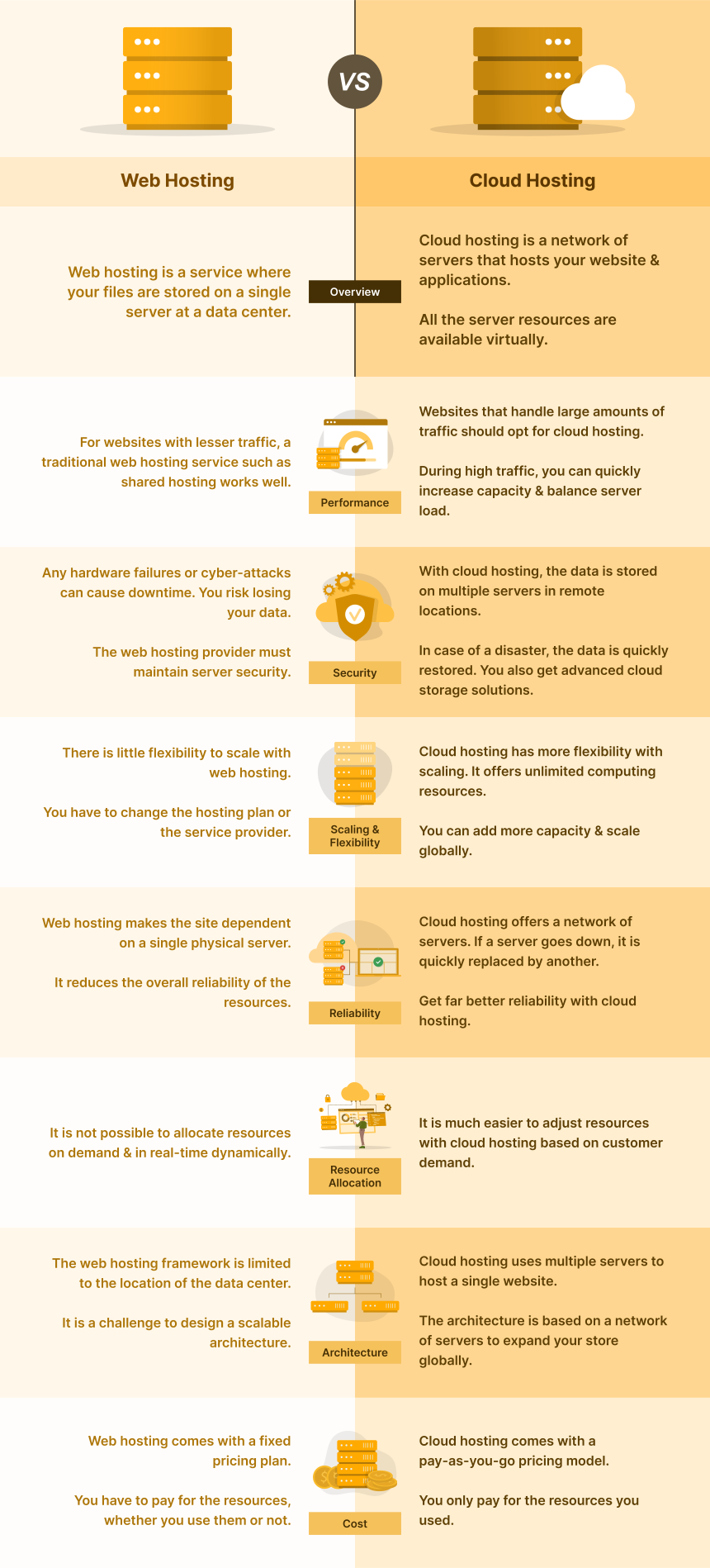
Cloud hosting uses many servers. Web hosting uses one server. Cloud hosting is distributed. Web hosting is centralized. This means cloud hosting can be more reliable. If one server fails, others work. Web hosting relies on one server. If it fails, your site goes down.
Cloud hosting offers scalability. You can add more resources easily. Web hosting has limits. You might need to switch plans for more resources. Cloud hosting is more flexible. You pay for what you use. Web hosting often has fixed plans. You might pay for unused resources.
Performance And Reliability
Cloud hosting provides better uptime. It uses multiple servers. If one server fails, another takes over. This helps keep websites online. Web hosting usually relies on a single server. If it crashes, your site might go down. Cloud hosting is also good at handling heavy loads. It can manage traffic spikes easily. Web hosting can struggle with too much traffic. It might slow down or stop working.
Cloud hosting often offers faster speeds. It uses data centers worldwide. This helps deliver content quickly. Web hosting might be slower. It depends on the server’s location. More distance can mean more delay. Cloud hosting reduces latency. It sends data from the nearest server. This makes websites load faster for users. Web hosting might not do this as well. It usually has one server location.
Security Aspects
Cloud hosting often has better data protection. It uses several servers. Data is copied across these servers. This means more backups are available. If one server fails, data stays safe.
Web hosting usually relies on one server. If it crashes, data might be lost. Data protection is weaker. Users depend on one server’s security.
Cloud hosting spreads risk across many servers. This reduces vulnerability. If one server is attacked, others can still protect data.
Web hosting has higher risk. Attacks can target the single server. This increases vulnerability. Protection depends on one point.
Cost Differences
Cloud hosting often uses a pay-as-you-go model. You pay for the resources you use. This means flexibility in costs. Web hosting usually has fixed monthly fees. You pay the same amount each month. This can be easier to budget.
Value for money can differ. Cloud hosting can be cheaper if your site has variable traffic. Web hosting might be more cost-effective if your site has consistent traffic. Choosing the right model depends on your needs. Think about traffic and budget before you decide.
Management And Control
User Accessibility in cloud hosting is quite different. Users access resources via the internet. This allows easy access from any device. It’s flexible for users on the go. You can manage your servers remotely. Web hosting usually has limited access. You often need direct server access. Customization is more restricted here. It’s less flexible for remote work.
Customization Options are broad in cloud hosting. Users can tailor resources to their needs. Adjust storage and computing power easily. Web hosting offers limited customization. Options are fixed or predefined. Changes often require technical support. Cloud hosting is scalable. Web hosting is less adaptable. This makes cloud hosting attractive for growing businesses.
Credit: www.cloudpanel.io
Use Cases And Suitability
Cloud hosting is perfect for big websites. These websites have high traffic. It works well for businesses that grow fast. New companies also benefit. They need flexibility. Cloud hosting can handle sudden traffic surges. It provides scalability. This means adding resources is easy. It is like having many computers work together. This ensures the website stays online even during busy times.
Web hosting suits small websites. These include personal blogs or small businesses. It is affordable. It is also easy to set up. Best for websites with steady traffic. Web hosting offers a simple solution. Resources are shared with other websites. This keeps costs low. It is a good choice for those who are new to websites.
Future Trends
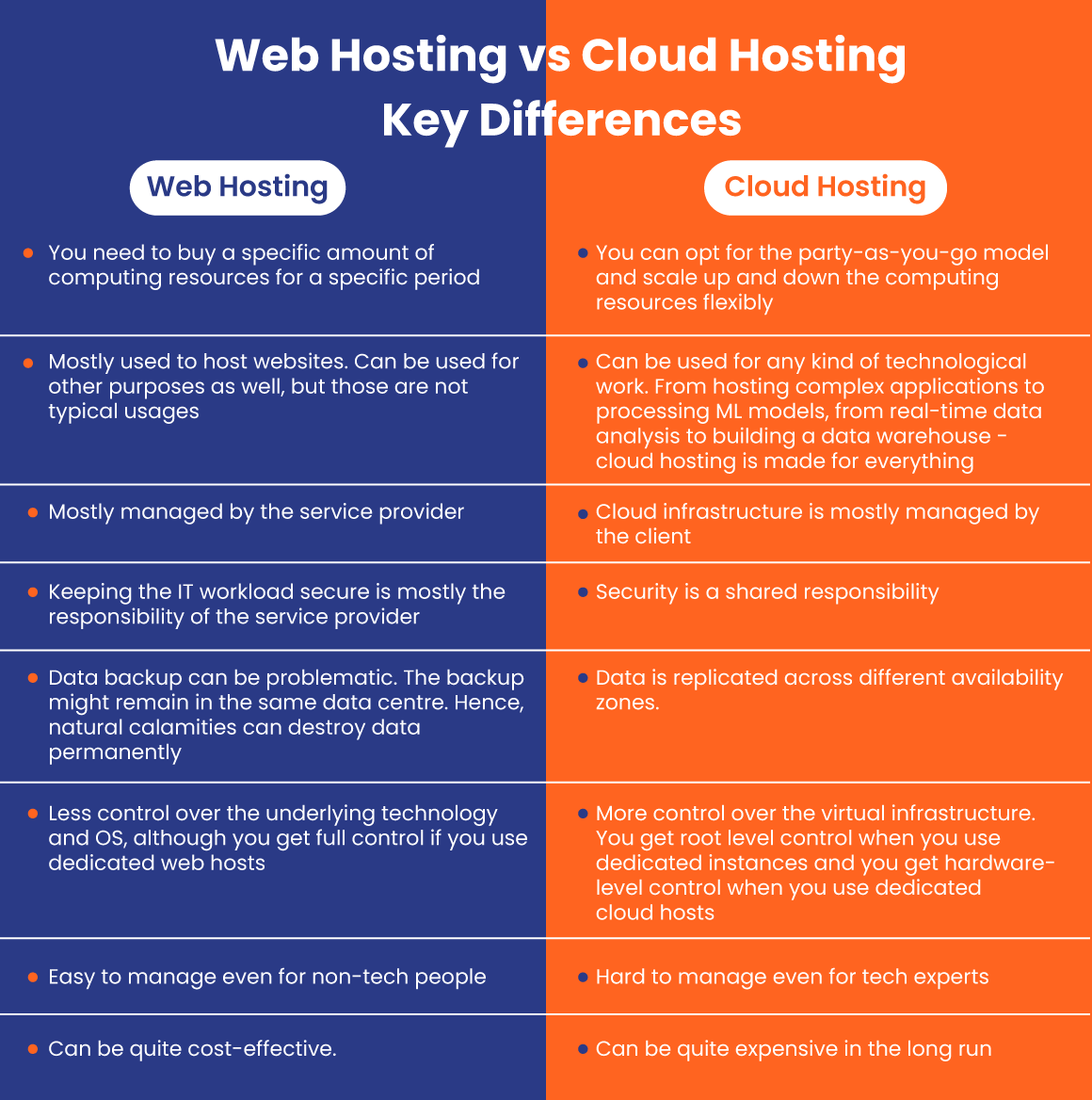
Cloud hosting offers flexibility by distributing resources across multiple servers, enhancing performance and reliability. In contrast, web hosting utilizes a single server, which may limit resources and scalability. Understanding these differences helps in choosing the right hosting solution for your needs.
Emerging Technologies
New technologies are changing hosting. AI helps improve server performance. It makes things faster. Machine learning predicts traffic spikes. This means better service. Edge computing is also growing. It brings data closer to users. This reduces loading time. More people will use cloud hosting. It gives flexibility and scalability.
Market Predictions
Experts say the hosting market will grow. More businesses will move to the cloud. This is because cloud hosting is cost-effective. It saves money. The demand for data security will rise. Hosting companies will work on this. They will improve security measures. The market will get more competitive. Companies must offer better services to stay ahead.
Credit: www.silvertouch.com
Frequently Asked Questions
What Is The Difference Between Web Hosting And Cloud Hosting?
Web hosting uses a single server, providing limited resources. Cloud hosting uses multiple servers, offering scalability and flexibility. Cloud hosting ensures better uptime and resource management. It’s ideal for growing businesses needing dynamic resource allocation. Web hosting suits smaller sites with stable traffic.
What Is The Difference Between Cloud And Web Server?
A cloud server is a virtual server running on a cloud computing platform. A web server is a hardware or software system serving web pages. Cloud servers provide scalability and flexibility. Web servers focus on hosting and delivering website content.
What Is The Difference Between Cloud Hosting And Local Hosting?
Cloud hosting stores data online, offering scalability and accessibility. Local hosting uses physical servers on-site, providing control and customization. Cloud hosting is typically easier to manage, while local hosting offers better security. Costs can vary; cloud hosting often incurs ongoing fees, whereas local hosting involves upfront hardware investment.
What Is The Difference Between Cloud Services And Web Services?
Cloud services provide scalable computing resources over the internet. Web services facilitate communication between applications via the web. Cloud services focus on infrastructure, while web services focus on software integration. Both enhance efficiency but serve different purposes.
Conclusion
Choosing between cloud hosting and web hosting is crucial. Cloud hosting offers flexibility and scalability. It’s ideal for growing businesses. Web hosting suits smaller, static websites. It’s cost-effective for beginners. Consider your website needs and budget. Both options have unique benefits.
Evaluate your traffic and resource requirements. This helps in making the right choice. Remember, technology keeps evolving. Stay updated with the latest trends. That way, you can adapt your hosting solution. Choose wisely for your website’s success.


