
Have you ever found yourself puzzled by the terms “web domain” and “web hosting”? You’re not alone.
These two components are fundamental to creating a website, yet they’re often misunderstood. Imagine you want to build a house. A web domain is like the address where your house will be located, while web hosting is the land where you construct your dream home.
Both are essential, but they serve distinct purposes. Understanding the difference is crucial for anyone looking to establish a strong online presence. As you read on, you’ll discover how each element plays a vital role in getting your website up and running smoothly. By the end of this article, you’ll not only grasp the difference but also gain the confidence to make informed decisions about your online endeavors. Curious to learn more? Keep reading to unlock the secrets behind these digital building blocks.
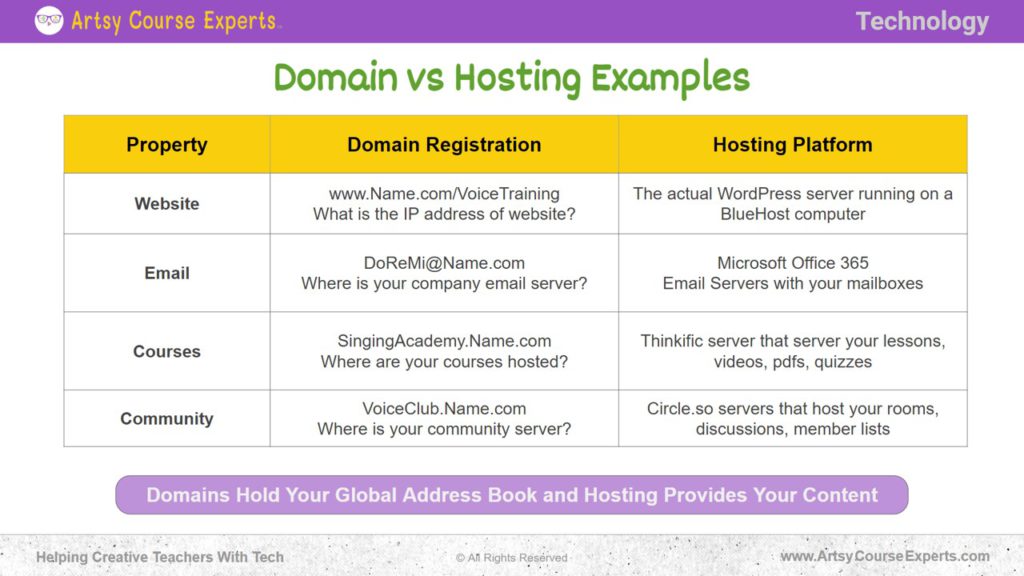
Credit: www.artsycourseexperts.com
Web Domain Basics
A web domain is a unique name. It identifies a website on the internet. Think of it as an address. Websites need an address so people can find them. Without a domain, users can’t visit a website. Domains help organize the web. They make browsing easier. Each domain is unique. No two websites have the same domain. This makes each website special.
Domain names have extensions. Extensions are like endings. Common extensions are .com, .org, and .net. Each extension has a purpose. For example, .com is for commercial sites. .org is for organizations. Extensions help users understand the website’s type. They give information about the site. Choosing the right extension is important. It affects how users see the site.
Web Hosting Essentials
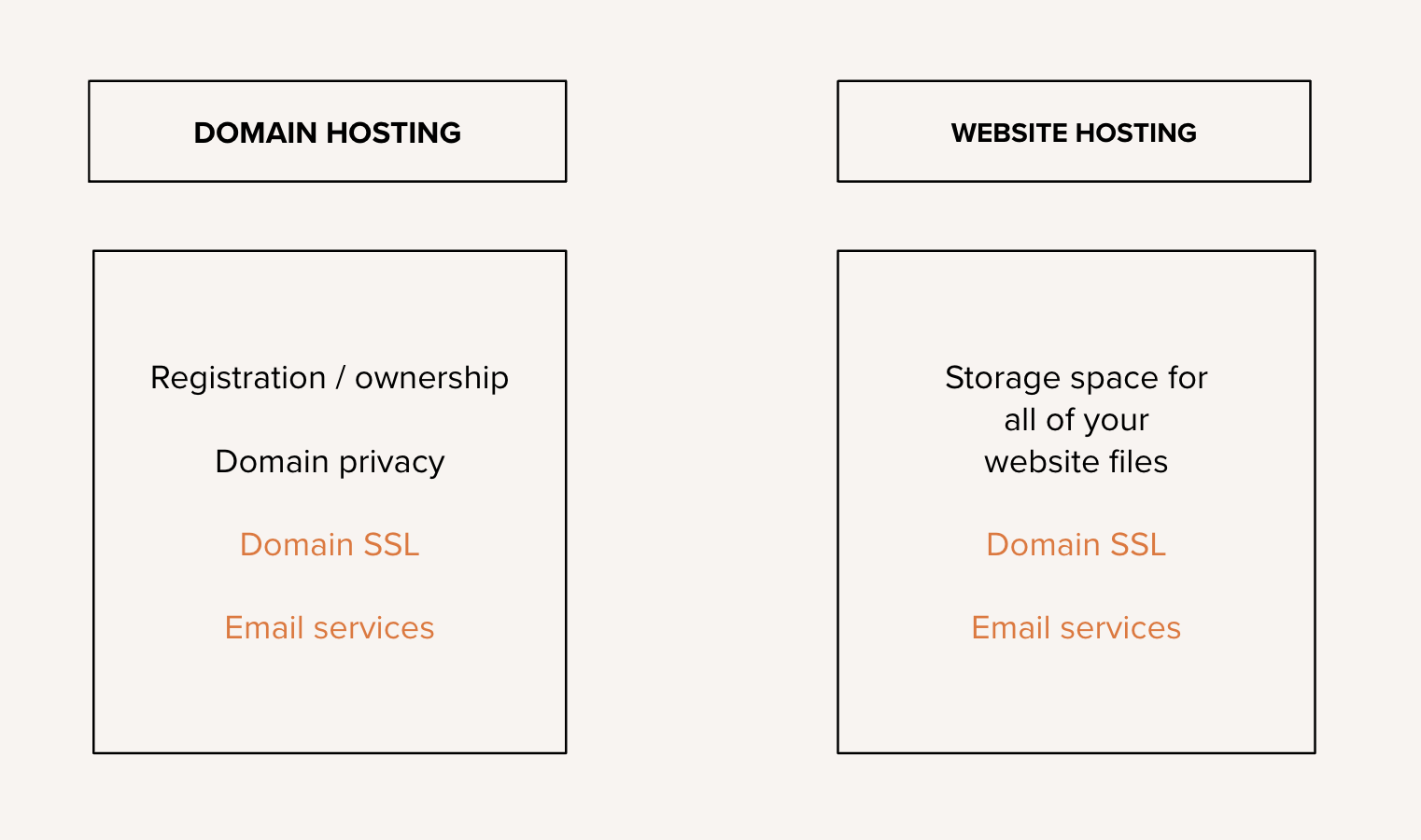
A web domain is your website’s address on the internet, like a street address. Web hosting is the service that stores your website’s files and makes them accessible online. Both are essential for getting your website up and running.
Definition And Functionality
Web hosting is a service that stores your website files. These files are stored on powerful computers called servers. Servers keep your website online and accessible. Without hosting, your site can’t be seen on the web. Hosting providers offer space and resources for your site. This includes bandwidth, storage, and security. It ensures your site runs smoothly and safely.
Types Of Web Hosting
| Type | Description |
|---|---|
| Shared Hosting | Many sites share one server. It’s cheap and easy. |
| VPS Hosting | Virtual private space on a shared server. More control. |
| Dedicated Hosting | One server for your site. Best for large sites. |
| Cloud Hosting | Uses many servers. Reliable and flexible. |
Key Differences
Web domain is like a name. It is what people type to find your site. You own your domain name. You can change it if you want. You control its use. You can direct it to any site.
Web hosting is like land. It is where your site lives. You rent hosting from a company. You don’t own it. The host controls the server. You can choose how much space you need.
Web domain helps people find your site. Without a domain, no one can reach you. Your site stays hidden.
Web hosting keeps your site online. Without hosting, your site won’t work. It will be offline. Hosting makes your site visible.

Credit: www.differencebetween.net
Choosing A Domain
Picking the right domain is crucial. Make it easy to remember and short. Long names are hard to type. Use common words and avoid strange spellings. Check if the domain is available. A unique name is always better. Think about the target audience. It should fit your website’s purpose. Adding keywords can help with search ranking. But don’t overdo it. Consider the extension like .com or .org. Some are more trusted by users.
Registering a domain is simple. First, choose a domain registrar. Many companies offer this service. Then, search for your desired domain name. If it’s free, you can buy it. Fill in your personal details and pay the fee. The domain is now yours. You must renew it every year. Some registrars offer deals for longer periods. Keep an eye on your domain expiry date. If you forget to renew, someone else might buy it.
Selecting Web Hosting
Understanding web domain and web hosting is essential. A web domain is your site’s address, like ‘example. com’. Web hosting is the space where your website’s files live. Both are crucial for a website’s presence online.
Evaluating Hosting Needs
Choosing the right hosting is important. Understand your website goals. Do you need lots of space? Or do you want fast loading times? Think about your budget. Some hosting plans are cheap. Others cost more but offer extra features. Security is important too. Look for hosts that offer good protection. Think about customer support. Good support can solve problems fast. Check if the host offers backups. This keeps your data safe. Make sure to know your hosting needs.
Comparing Hosting Providers
Compare different hosting providers. Look at their prices. Some are more expensive. Others offer deals for new users. Check their features. Do they offer easy-to-use control panels? How about email hosting? Look at their reviews. Happy customers mean good service. See if they have a money-back guarantee. This helps if you’re not happy. Uptime is key. You want your site online always. Research well and choose wisely.
Credit: thedesignspace.co
Common Misconceptions
Understanding web domain and web hosting can be confusing. A domain is your website’s address, like a street name. Web hosting is where your website files live, like a house. Both are needed for a functioning website.
Domain Vs. Hosting Confusion
Many people mix up domains and hosting. A domain is like your home address. It tells people where your website lives. Hosting is the house itself. It stores all your website files and data. Both are important, but they are not the same.
Impact On Website Performance
A domain doesn’t affect how fast your website is. Website speed depends on hosting quality. Good hosting makes your site load quickly. Slow hosting can frustrate visitors. Make sure to choose a reliable hosting service. This ensures a smooth user experience for visitors.
Practical Examples
Imagine a web domain as your home’s address. It tells people where to find you. Your web hosting is like your house. It stores everything inside. Without hosting, your domain leads to an empty lot.
A store needs both an address and a building. The address helps customers find the store. The building holds products and displays them. In the same way, a website needs both a domain and hosting.
Sarah bought a domain name for her blog. She also purchased hosting to store her blog posts. Without hosting, her domain would show nothing. With both, her blog is live and viewable.
John’s company owns a domain but hasn’t bought hosting. People type the domain and see nothing. Hosting is needed to show their services online.
Frequently Asked Questions
What Is The Difference Between Web Hosting And Web Domain?
Web hosting stores your website files on servers, making them accessible online. A web domain is your website’s address, like www. example. com. Hosting allows your site to exist, while the domain lets users find it. Both are essential for a website’s functionality and visibility on the internet.
Do I Need Web Hosting If I Have A Domain Name?
Yes, you need web hosting to make your website accessible online. A domain name is just your website’s address. Hosting stores your site’s files, making them available on the internet. Without hosting, your domain name won’t display your website content to visitors.
What Is An Example Of A Domain And Hosting?
A domain example is “example. com,” which is your website’s address. Hosting is the service that stores your website files, like Bluehost.
Is Godaddy A Host Or Domain?
GoDaddy offers both domain registration and web hosting services. You can register domain names and host websites with GoDaddy. Their services include domain management, hosting plans, and website building tools, making them a versatile choice for online needs.
Conclusion
Understanding web domains and hosting is crucial for online presence. A domain is your website’s address. Hosting is where your website lives. They work together for a functioning website. Choose a memorable domain name. Ensure reliable hosting for smooth performance.
Both are essential for building a website. They connect users to your online content. Getting these basics right ensures a strong foundation. Start with clear goals. Make informed decisions. Your website’s success depends on it. Keep learning. Grow your online space wisely.


