
Have you ever found yourself confused about the terms “web hosting” and “website builder”? You’re not alone.
With so many options available for creating and managing your online presence, understanding the difference between these two essential tools can be a real puzzle. But guess what? Unraveling this mystery can be the key to taking your website from a simple idea to a fully-functioning reality.
Imagine knowing exactly what you need to get your site up and running without any unnecessary hassle or expense. Sounds good, right? Stick around, and you’ll discover how each plays a vital role in your online success. By the end of this article, you’ll feel empowered to make informed decisions that perfectly align with your goals. Let’s dive into the crucial distinctions that could transform your digital experience!
Web Hosting Basics
Web hosting lets you store your website on the internet. It uses servers to keep your site files safe. People can see your site anytime. Hosting is like renting space for your website. Without hosting, your site won’t be online. Hosts have big computers called servers. They keep websites running and show them to visitors.
Different types of web hosting exist. Shared hosting is common. Many websites share one server. It costs less but can be slow. Dedicated hosting gives one server to one site. It’s faster and costs more. VPS hosting is in the middle. It shares a server but gives more space. Cloud hosting uses many servers. It’s good for big sites with lots of visitors.
Web hosting uses servers to store site files. When someone types your website address, servers send files to their computer. It shows your site on their screen. Hosting companies manage these servers. They keep them running all the time. Servers need electricity and internet. They stay cool in special rooms. This lets people visit your site day or night.

Credit: www.domain.com
Website Builder Essentials
Understanding the difference between web hosting and website builders is crucial. Web hosting provides the space for your website on the internet. A website builder offers tools to design your site easily without coding.
Definition Of Website Builder
A website builder is a tool. It helps you make websites. It’s like magic for non-tech people. No need to know coding. You can drag and drop things. It’s that simple. Most builders have templates. You pick one and start. They are easy to use. Perfect for beginners.
Features Of Website Builders
Website builders have many features. They offer pre-made templates. These templates look nice. You can change colors and fonts. You can add pictures and text. Some builders have SEO tools. These tools help your website get found. Other features include mobile-friendly designs. Your site looks good on phones and tablets. Security is also important. Many builders provide SSL certificates for safety.
How Website Builders Operate
Website builders work online. You need the internet. They are often cloud-based. This means you can work from anywhere. Just log in and start. Changes save automatically. This is helpful. You won’t lose your work. Builders often have customer support. They help if you get stuck. Some builders offer free plans. But paid plans give more features.
Key Differences
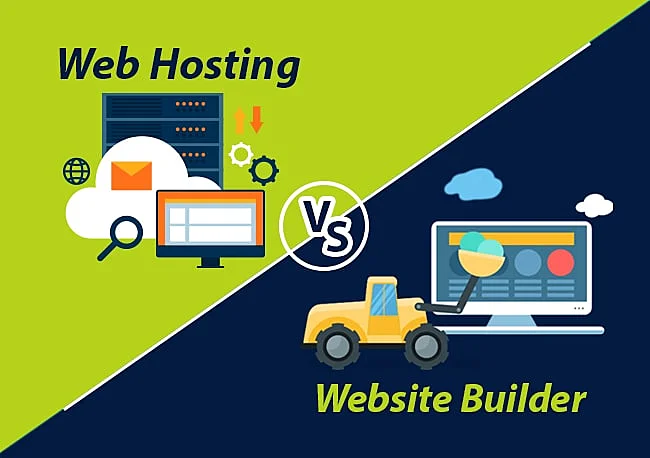
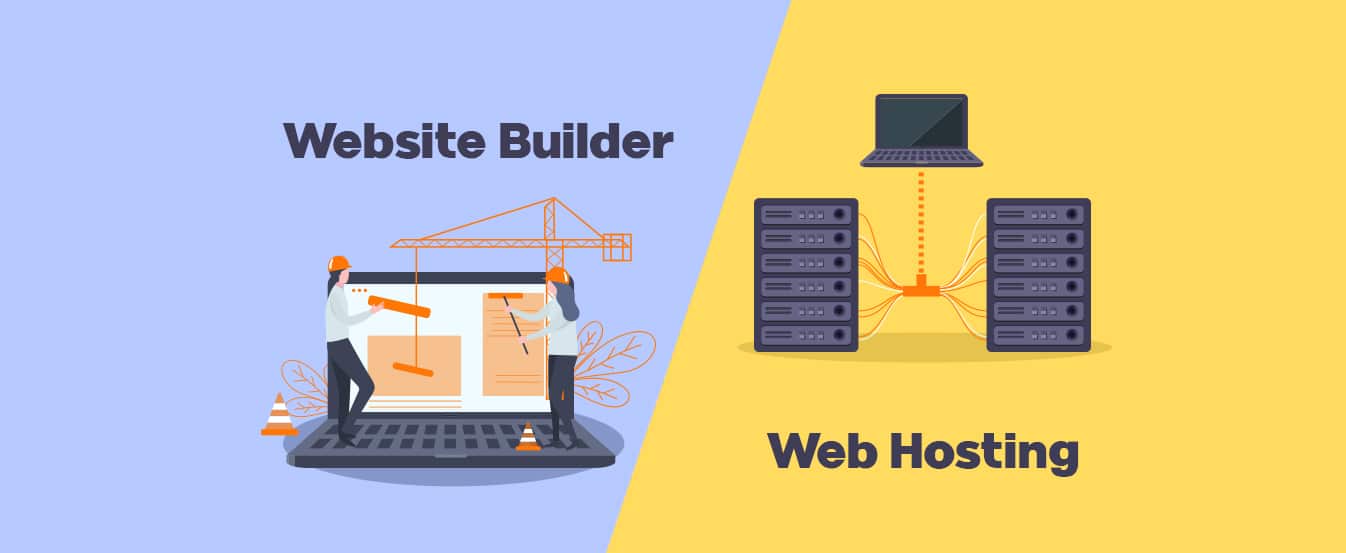
Web hosting stores your website files online. Website builders help you create the website. Web hosting is like renting space. Website builders are tools to design the space. Hosting keeps your site live. Builders make it look nice.
Hosting offers more control. You can choose your setup. Website builders give less control. They offer templates and tools. Hosting allows custom coding. Builders have preset designs. You pick design elements with builders. Hosting lets you change everything.
Web hosting needs technical skills. You manage servers and software. Website builders are user-friendly. They require little tech knowledge. Hosting might need coding skills. Builders use drag-and-drop features. Hosting often needs updates. Builders handle updates for you.
Credit: www.hostitsmart.com
Pros And Cons Of Web Hosting
Web hosting offers many benefits. One big advantage is control. You decide how your site looks. You can choose your own domain name. This makes your website easy to find. Hosting gives your site a professional image. You can have more features. Add blogs, forums, or stores. It is like building your own house. You can pick every detail. Customizing your site is easy with hosting. You can make it fit your needs. Hosting also provides better security. Your website is safer from hackers.
Web hosting has some downsides too. It can be expensive. You pay for the domain and hosting space. Sometimes, it is hard to learn. Setting up a site needs technical knowledge. Not everyone has this skill. It takes time to manage. You must update and fix problems. This can be hard if you are busy. Another issue is limited resources. Some hosts restrict storage and bandwidth. If your site grows, you might need more. This means spending more money.
Pros And Cons Of Website Builders
Website builders simplify design, offering templates for quick setup, while web hosting provides storage for site files online. Builders are user-friendly but limit customization, whereas hosting offers flexibility, requiring more technical skill. Both serve different needs, with builders catering to beginners and hosting offering more control for advanced users.
Advantages Of Website Builders
Website builders are easy to use. They have simple tools. You don’t need coding skills. Templates are available to make sites look nice. Drag-and-drop features save time. Hosting is often included. Support is readily available. Many builders offer free trials. They are cost-effective for small businesses. Updates happen automatically. It’s great for beginners.
Limitations Of Website Builders
Customization can be limited. Design options may not fit your needs. Builders might lack advanced features. Speed can be a problem. Large sites may face issues. You might have to pay extra for more storage. SEO tools are often basic. Migration to another platform can be tricky. E-commerce might not be robust. You may face restrictions on branding. Some builders have hidden fees.
Credit: n6host.com
Choosing The Right Option
Think about what you want. Do you need a simple website? Or do you want to build a big one? A website builder is easy for beginners. But it may not offer all features. Web hosting gives more control. It may need more skill to use.
Money is important. Website builders often have a fixed cost. This makes budgeting easy. Web hosting can be cheaper at first. But, costs can grow with your needs. Think about how much you want to spend now and later.
Think about the future. Will your website grow? Web hosting allows more space and features. This is good for big sites. A website builder might limit growth. Plan for future needs now. Make a smart choice.
Popular Web Hosting Providers
Many companies offer web hosting services. Here are some popular names. Bluehost is known for good pricing. HostGator offers flexible plans. SiteGround is praised for support. DreamHost provides strong security. GoDaddy is famous for domain names. These companies help get your site online.
| Company | Features | Support |
|---|---|---|
| Bluehost | Free domain for one year | 24/7 chat support |
| HostGator | Unlimited bandwidth | Phone support |
| SiteGround | Daily backups | Fast response |
| DreamHost | Custom control panel | Live chat |
| GoDaddy | Website builder | Phone and chat |
Popular Website Builders
Website builders help create websites without coding. Web hosting stores your website online. Both are essential for a functioning site. Builders focus on design, while hosting provides space and accessibility. Understanding the difference ensures effective website management.
Leading Website Builder Platforms
Website builders help create sites easily. They offer templates and tools. Wix is popular for its drag-and-drop feature. It makes designing easy for beginners. Squarespace offers beautiful templates. Great for professional designs. Weebly focuses on simplicity. Good for small business sites.
Comparison Of Features
| Platform | Ease of Use | Design Options | Price Range |
|---|---|---|---|
| Wix | Very Easy | Varied Templates | Free to Premium |
| Squarespace | Moderate | Elegant Designs | Subscription-based |
| Weebly | Easy | Simple Layouts | Affordable |
Frequently Asked Questions
What Is The Difference Between Web Hosting And Website Builder?
Web hosting stores your website’s files on a server, making it accessible online. A website builder is a tool that helps you design and create a website without coding. Both are essential for a complete online presence.
Is It Better To Build Your Own Website Or Use A Website Builder?
Building your own website offers customization and control. Website builders provide ease and speed for beginners. Choose based on your needs, skills, and budget. For unique designs and flexibility, consider building from scratch. For quick setup and simplicity, use a website builder.
Can You Build A Website Without A Host?
Building a website without a host is impossible. Hosting provides server space for your website files, making them accessible online. You can develop a site locally on your computer, but it won’t be visible to others until hosted. Choose reliable hosting services for optimal website performance and accessibility.
What Is The Best Website Builder And Hosting?
Wix is a top website builder offering user-friendly design tools and templates. Bluehost is highly recommended for reliable hosting. Both provide excellent customer support and seamless integration options. Choose based on your specific needs and budget to ensure a successful online presence.
Conclusion
Choosing between web hosting and a website builder depends on your needs. Web hosting offers flexibility and control. You can customize and manage your site. Ideal for those with technical skills. Website builders provide simplicity and speed. Perfect for beginners who need an easy setup.
No coding required. Decide based on your budget, skills, and goals. Hosting suits complex needs. Builders fit simple projects. Both have their strengths. Consider what works best for your project. Understanding these options helps you make informed decisions. Your website’s success starts with the right choice.


