
Ever wondered what makes your favorite websites available at the click of a button? The secret lies in web hosting.
If you’ve ever thought about creating your own website or are simply curious about how the internet works, understanding web hosting is crucial. But what exactly does “web hosting” mean? And why should you care about it? Imagine your website as a house.
Just like a house needs a plot of land to sit on, your website needs a space on the internet to exist. Web hosting provides that space. It’s the invisible yet powerful force that makes your website accessible to people around the globe. Dive into this article to uncover the mysteries of web hosting, and discover how it could be the key to unlocking your online potential. Get ready to turn your curiosity into clarity.
Web Hosting Basics
Web hosting is like renting space on the internet. Websites need a place to live. This space is called a server. Servers are big computers that store all website data. Hosting companies provide server space. They manage the servers for you.
There are different types of web hosting. Shared hosting is the cheapest. Many websites share one server. It is good for small sites. VPS hosting gives more control. Fewer websites share the server. Dedicated hosting means you get your own server. It is best for big websites.
Picking a hosting provider is important. Look at their price and features. Check if they have good support. Read reviews from other users. Make sure they offer security for your data.

Credit: www.layerhost.com
Types Of Web Hosting
Shared hosting means many websites on one server. It’s cheap and easy. But, it’s slow if many sites use it. Great for small websites and beginners.
VPS hosting gives a virtual server. It’s stronger than shared hosting. Users have more control. It’s good for growing websites.
Dedicated hosting uses one server for one website. It’s fast and secure. Best for big websites and businesses. It costs more than others.
Cloud hosting uses many servers. It handles traffic well. It’s flexible and scalable. Pay for what you use. Good for dynamic websites.
Key Features Of Web Hosting
Storage is the space for your website files. It includes text, images, and videos. More storage means you can add more content. Bandwidth affects how much data flows between your site and users. It impacts how many people can visit your site at once. Limited bandwidth can slow your site down. Unlimited bandwidth is ideal for popular sites.
Uptime is the time your site is live. A good host promises 99.9% uptime. Less downtime means your site is always available. Downtime can cause visitors to leave. Choose hosts with strong uptime guarantees. It ensures your site stays accessible.
Control panel helps you manage your site. It is a dashboard with tools. cPanel and Plesk are popular options. Easy-to-use panels save time. They let you upload files and manage emails. A good control panel makes site management simple. Look for hosts that offer these features.

Credit: rackset.com
Choosing The Right Web Hosting Provider
Begin by knowing what your website needs. This includes the type of website you want and the traffic you expect. A small blog might need less space than a big shop. Think about the software you want to use. Some hosts offer easy tools for beginners. Others offer more control for experts.
Look at different pricing plans. Some plans are cheap but have limits. Others may be more expensive with more features. Check if the plan has a money-back guarantee. This helps you try the service without losing money. Also, look for hidden fees. Some hosts charge extra for backups or security.
Good support is very important. Look for a host with 24/7 support. This means you can get help anytime. Check if they offer live chat or phone support. Reading customer reviews can help too. They show if the support team is helpful and fast. A good host listens and solves problems quickly.
Common Web Hosting Challenges
Downtime can be a big problem for websites. Websites need to stay online. When they go down, visitors can’t see them. This can make people sad. Businesses lose money. Web hosting should be reliable. Good hosting keeps sites up all the time. Some hosts have backup servers. These help keep sites running. Downtime can hurt trust. People might not come back.
Security is very important for web hosting. Hackers can attack sites. They steal information. This is bad for users. Web hosts need strong security measures. Firewalls help block attacks. SSL certificates keep data safe. Regular updates fix security holes. Good hosts protect their sites well. Security keeps users safe and happy.
Future Trends In Web Hosting
Web hosting means storing website data on servers, making it accessible online. Future trends include faster servers and more secure cloud-based solutions.
Green Hosting
Green hosting uses renewable energy sources. It aims to reduce the carbon footprint. This type of hosting helps the environment. It uses less energy and saves resources. Many companies offer eco-friendly plans now. These plans are becoming more popular. Choosing green hosting supports the earth.
Ai Integration
AI is changing web hosting. It makes things faster and easier. AI helps with security. It can stop attacks quickly. AI also improves customer service. It answers questions fast. Websites run smoother with AI. This technology keeps getting better.
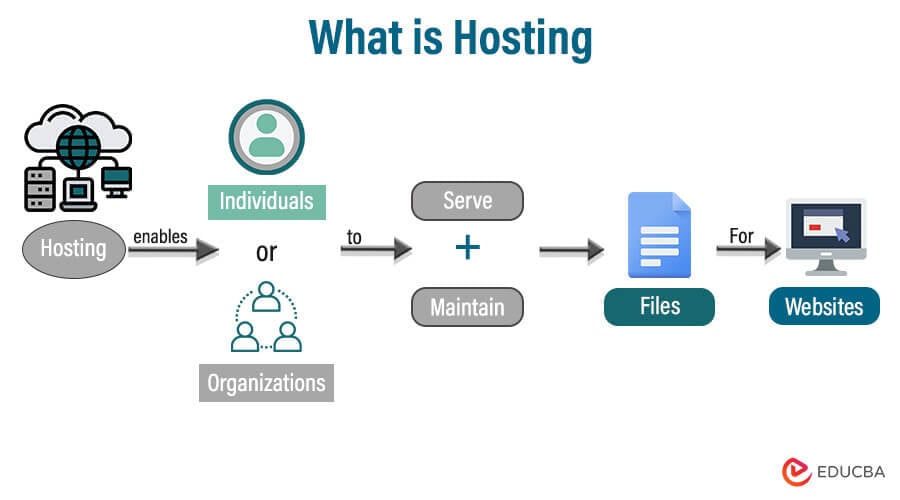
Credit: www.educba.com
Frequently Asked Questions
What Is Web Hosting With An Example?
Web hosting is a service that stores website files on servers, making them accessible online. For example, Bluehost hosts websites by providing server space and support.
What Are The 3 Types Of Web Hosting?
The three types of web hosting are shared hosting, VPS hosting, and dedicated hosting. Shared hosting is cost-effective, VPS offers flexibility, while dedicated hosting provides exclusive server resources. Each type caters to different needs based on budget and performance requirements.
Can I Run My Website Without Hosting?
You need hosting to run your website. Hosting provides storage and server resources for your site. Without it, your site cannot be online. Consider choosing a reliable hosting provider to ensure your website functions properly and remains accessible to users.
Hosting is essential for maintaining site performance and security.
What Is The Purpose Of A Web Host?
A web host stores website files and makes them accessible online. It ensures reliable site performance and security. Web hosting services provide essential resources like bandwidth and storage. They enable businesses and individuals to maintain an online presence. Web hosts are crucial for website accessibility and functionality.
Conclusion
Web hosting is key for your online presence. It stores your website data. Without it, your site won’t be visible online. Many hosting options exist, like shared, VPS, and dedicated. Each has its pros and cons. Choose based on your site’s needs and budget.
A good host ensures fast loading and security. This helps attract and retain visitors. So, understand your needs first. Then, pick the right web hosting. Your website’s success depends on it. Invest time to make a smart choice. Always prioritize reliability and support.
Your online journey begins here.


