
Imagine having complete control over your web application’s hosting environment. You’re not bound by the constraints of a traditional web server, and you can tailor your setup to precisely meet your needs.
This is the promise of Web API self-hosting. It’s a powerful concept that lets you run your web applications independently, giving you flexibility, scalability, and the ability to innovate. But what exactly is Web API self-hosting, and how can it benefit you?
Dive into this article to discover the ins and outs of this fascinating technology. You’ll learn how it can transform your approach to web development and find out why so many developers are choosing it. Ready to unlock new possibilities for your web projects? Keep reading to see how Web API self-hosting can be your secret weapon.
Web Api Self Hosting Basics
Web API self hosting lets you run a web service on your own server. It gives you more control over your API. This way, you can set it up just how you want.
Self hosting means you do not rely on a third party. You are in charge of the performance and security. It is like having your own house instead of renting one.
Several parts work together for Web API self hosting. You need a server to host your API. The server processes the requests from users.
A framework is also essential. It helps you build the API. Common frameworks include ASP.NET and Node.js. They make coding easier and faster.

Credit: www.youtube.com
Advantages Of Self Hosting
Self hosting gives you full control over your web API. You can choose the tools and technologies you prefer. This means you can adjust settings to fit your specific needs. You have the power to make changes anytime. No need to wait for others. You decide when to update or modify. This flexibility helps you meet your project goals. You can also ensure security your way. It is important to manage the data and performance yourself.
Hosting your own API can improve speed and efficiency. You can optimize the server for better performance. Your API can be faster and more reliable. There is less chance of downtime. You can handle more requests smoothly. Your users will have a better experience. You also save on costs in some cases. By managing resources, you can reduce unnecessary expenses. This makes your project more efficient.
Setting Up Self Hosting
Self-hosting a Web API needs some tools. Visual Studio is a key tool. It helps create and manage projects. You will also need .NET Framework. This is essential for building applications.
Install IIS Express for testing. It is a lightweight server. It works well with Visual Studio. A code editor like Visual Studio Code helps manage code easily. These tools are easy to find online. Make sure your computer is ready. This means it has enough memory and space.
First, open Visual Studio. Create a new project. Choose Web API template. Next, configure IIS Express. This helps run the application locally.
Set up routes for the API. These are paths for users to access. Adjust the web.config file. This file contains settings. Finally, build and run the project. Test the API with tools like Postman. It checks if the API is working fine.
Common Challenges
Web API self-hosting can present several challenges. Managing server setup and ensuring security are crucial tasks. Additionally, handling updates and maintaining performance requires technical expertise.
Security Concerns
Self-hosting a Web API has its risks. One major concern is security. Hackers try to break into systems. Protecting sensitive data becomes crucial. Firewalls and strong passwords help. Regular security updates are needed. They keep the system safe. Always use secure connections like HTTPS. Encryption makes data safe during transfer. Monitor the system for suspicious activity. Security should always be a priority.
Maintenance Efforts
Keeping a self-hosted Web API running is work. Regular maintenance is needed. Software updates are frequent. This prevents problems and improves performance. Monitoring the server is important. It helps identify issues early. Backups ensure data safety. They help in case of failures. Troubleshooting can be time-consuming. Experts might be needed sometimes. Plan ahead for maintenance activities.
Self Hosting Vs Traditional Hosting
Self hosting often saves money. You control the costs. Traditional hosting may have higher fees. Companies charge for services. Self hosting means fewer monthly bills. You buy only what you need. Traditional hosting sometimes has hidden fees. Services can cost more than planned. Self hosting can be cheaper for small projects. You manage your own server. Traditional hosting is easier but pricier for big needs. Consider your budget. Choose wisely.
Self hosting offers more control. You decide the limits. Traditional hosting has set limits. Companies decide how much space you get. Self hosting lets you grow at your pace. You add space when needed. Traditional hosting may restrict growth. Plans limit how much you can expand. Self hosting suits dynamic needs. Scale up or down easily. Traditional hosting is fixed. You may need a bigger plan for growth.

Credit: www.linkedin.com
Case Studies
Many companies use Web API self-hosting today. This helps them save money. They do not need big servers. Small teams find this helpful. They can work faster. They also have more control. They fix problems quickly.
Startups also use this. They have fewer resources. Self-hosting is a good choice for them. It fits their budget. They can grow step by step. This way, they learn as they go.
Every project teaches something new. Teams often learn about security. They need to keep data safe. They must also manage their time well. It is important to plan.
Mistakes are common. But, they are part of learning. Each error is a chance. A chance to grow and improve.
Future Of Web Api Self Hosting
Many developers like Web API self hosting. It is easy to set up. It gives more control. Cost savings is a big advantage. Companies don’t need to pay for cloud services. More flexibility is another trend. Developers can choose their own tools. They can also manage updates themselves. This trend is growing.
Security is also improving. Better security features keep data safe. More companies are trying self hosting. It can be a good choice for small teams. They can manage everything on their own.
New tools make Web API self hosting easier. Automation tools help with setup. They save time for developers. Lightweight servers are also popular. These servers use less power. They are also faster.
Container technology is a game changer. It helps in scaling. More APIs can run on the same server. This is good for big projects. Open-source software is another innovation. Many developers use it to build APIs. It’s free and has many features.
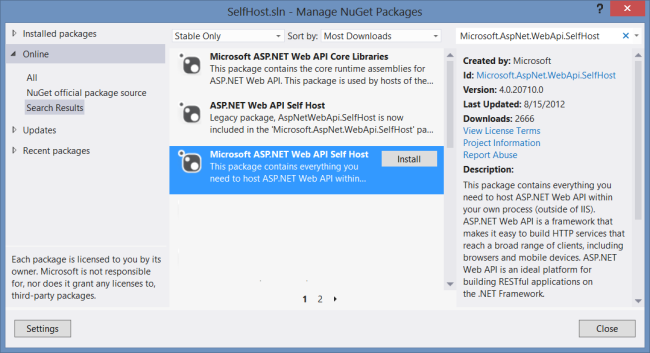
Credit: learn.microsoft.com
Frequently Asked Questions
What Is Self-hosting In Web Api?
Self-hosting in Web API means running the API on your own server instead of using a third-party host. It offers more control, customization, and security. Developers can configure the environment to meet specific needs, leading to potentially better performance and reliability.
What Is Web Api Hosting?
Web API hosting involves deploying APIs on servers, enabling communication between software applications. It ensures seamless data exchange and accessibility. Hosting facilitates API management, security, and scalability, making APIs reliable and efficient for developers and users.
What Does Self-hosting A Website Mean?
Self-hosting a website means managing your own server to store website files. You control security, performance, and data.
What Web Api Means?
A Web API is an interface that allows applications to communicate over the internet. It enables data exchange between servers and clients, facilitating web services. Web APIs are essential for integrating different software systems and enhancing functionality. They use protocols like HTTP for seamless data transfer.
Conclusion
Web API self-hosting offers many benefits for developers. It provides control over deployment settings. This approach enhances application flexibility. You gain autonomy to manage resources efficiently. Hosting locally ensures better performance. Security is easier to handle. Developers appreciate the customization options available.
Self-hosting reduces reliance on third-party services. It is an ideal choice for those seeking independence. Consider this option for small and medium projects. It fits well with specific needs and requirements. Explore self-hosting to optimize your web API solutions.


