
Have you ever wondered what really distinguishes cloud hosting from web hosting? As you strive to establish your online presence, understanding these hosting options is crucial.
Choosing the right one can enhance your site’s performance and user experience. Imagine having the flexibility to scale your resources effortlessly or the security to safeguard your data. The difference between cloud hosting and web hosting could be the key to unlocking these benefits.
Dive into this article to discover how these hosting solutions can transform your digital strategy and ensure your website stands out. Let’s unravel this mystery together and empower you with the knowledge to make the best choice for your needs.
Defining Cloud Hosting
Cloud hosting uses many servers to run websites. These servers work together. They act like one big server. If one server fails, another takes over. This keeps websites online. Websites are not stored on one machine. They use many machines in different places. This makes cloud hosting very strong. It can handle many users at once.
Cloud hosting is scalable. It can grow with more users. It is reliable because of many servers. Costs depend on usage. Users only pay for what they use. No need for extra hardware. Data is safe and backed up often. Performance is good and fast. Easy to manage with simple tools.

Credit: www.hostgator.com
Defining Web Hosting
Web hosting is like renting space on the internet. Websites need a place to live. This space is on a server. Servers are powerful computers. They store website files. They deliver files to users. Users see these files as web pages.
Servers connect to the internet 24/7. They share website data. When someone types a website address, their computer talks to the server. The server sends back the website data. This data shows up as a web page. This whole process happens in seconds.
- Storage Space: Amount of data you can store.
- Bandwidth: Data transfer limit per month.
- Uptime: Time the server is online. Usually 99% or more.
- Security: Protects your website data.
- Support: Help when you face issues.
Performance Comparison
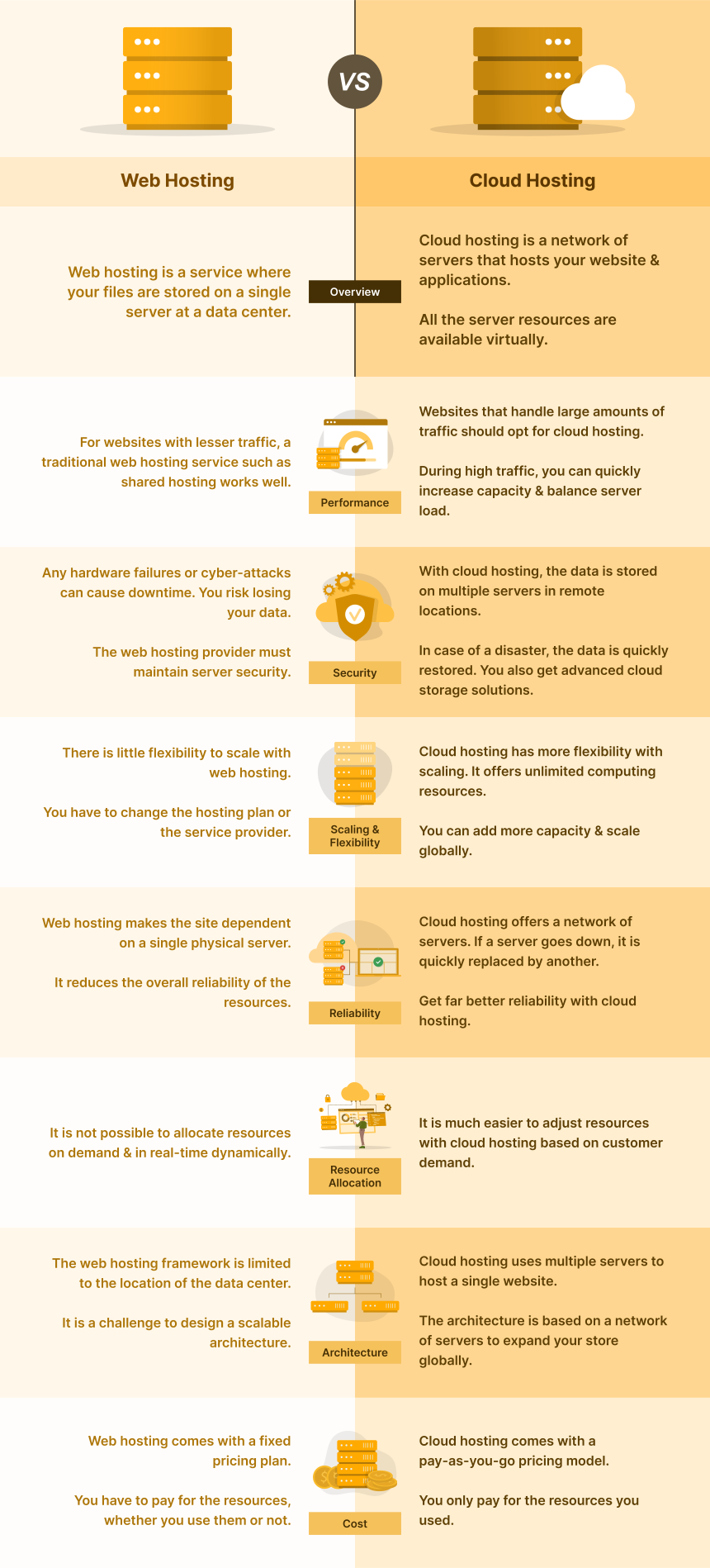
Cloud hosting distributes resources across multiple servers, ensuring reliability. Web hosting relies on a single server, offering limited resources. Performance varies based on scalability and load management capabilities.
Speed And Reliability
Cloud hosting uses many servers. This makes it fast and reliable. Web hosting uses one server. It can be slower and less reliable. Cloud hosting handles more users at once. Web hosting might struggle with many users. Cloud hosting has backup systems. This prevents downtime. Web hosting might have more downtime. Choosing cloud hosting can mean faster loading times. This keeps users happy. Reliable service is important for sites.
Scalability And Flexibility
Cloud hosting grows with your needs. It adds resources easily. Web hosting is less flexible. Scaling up can be hard. Cloud hosting adapts to changes quickly. Web hosting is slower to change. Businesses often choose cloud hosting for growth. It offers more room to expand. Flexibility helps businesses stay competitive. Adjusting resources is easy with cloud hosting. Web hosting may not meet changing demands.
Security Aspects
Cloud hosting provides strong security. Data is stored in multiple locations. This makes it hard for hackers. If one server fails, others keep working. Regular updates protect the system. Firewalls and encryption add more safety. Access controls are strict. Only trusted users enter. Cloud providers watch for threats. They act fast if needed. Strong security helps protect your data.
Web hosting has basic security. Data stays on one server. This can be risky if attacked. Many updates are done by users. Firewalls and basic encryption are used. Access is often less strict. Sometimes, manual checks are needed. Providers offer help, but not always fast. Users need to be careful. They should keep their data safe.
Cost Considerations
Cloud hosting often uses a pay-as-you-go model. You pay based on usage. This can be cheaper for small sites. Large sites may pay more as they use more resources. Web hosting usually has fixed monthly fees. Costs are predictable, no matter the usage. For many, this makes budgeting easier. But, you might pay for unused resources.
Cloud hosting can have hidden costs. Data transfer fees and storage fees may surprise you. Web hosting costs are often clearer. Sometimes, you pay extra for technical support. Both services can have hidden charges. It’s wise to read all terms carefully. Understanding these costs helps in choosing the right plan.
User Experience
Cloud hosting is easy to use. Everything happens online. No need to handle physical servers. This makes it simple for beginners. Web hosting can be trickier. It often needs manual setup. This might confuse new users. Both services have control panels. These panels help manage websites. Cloud hosting panels are often more modern. They offer easy-to-understand options. Web hosting panels might look old-fashioned. This can make them harder to use.
Cloud hosting offers flexible choices. Users can add or remove features quickly. This helps meet changing needs. Web hosting is more limited. It often has fixed settings. Changing these settings can be hard. More customization means more control. Cloud hosting is great for this. Web hosting works well for simple sites. Both have strengths. Choose based on your needs.
Choosing The Right Option
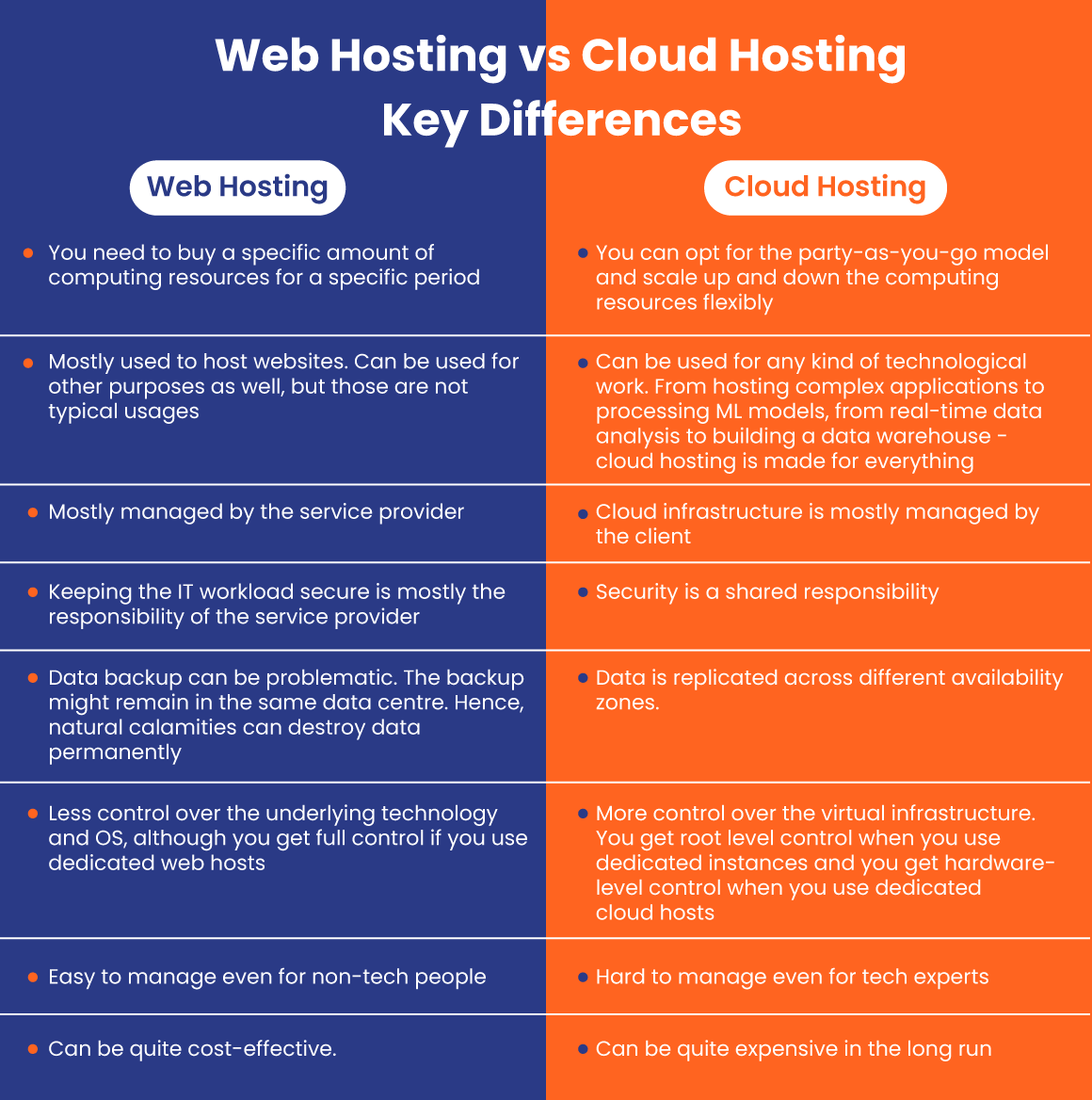
Cloud hosting offers flexibility and scalability by using multiple servers, while web hosting relies on a single server. Cloud hosting can handle more traffic and data, whereas web hosting is simpler and often cheaper. Understanding these differences helps in choosing the best hosting solution for your needs.
Business Needs
Every business has different needs. Cloud hosting is great for businesses that need to grow fast. It is flexible and can handle big traffic spikes. Web hosting is good for smaller sites with steady traffic. It is often cheaper and easier to use.
Think about your technical requirements. Do you need lots of storage? Cloud hosting can give you more space. But if you only need a little, web hosting might be enough.
Also, consider your budget. Cloud hosting can cost more over time. Web hosting is usually less expensive. But it may offer fewer features. Understand what your business needs most. This will help you choose the right option.
Credit: www.cloudpanel.io
Credit: www.silvertouch.com
Frequently Asked Questions
What Is The Difference Between Web Hosting And Cloud Hosting?
Web hosting uses a single server to store and manage website data. Cloud hosting distributes data across multiple servers, enhancing scalability and reliability. Web hosting is often more affordable, while cloud hosting offers better performance and flexibility, especially for high-traffic websites.
Both have distinct features catering to different needs.
What Is The Difference Between A Cloud Server And A Web Server?
A cloud server operates in a virtual environment, offering scalability and flexibility. A web server hosts websites and serves web pages to users. Cloud servers provide resources on demand, while web servers focus on delivering content over the internet. Both are essential for web-based services.
What Is The Difference Between Cloud Hosting And Local Hosting?
Cloud hosting uses remote servers accessed via the internet, offering scalability and flexibility. Local hosting involves on-site servers, providing control and security but limited scalability.
What Is Cloud Hosting?
Cloud hosting distributes website data across multiple servers for better performance. It offers scalability, reliability, and flexibility. Users can easily upgrade or downgrade resources based on demand. This hosting ensures minimal downtime, making it ideal for websites with fluctuating traffic.
Pay-per-use pricing models make it cost-effective and efficient.
Conclusion
Cloud hosting and web hosting serve different needs. Cloud hosting offers flexibility and scalability. It suits businesses expecting growth. Web hosting is simpler and more affordable. It’s ideal for smaller sites or beginners. Choosing between them depends on your specific needs.
Consider your budget and expected traffic. Both options have unique benefits. Understanding them helps make the best choice. This way, you ensure your website runs smoothly. And meets your goals efficiently.


