
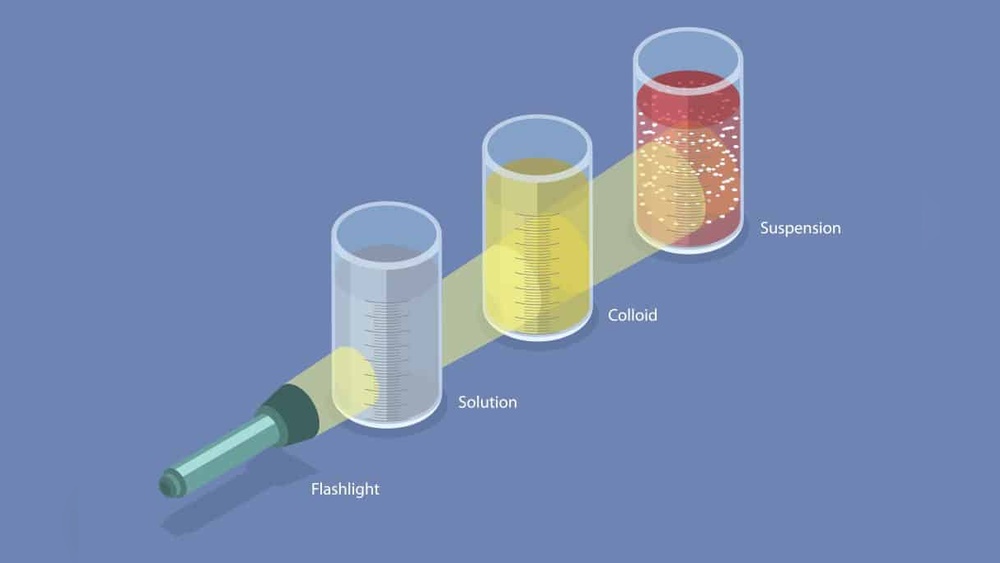
Have you ever wondered whether your favorite salad is more than just a tasty meal? Could it actually be a solution in chemistry?
If you’re curious about what makes a salad different from the liquids you drink or the mixtures you see in experiments, you’re in the right place. Understanding whether a salad is a solution or not might seem simple, but the answer reveals important ideas about mixtures, solutions, and how substances combine.
By the end of this article, you’ll clearly see why a salad is not a solution, and you’ll discover the surprising science behind the food on your plate. Ready to clear up this common chemistry question? Let’s dive in!
Salad As A Mixture
A salad is a classic example of a mixture in chemistry. It contains different ingredients combined but not chemically bonded. Each component keeps its own properties. This makes salad a perfect case to understand mixtures.
Mixtures differ from solutions because their parts are not uniform. You can see and separate each ingredient easily. This is why salad is called a heterogeneous mixture in science.
Visible Components In Salad
In a salad, you can clearly see all parts. Lettuce leaves, tomato slices, cucumber pieces, and other ingredients remain distinct. Their shapes and colors do not blend into each other. This visibility shows that the salad is not a solution but a mixture.
Uneven Distribution Of Ingredients
The ingredients in a salad are not spread evenly. One forkful may have more lettuce, another more tomatoes. The mix varies with every bite. This uneven spread is a key sign of a mixture, unlike a solution where components mix evenly.
Physical Separation Of Parts
The parts of a salad can be separated by hand or tools. You can pick out the cucumbers or tomatoes easily. No chemical change is needed to separate ingredients. This physical separation confirms salad as a mixture, not a solution.
Credit: alliancechemical.com
Characteristics Of A Solution
A solution in chemistry has distinct traits that set it apart from mixtures like salad. Understanding these traits helps us identify what makes a solution unique. A solution is a homogeneous mixture. This means its composition is even and consistent throughout.
Unlike a salad, which shows visible pieces of different ingredients, a solution blends substances completely. Each part of the solution looks the same as any other part. This uniformity is key to defining a solution.
Uniform Composition
Solutions have the same composition everywhere within the mixture. No matter where you take a sample, it will have the same ratio of substances. This even distribution means the solution appears as a single phase. For example, saltwater has salt evenly dissolved in water, making it consistent.
Indistinguishable Components
In a solution, the parts cannot be seen separately. The solute dissolves completely in the solvent. This makes the mixture look pure and clear. Unlike salad, where lettuce and tomatoes are visible, solutions hide their components well.
Common Examples Of Solutions
Many familiar liquids and gases are solutions. Sugar dissolved in tea is a solution. Air is another example, as it is a mixture of gases evenly spread. Vinegar, a solution of acetic acid in water, also shows these traits clearly.
Why Salad Is Not A Solution
Salad is often mistaken for a solution in chemistry, but it is not. Understanding why salad does not qualify as a solution helps clarify basic chemistry concepts. The key difference lies in how the ingredients combine and appear.
Heterogeneous Vs Homogeneous
Salad is a heterogeneous mixture. This means its parts are not uniform. Lettuce, tomatoes, and cucumbers remain distinct. Each bite can have a different mix of ingredients.
Solutions are homogeneous. They have a uniform composition throughout. For example, saltwater looks the same everywhere in the mixture.
Visual Identification Of Ingredients
In salad, you can easily see and pick out individual ingredients. This visibility shows it is not a solution. In a true solution, the components cannot be seen separately.
For instance, sugar dissolved in water forms a solution. You cannot see sugar crystals once dissolved. Salad ingredients stay visible and separate.
Physical Vs Chemical Separation
Salad ingredients can be separated physically. You can remove lettuce leaves or tomato slices by hand. This physical separation means no chemical change occurred.
In a solution, substances dissolve chemically. Separation requires chemical processes or evaporation. The ingredients in salad do not dissolve or bond chemically.
Comparing Fruit Salad And Solutions
Comparing fruit salad and chemical solutions helps us understand mixtures better. Both contain multiple components. Yet, their characteristics differ greatly. This comparison clarifies why salad is not a true solution.
Fruit Salad As A Heterogeneous Mixture
Fruit salad is a classic example of a heterogeneous mixture. You see different fruits like apples, oranges, and grapes. Each piece keeps its own shape and color. The ingredients are unevenly spread throughout the bowl. You can easily pick out each fruit. The composition changes from one spoonful to another. This shows the lack of uniformity in the mixture.
Differences From True Solutions
True solutions are homogeneous mixtures. Their components mix evenly on a molecular level. For example, sugar dissolving in water forms a solution. The sugar particles cannot be seen or separated easily. The mixture looks the same throughout. Unlike fruit salad, solutions have uniform composition. The parts of the solution cannot be picked apart physically. This is why fruit salad does not qualify as a solution in chemistry.
Real-world Examples Of Solutions
Solutions are part of everyday life. They consist of two or more substances mixed evenly. The result is a uniform mixture that looks the same throughout. Understanding real-world solutions helps us see chemistry in action. It also clarifies why some mixtures, like salad, are not solutions.
Saltwater And Sugar Solutions
Saltwater is a classic example of a solution. Salt dissolves completely in water. The salt particles spread evenly, making the mixture uniform. You cannot see the salt separately once dissolved.
Sugar solutions work the same way. When sugar dissolves in water, it creates a sweet, clear liquid. The sugar molecules mix evenly with water molecules. This makes the solution consistent in taste and appearance.
Brewed Coffee And Other Liquids
Brewed coffee is another common solution. Coffee grounds dissolve in hot water, releasing flavors and color. The final drink looks uniform with no visible particles.
Other liquids like tea or soda also form solutions. They mix flavor components, sugar, and water evenly. These drinks show how solutions appear clear and consistent.
Credit: alliancechemical.com
Credit: exberry.com
Frequently Asked Questions
Is A Salad A Solution?
No, a salad is not a solution. It is a heterogeneous mixture with visible, separate ingredients and uneven distribution.
What Is Salad Classified As In Chemistry?
Salad is classified as a heterogeneous mixture in chemistry. Its components are visibly distinct and unevenly distributed. You can physically separate ingredients like lettuce and tomatoes. Unlike solutions, salads do not have uniform composition or dissolved substances.
What Is An Example Of A Solution In Chemistry?
An example of a solution in chemistry is salt dissolved in water. This creates a uniform, homogeneous mixture.
Why Is Fruit Salad Not Considered A Solution?
Fruit salad is not a solution because its components remain separate and visibly distinct. It forms a heterogeneous mixture, not a uniform, dissolved blend.
Conclusion
A salad is not a solution in chemistry. It is a heterogeneous mixture with visible parts. The ingredients do not blend evenly or dissolve. You can separate each item easily by hand. Solutions mix substances uniformly and look the same throughout.
Examples include saltwater or sugar dissolved in tea. Understanding this difference helps explain how mixtures work. Salads offer variety, but chemistry calls for uniformity in solutions. This simple fact shows why salads can’t be called solutions.


