
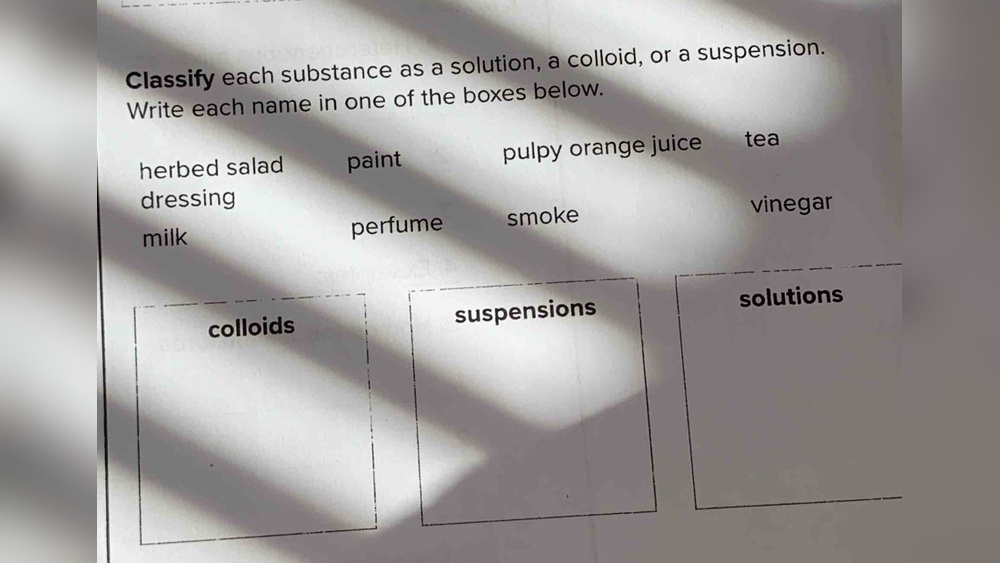
Have you ever wondered what exactly happens inside your herbed salad dressing? Is it a smooth blend where everything dissolves evenly, or do its ingredients separate over time?
Understanding whether your favorite dressing is a colloid solution or a suspension can change how you think about mixing, storing, and even enjoying it. You’ll discover the science behind herbed salad dressing and learn why shaking it before use isn’t just a habit but a necessity.
Ready to uncover the truth and impress your friends with some kitchen chemistry? Let’s dive in!
Basics Of Mixtures
Understanding mixtures is key to knowing what herbed salad dressing really is. Mixtures combine two or more substances without chemical bonding. Each substance keeps its own properties. Mixtures can be simple or complex. Their particles might mix evenly or stay separate.
Types Of Mixtures
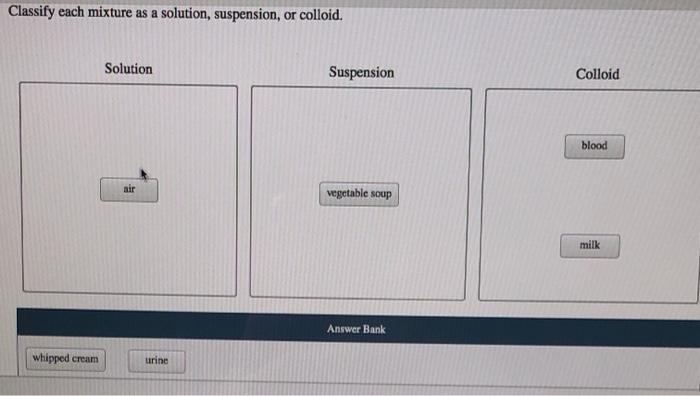
Mixtures fall into three main types: solutions, colloids, and suspensions. Solutions are uniform and clear. The particles dissolve completely, like salt in water. Colloids have particles bigger than in solutions but small enough to stay spread out. Milk is a good example. Suspensions have large particles that settle if left alone. Herbed salad dressing is one of these. The oil, vinegar, and herbs separate over time, so it needs shaking.
Key Characteristics
Solutions look clear and do not scatter light. Colloids appear cloudy and scatter light but do not settle. Suspensions are visibly mixed at first but separate quickly. Particles in suspensions are easy to see or filter. Herbed salad dressing shows this clearly. The herbs and oil float and sink, needing mixing to blend again. This behavior confirms it as a suspension, not a colloid or solution.
Credit: www.chegg.com
What Is A Suspension?
A suspension is a type of mixture where particles do not dissolve. These particles are large enough to be seen and will settle over time. Suspensions need to be shaken or stirred to mix the particles evenly again. Herbed salad dressing is a common example of a suspension because its ingredients separate if left still.
Particle Size And Visibility
Suspension particles are larger than those in solutions or colloids. You can often see these particles with the naked eye or under a simple microscope. In herbed salad dressing, bits of herbs and oil droplets are clearly visible. This visibility shows the mixture is not uniform throughout.
Behavior Over Time
Particles in a suspension will settle at the bottom if left alone. This happens because the particles are heavier than the liquid they are in. For example, in herbed salad dressing, oil and herbs separate from vinegar over time. Shaking the bottle mixes the particles again, but the settling will happen once more.
Examples In Everyday Life
Many common items are suspensions. Muddy water, pulpy orange juice, and certain medicines are good examples. Herbed salad dressing fits this group because its solid and liquid parts separate. Knowing this helps explain why you must shake the dressing before use.
What Is A Colloid?
Understanding what a colloid is helps us know how mixtures like herbed salad dressing behave. A colloid is a special type of mixture where tiny particles spread evenly throughout another substance. These particles are bigger than those in a solution but too small to settle out quickly. This unique size and spread give colloids their distinct look and feel. Let’s explore this idea more.
Particle Dispersion
In a colloid, particles spread evenly but do not dissolve. The particles range from 1 to 1000 nanometers in size. They stay mixed and do not separate easily. Light can scatter when it passes through a colloid, making the mixture look cloudy or milky. This effect is called the Tyndall effect.
Stability And Settling
Colloids remain stable without stirring for a long time. The particles are small enough to stay suspended by natural motion. They do not settle at the bottom quickly. This contrasts with suspensions, where particles are larger and fall out over time. Colloids need less shaking or mixing to keep uniform.
Common Examples
Milk is a common colloid, with fat droplets spread in water. Paint is another example, where solid particles mix with liquid. Fog and smoke also act as colloids, with tiny droplets or solid particles in air. These mixtures look uniform but are made of different substances combined closely.

Credit: quizlet.com
Salad Dressing Components
Herbed salad dressing has a mix of different ingredients. Each part plays a role in how the dressing looks and feels. Understanding these parts helps explain if it is a colloid or a suspension.
The main parts include oil, vinegar, and herbs. These ingredients behave differently when combined. Their interaction creates the unique texture of the dressing.
Oil And Vinegar Interaction
Oil and vinegar do not mix well. Oil is a non-polar liquid, while vinegar is mostly water and polar. When combined, they form two separate layers.
Shaking the dressing breaks the oil into small droplets. These droplets float in the vinegar but will settle if left still. This separation is a key sign of a suspension.
Herbs And Particles
Herbs add solid bits to the dressing. These bits are larger and can be seen easily. They settle at the bottom if the dressing sits for some time.
The presence of visible particles makes the dressing a suspension rather than a colloid. Colloids have tiny particles that do not settle quickly.
Why Herbed Salad Dressing Is A Suspension
Herbed salad dressing is a classic example of a suspension rather than a colloid. The mixture contains visible particles of herbs and oil droplets that do not dissolve completely in the vinegar or other liquid base. These particles are large enough to settle over time. This behavior is a key sign of a suspension. Understanding why herbed salad dressing is a suspension helps explain its texture and how to use it best.
Particle Size In Dressing
The particles in herbed salad dressing are relatively large. Herbs and oil droplets are easy to see with the naked eye. These particles do not dissolve or break down into smaller pieces. Their size allows them to remain suspended for a while but eventually settle at the bottom. This is different from colloids, where particles are smaller and stay evenly spread out without settling.
Separation And Layering
Over time, herbed salad dressing separates into layers. Oil rises to the top while heavier herbs and vinegar settle down. This layering is a clear sign of a suspension. The particles are too large and heavy to stay mixed. This separation happens naturally without stirring or shaking. It shows the unstable nature of the suspension in the dressing.
Effect Of Shaking
Shaking herbed salad dressing mixes the particles temporarily. The oil droplets and herbs spread evenly through the liquid again. This makes the dressing look smooth and uniform. But the particles will start to separate soon after. This need to shake before use is typical for suspensions. It helps keep the mixture mixed and ready to serve.
Credit: www.gauthmath.com
Distinguishing From Colloids
Understanding whether herbed salad dressing is a colloid or a suspension starts with distinguishing from colloids. Colloids have tiny particles evenly spread that do not settle quickly. Suspensions contain larger particles that separate over time. This key difference affects how salad dressings behave and look.
Herbed salad dressing often shows visible particles like herbs and oil droplets. These particles tend to settle at the bottom if left still. This settling helps identify the dressing as a suspension rather than a colloid.
Temporary Emulsions
Herbed salad dressing forms a temporary emulsion when shaken. The oil and vinegar mix but separate after some time. This temporary mixing means the particles are not stable enough to remain suspended. Unlike stable colloids, the droplets in the dressing merge and settle quickly.
This temporary nature is common in suspensions. The visible droplets remain separate and do not blend fully into one phase. This behavior confirms that herbed salad dressing is not a true colloid.
Differences In Stability
Colloids have high stability due to very small particle size. These particles stay evenly dispersed without settling. Milk and paint are classic examples of stable colloids. Herbed salad dressing lacks this stability.
The larger particles in the dressing cause it to separate over time. Shaking is necessary to remix the ingredients. This instability is a clear sign that herbed salad dressing is a suspension. Understanding this helps explain why you must shake the bottle before use.
Practical Implications
Understanding whether herbed salad dressing is a suspension or a colloid helps in handling it properly. The practical effects influence how you store, mix, and enjoy the dressing. These factors impact the texture, flavor, and overall experience of your salad.
Storage And Mixing Tips
Herbed salad dressing is a suspension with visible particles. Over time, the herbs and oil separate from the vinegar. This separation is natural and expected. Always shake the bottle well before use. Stirring or shaking helps recombine the ingredients evenly. Store the dressing in a cool place, like a refrigerator. Cooler temperatures slow down particle separation. Avoid leaving it in direct sunlight or warmth. Proper storage keeps the dressing fresh and tasty longer.
Impact On Texture And Flavor
Suspensions like herbed salad dressing offer a bold texture. The herbs add small chunks and specks that give a fresh feel. The oil and vinegar layers provide a rich mouthfeel. Mixing before use balances the sharpness of vinegar and smoothness of oil. This balance enhances the flavor experience. The herbs release their aroma and taste only when stirred well. Without mixing, the taste may be uneven or too strong in parts. Proper handling ensures every bite is flavorful and textured.
Frequently Asked Questions
Is Herbed Salad Dressing A Colloid?
No, herbed salad dressing is a suspension, not a colloid. It has large particles that separate over time and need shaking to mix.
Is Salad Dressing A Suspension?
Yes, salad dressing is a suspension. Its oil and vinegar separate into layers over time and need shaking to mix.
What Type Of Mixture Is Salad Dressing?
Salad dressing is a suspension mixture. Its oil and vinegar components separate over time and require shaking to mix.
How To Tell If Something Is A Solution, Suspension, Or Colloid?
A solution has fully dissolved particles and appears uniform. A colloid has small, dispersed particles that don’t settle. A suspension contains larger particles visible to the eye that settle over time and need shaking to mix.
Conclusion
Herbed salad dressing is best described as a suspension. It contains larger particles that separate over time. You can see herbs and oil droplets settling if left still. Shaking the bottle mixes these parts again temporarily. Unlike colloids, its particles do not stay evenly spread.
This difference helps explain why you must shake dressing before use. Understanding this helps you know how to store and serve it. Suspensions like this show visible layers and need mixing. Simple science makes your salad taste better every time.


