
Are you confused about the difference between web hosting and cloud hosting? You’re not alone.
With so many hosting options available, it can be tough to choose the right one for your website. Making the wrong choice could slow down your site, frustrate your visitors, and even affect your business. But don’t worry, you’re in the right place to clear up the confusion.
Imagine your website as a bustling shop. You need a solid foundation to make sure your shop runs smoothly and stays open for customers. That’s where hosting comes in. Web hosting and cloud hosting are like different types of foundations, each with its unique strengths. Understanding these differences can help you make a smart decision that benefits your site and your visitors. Stick around, because we’re going to break it down in simple terms. You’ll discover which option suits your needs best and why. By the end of this article, you’ll feel confident in making an informed choice that will keep your website running efficiently. Let’s dive in!
Web Hosting Basics
Web hosting stores your website on a server. It helps people see your site on the internet. There are different types of web hosting. Each type has unique features.
Shared Hosting Explained
Shared hosting means multiple websites share one server. It is cheaper than other options. Great for small websites. But it might be slow if many sites use the server at once.
Dedicated Hosting Overview
Dedicated hosting gives your website a whole server. No sharing with others. More control and security. It costs more than shared hosting. Best for big websites with lots of visitors.
Credit: www.silvertouch.com
Cloud Hosting Essentials
Understanding Cloud Infrastructure can be simple. Cloud hosting uses a network of computers. These computers work together. They store and manage data. This is different from traditional hosting. Traditional hosting uses a single server. Cloud hosting spreads the load across many machines. This improves performance and reliability.
Public vs. Private Cloud matters. A public cloud is open to everyone. Many users share the same resources. This makes it cost-effective. A private cloud is for one user only. It is more secure and customizable. Businesses choose based on their needs. Public clouds are cheaper. Private clouds offer more control.
Scalability and Flexibility are key features. Cloud hosting grows with your needs. Add or remove resources easily. This saves money. Pay for what you use. No need for expensive upgrades. Flexibility allows quick changes. Adjust settings as required. This suits fast-changing environments.
Key Differences
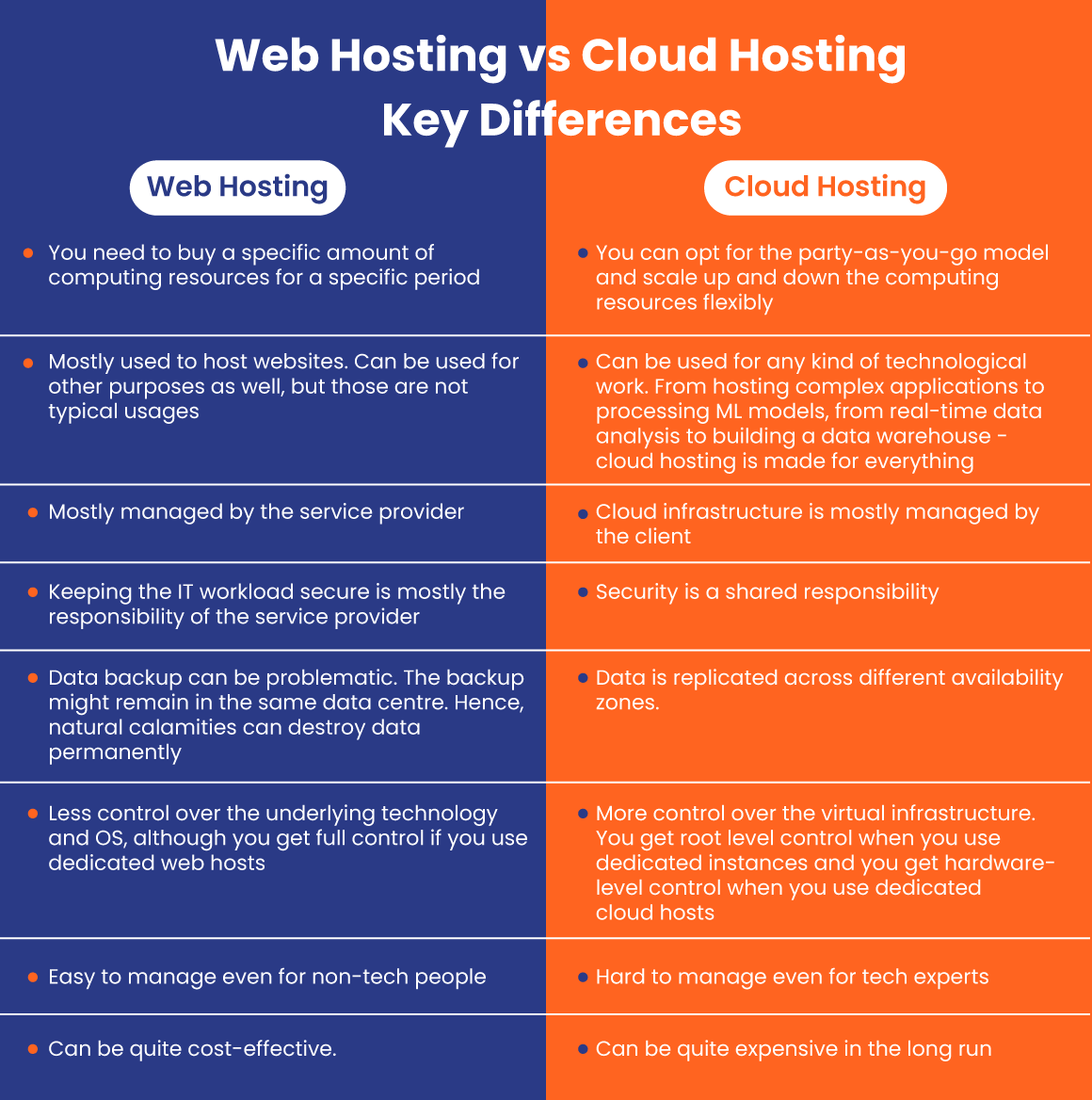
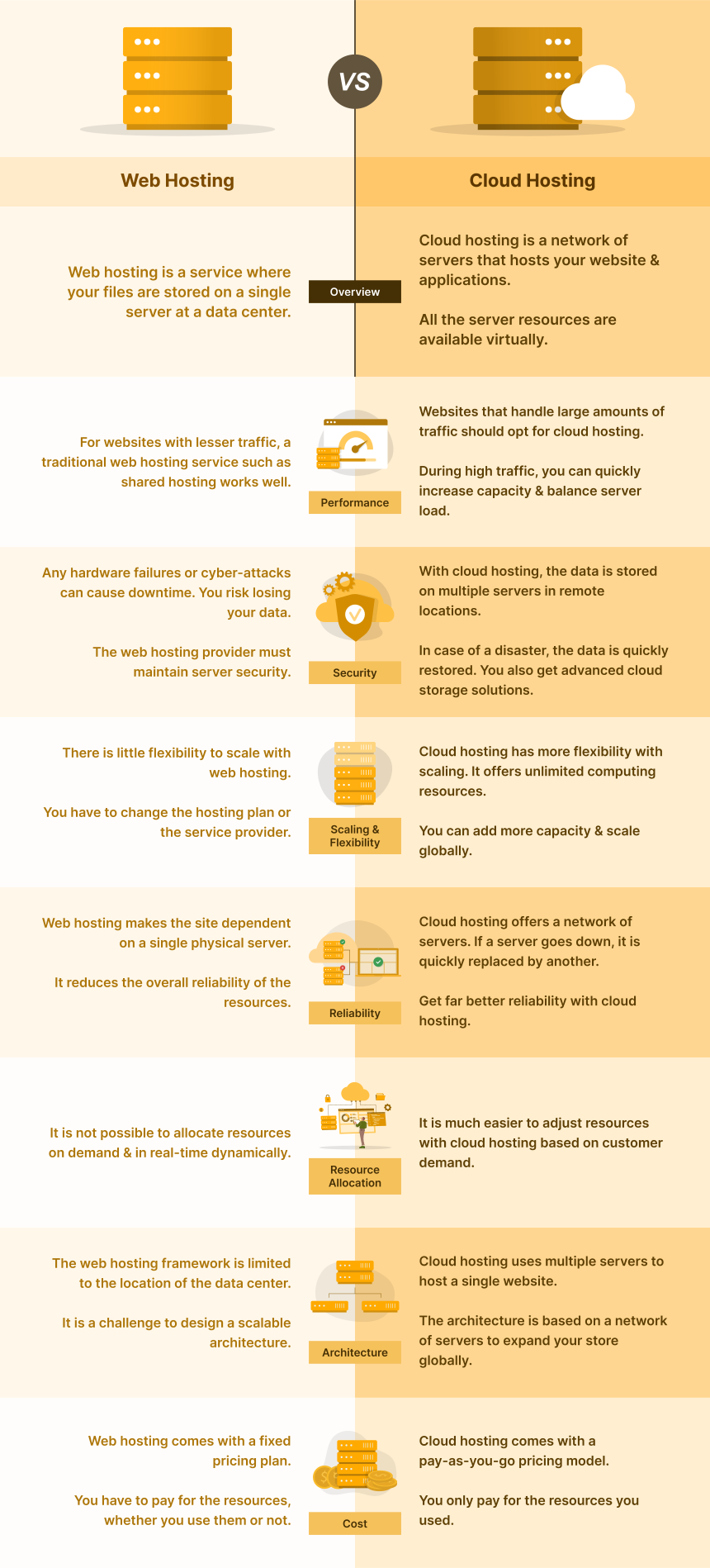
Web hosting uses one server. This can slow down during traffic peaks. Cloud hosting uses many servers. It handles traffic better. Speed stays fast. No slowdowns. Cloud hosting scales easily. Web hosting struggles with big loads. Fast speed means happy users. No waiting.
Reliability is key. Web hosting can fail if the server crashes. Cloud hosting rarely fails. It uses many servers. If one crashes, others help. Uptime is high. Almost no downtime. Websites stay online. Users can visit anytime. Web hosting might go offline. Cloud hosting stays strong.
Costs differ. Web hosting is usually cheaper. Fixed monthly rates. Cloud hosting costs vary. Pay as you use. More traffic, more cost. Less traffic, less cost. Flexibility in payments. Web hosting lacks this. Choose based on budget and needs. Cost matters for small sites.
Credit: www.cloudpanel.io
Security Considerations
Web hosting stores your website on a single server, making it vulnerable to attacks. Cloud hosting spreads your data across multiple servers, offering enhanced protection and reliability. This setup minimizes risks by distributing resources, ensuring greater security for your online presence.
Data Protection In Web Hosting
Web hosting stores data on one server. This can be risky. Hackers might target this single point. Loss of data is possible. Backup options are available. But they are not always automatic. Users must often set them up. This can be tricky. Physical server protection is needed. Strong passwords and firewalls help. Regular updates are important too. Data may not be encrypted by default. Users must ensure protection steps.
Security In Cloud Hosting
Cloud hosting spreads data across many servers. This adds a layer of safety. If one server fails, others take over. This ensures data is safe. Cloud providers offer automatic backups. Data is often encrypted. This makes it hard for hackers. Security updates happen often. Users get alerts for unusual activity. Cloud hosting offers better security tools. But, users must choose settings wisely.
Choosing The Right Option
Think about the size of your business. Small businesses might prefer web hosting. It’s often cheaper and easier to manage. Large businesses often need cloud hosting. It offers more flexibility and power.
Consider your team’s skills. Web hosting requires less technical know-how. Cloud hosting needs more technical understanding. It’s important to match hosting with your team’s skills.
Plan for the future. Web hosting can have limits. It might not handle large growth well. Cloud hosting can grow with your business. It’s more scalable. Businesses growing fast might choose cloud hosting.
Think about cost changes as you grow. Web hosting costs can rise with more traffic. Cloud hosting costs might change based on usage. Choose based on future growth plans.
Credit: www.educba.com
Frequently Asked Questions
Is Web Hosting The Same As Cloud Hosting?
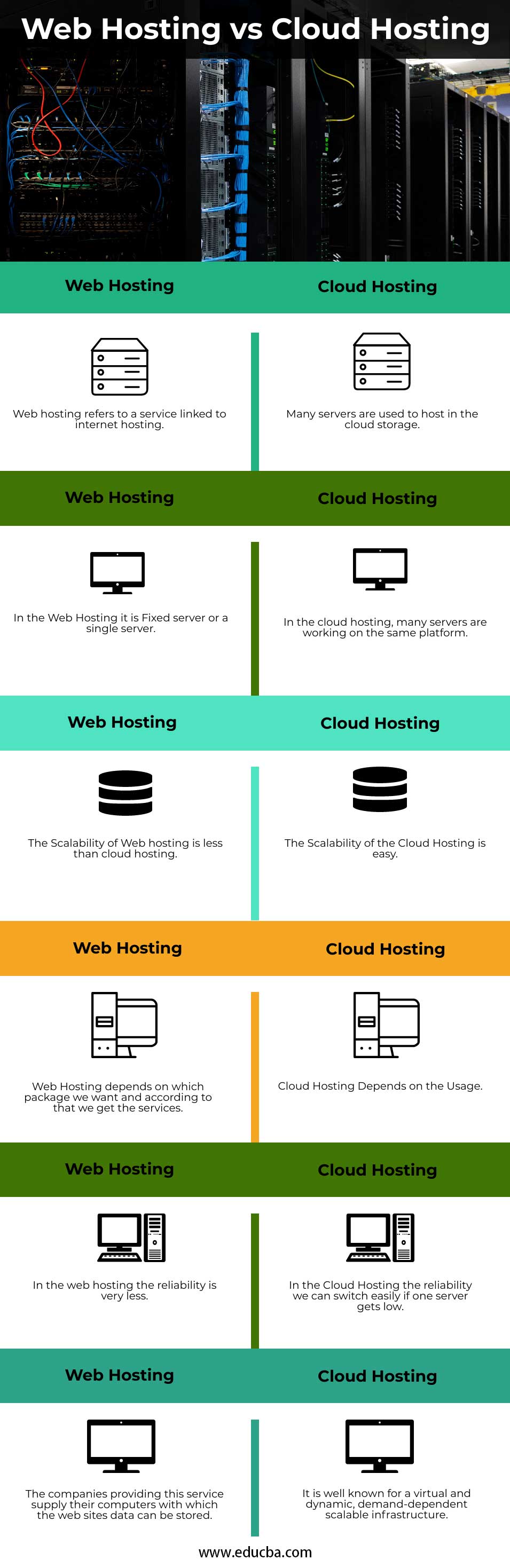
Web hosting uses a single server, while cloud hosting utilizes multiple servers. Cloud hosting offers more flexibility, scalability, and reliability. Web hosting is typically less expensive but may have limited resources compared to cloud hosting. Both serve different business needs.
What Is The Difference Between Cloud And Web Server?
A cloud server is a virtual server hosted in a cloud computing environment. A web server delivers web content to users’ browsers. Cloud servers offer scalability and flexibility, while web servers focus on hosting websites and applications. Both have unique features suited for different needs.
What Is The Difference Between Cloud Hosting And Local Hosting?
Cloud hosting uses multiple servers over the internet, offering scalability and flexibility. Local hosting relies on physical servers located on-site, providing more control but limited resources. Cloud hosting is often more cost-effective and accessible, while local hosting can be more secure.
Choose based on your specific needs and resources.
What Is Meant By Cloud Hosting?
Cloud hosting distributes resources across multiple servers for scalability and reliability. It offers on-demand access, enhanced performance, and flexibility. Users pay for what they use, ensuring cost-efficiency. This hosting model supports high traffic and eliminates downtime risks, making it ideal for dynamic websites and applications.
Conclusion
Choosing between web hosting and cloud hosting depends on your needs. Web hosting offers simplicity and is ideal for small websites. Cloud hosting provides scalability and flexibility for growing businesses. Understand your website’s requirements first. Think about traffic, budget, and technical expertise.
Make informed decisions based on these factors. Both types have their advantages. Evaluate what suits your goals best. This helps in providing a stable online presence. Remember, hosting is crucial for your website’s performance. Choose wisely to ensure a smooth digital experience.


