
Ever wondered how your favorite websites are available to you at the click of a button? Or why your own site needs something called ‘web hosting’?
These aren’t just techy buzzwords reserved for the IT crowd. Understanding web hosting is crucial if you’re planning to create a website, whether it’s for your personal blog or a booming business venture. So, what exactly is web hosting? In simple terms, it’s like renting space on the internet for your site.
But there’s more to it than just that. By grasping the full definition, you’ll be better equipped to make smart decisions that can boost your online presence and ensure your website runs smoothly. Dive in, and let’s unravel what web hosting really means for you and your digital ambitions.
Credit: www.quora.com
Web Hosting Basics
Web hosting is where websites live on the internet. It stores your site’s files and makes them available online. Without hosting, no one can see your site. It’s like renting a space on a computer server. Different web hosting options exist to fit different needs.
Shared hosting is like living in an apartment. You share resources with others. It’s cheap and good for small sites. VPS hosting is a bit more private. You get your own space but still share a server. Dedicated hosting means you have the whole server to yourself. It’s great for big sites with lots of visitors. Cloud hosting spreads your site across many servers. This makes it super reliable.
Web hosting keeps your site online. It makes sure your site loads fast. Without it, your site won’t work well. Good hosting helps your site stay safe from hackers. It also helps you handle lots of visitors at once. Choosing the right hosting is important for your site’s success.
Shared Hosting
Shared hosting means many websites share one server. It’s cheaper than other types. This makes it affordable for small websites. You also get easy setup and support. But there are some downsides. Your website can be slow if others use too much space. You have limited control over the server. Security can be weaker compared to private hosting. For big websites, shared hosting may not be ideal.
Small businesses and personal blogs often use shared hosting. It’s also good for students and beginners. People who want to save money choose it. Those who need basic features find it useful. If you don’t need advanced options, shared hosting works well. It’s best for sites with low traffic. Many users like its simplicity and cost.
Vps Hosting
VPS Hosting offers more control over your server. It provides dedicated resources like CPU and RAM. This means your website runs faster and more reliably. Shared Hosting can be slow if many users are on the same server. With VPS, you get better security too. You can install custom software and make changes easily. This hosting is best for growing websites needing more power.
VPS is great for medium-sized businesses. It suits websites that get moderate traffic. Developers also like VPS for testing and development. People who want more control over their server should choose VPS. It’s a good step up from Shared Hosting. VPS can handle higher traffic than shared options.
Dedicated Hosting
Dedicated hosting offers you your very own server. This means more power and control. You don’t share resources with others. This can make your website faster. You can also choose the software you want. This gives you freedom to set up your server just right. It can handle lots of visitors too. This is good for big websites.
Dedicated hosting suits big businesses best. These businesses need lots of data space. They also need strong security. This hosting type can offer both. It helps keep customer data safe. Companies that sell online also benefit. They need their websites to work well all the time. Dedicated hosting makes sure their websites run smoothly. It’s a good choice for them.
Cloud Hosting
Cloud hosting allows for easy scaling. Add more resources as needed. This is useful for growing websites. No need for big changes or delays. Websites can handle more visitors easily. Sudden traffic spikes are not a problem. Scale down when traffic is low. Save money and resources. Cloud hosting is great for growing businesses. It keeps websites running smoothly.
Cloud hosting can be cost-effective. Pay only for what you use. No need to pay for unused resources. This is good for small budgets. But it might be more expensive sometimes. Costs depend on usage and provider. Understand your needs before choosing. Compare different pricing plans. Choose the best one for your needs. Budget planning is important. Don’t spend more than you need.

Credit: www.easysite.com
Managed Hosting
Support services offer help to users. Experts are ready to assist. They solve technical problems quickly. Users can ask questions anytime. This makes hosting stress-free. Everyone can focus on their work. No need to worry about complex issues. Managed hosting is like having a helper. Your website is safe and sound.
Managed hosting is easy to use. Everything is set up for you. No need to understand technical details. Control panels are simple. Click a button and things happen. Users get updates automatically. This saves time and effort. Websites run smoothly. Anyone can manage their site easily. No special skills needed.
Choosing The Right Host
Assessing Needs is crucial when picking a web host. Understand what your website requires. Do you need large storage? Do you expect high traffic? For simple blogs, less storage is okay. Big businesses might need more. Check if the host supports your software. Some hosts are good for WordPress. Others might support different platforms. Make a list of your needs. Compare hosts based on these needs.
Budgeting for Hosting is important too. Hosting prices vary a lot. Shared hosting is cheaper. Dedicated servers cost more. Decide how much you can spend. Look for hosts within your budget. Don’t just choose the cheapest. Quality matters too. Think about renewal costs. Some hosts offer discounts at first. Renewal may be higher. Compare prices carefully. Ensure you’re getting good value.
Web Hosting And Security
Web hosting involves storing your website’s data. This data needs strong protection. Hackers may try to steal or harm it. Security is a big part of hosting. Companies work hard to keep your data safe. They use many tools and tricks. Keeping data safe is their main job. Good security means less worry for you.
SSL certificates are important for website security. They make sure data is sent safely. When you see a padlock icon, SSL is working. It helps keep your information private. This is very important for online shopping. SSL makes sure no one can steal your details. Websites with SSL are trusted by users. They feel safe to browse and shop.
Future Of Web Hosting
The future of web hosting looks bright. Emerging technologies like cloud hosting and AI are leading the way. Cloud hosting makes websites fast. It stores data in many places. If one server fails, another takes over. AI helps in managing servers. It predicts problems and fixes them. This keeps websites running smoothly. Security is another area improving with technology. New tools keep data safe from hackers.
Web hosting is very important for businesses. A good host makes websites load fast. This keeps visitors happy. Slow websites can make visitors leave. This is bad for business. A reliable host also means less downtime. If a website is down, it can’t sell products. This can lead to lost sales. Affordable hosting options help small businesses. They can start online without spending a lot. Good hosting helps businesses grow.
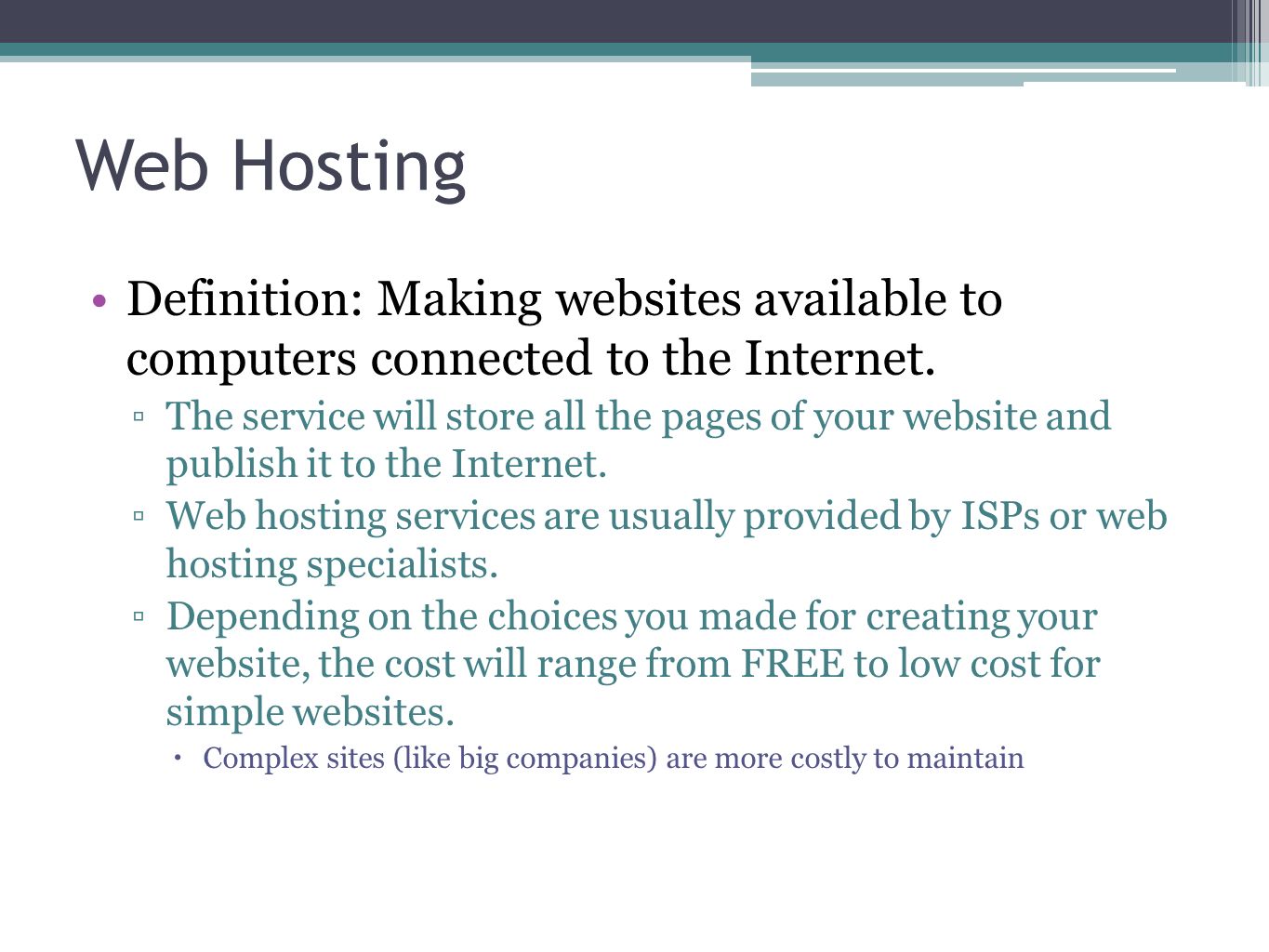
Credit: slideplayer.com
Frequently Asked Questions
What Do You Mean By Web Hosting?
Web hosting involves storing and serving website files on a server connected to the internet. It enables users to access your site online. Hosting services provide space, bandwidth, and technical support to ensure your website runs smoothly. Reliable hosting enhances site performance and user experience.
What Is An Example Of A Web Host?
An example of a web host is Bluehost. It offers reliable hosting services, including shared, VPS, and dedicated hosting. Bluehost is popular for its user-friendly interface, strong customer support, and competitive pricing. It is suitable for beginners and experienced users looking to build and maintain websites efficiently.
Can I Run My Website Without Hosting?
A website needs hosting to be accessible online. Hosting provides storage for website files on a server. Without hosting, your website cannot be live or viewable. You can use free platforms with limited features, but self-hosting offers more control and scalability.
What Is Web Hosting In Layman Terms?
Web hosting is a service that stores your website files on servers. It makes your website accessible online. Hosting companies provide the technology and resources needed to keep your site running smoothly. You rent space on their servers to ensure your website is available to visitors worldwide.
Conclusion
Web hosting is essential for your website’s online presence. It stores your site’s data on servers. This allows users to access your content anytime. Different hosting types suit different needs. Shared hosting is affordable. VPS offers more control. Dedicated servers provide maximum resources.
Cloud hosting is flexible and scalable. Choose based on your website’s requirements. Understanding hosting types helps you make informed choices. This ensures your site runs smoothly. Always remember, the right hosting boosts your site’s performance. Keep learning and exploring. Your website deserves the best support.


