
Are you ready to launch your website but find yourself tangled in the web of technical jargon? Terms like “domain” and “web hosting” might sound intimidating, but they are essential pieces of the puzzle when it comes to creating an online presence.
Understanding the difference between these two is crucial for making informed decisions that will affect the success of your website. Imagine your website as a house. The domain is like the address that tells people where to find you, while web hosting is the land on which your house sits.
Without both, your online home simply can’t exist. We’ll break down the differences between domain and web hosting in the simplest terms possible. You’ll discover how each plays a unique role in getting your website up and running smoothly. Stick around, and you’ll gain the clarity you need to confidently manage your online journey.
Domain Basics
A domain is like your address on the internet. It is a name that people type to find your website. For example, www.example.com is a domain. Domains are important because they help others find your site easily. Without a domain, your website cannot be found.
Your domain is your online identity. It tells people who you are or what your site is about. A good domain name is easy to remember. It can help your site look more professional. Choosing the right domain is important for your web presence.
Web Hosting Essentials
Web hosting is like a home for your website. It keeps your website’s files safe and ready for visitors. Servers are special computers that store these files.
When someone types your website address, the server sends the files to their computer. This process helps people see your website. Without hosting, your site can’t be on the internet.
Hosting makes your website accessible all the time. It ensures that visitors can see your content anytime. Good hosting means your site loads quickly. This keeps visitors happy and coming back.
Some hosting plans even offer extra security. This keeps your site safe from online threats. A reliable host gives your site a stable home. This is important for any website.
Core Differences
Domain names are like addresses on the internet. They help people find your website. Every website needs a domain name.
Web hosting is where your website lives. It’s like a house for your site. Without hosting, your website won’t work online.
Domains point users to your site. They are words, not numbers. Easy to remember. Hosting stores all website files. It keeps them safe. Hosting makes sure your site stays up.
Domains and hosting work together. Without domains, users can’t find your site. Without hosting, your site won’t be live.
You own your domain name. You pay for it yearly. You choose where to host your site. You can switch hosts anytime.
Hosting requires management. You need to update and backup files. Domains need renewal. Hosting needs maintenance. Both need care.

Credit: dorik.com
Types Of Domain Names
Domain names serve as unique addresses for websites, while web hosting stores a website’s data. Understanding their differences helps in building an online presence.
Top-level Domains
Top-Level Domains, or TLDs, are the last part of a web address. Examples include .com, .org, and .net. They are the most common and familiar. TLDs help identify the type of organization or purpose of the website. For instance, .edu is for educational institutions. Businesses often use .com. Each TLD serves a unique role.
Country Code Domains
Country Code Domains, or ccTLDs, end with two letters. These letters represent a country. For example, .us is for the United States, .uk is for the United Kingdom. They help websites target specific countries. Businesses use them to connect with local audiences. ccTLDs are useful for local presence.
Subdomains
Subdomains are a part of a larger domain. They help organize a website into sections. For example, blog.example.com is a subdomain. Here, “blog” is separate from the main site. Subdomains are useful for different parts of a website. They can hold unique content. They make navigation easier for users.
Types Of Web Hosting
Shared hosting is like sharing a big house. Many websites live together on one server. This makes it cheaper for everyone. Each site has its own space but shares resources. If one site uses lots of space, others might slow down. It’s good for small websites or beginners. Easy to set up, but not very fast. It’s the most affordable option.
VPS hosting means Virtual Private Server. It’s like renting your own apartment. You get more space and control. No sharing with many neighbors. It’s faster than shared hosting. You can change settings and install programs. It’s pricier than shared hosting. Suitable for medium-sized websites.
Dedicated hosting gives you the whole building. No sharing at all. You get full control and power. It’s super fast. Perfect for big websites with lots of visitors. Costs more than VPS and shared hosting. Ideal for businesses that need high performance.
Cloud hosting is like living in many places at once. Your website uses many servers. If one server breaks, others keep it working. It’s flexible and can grow easily. Fast and reliable. Good for websites that need lots of space. Costs depend on usage.
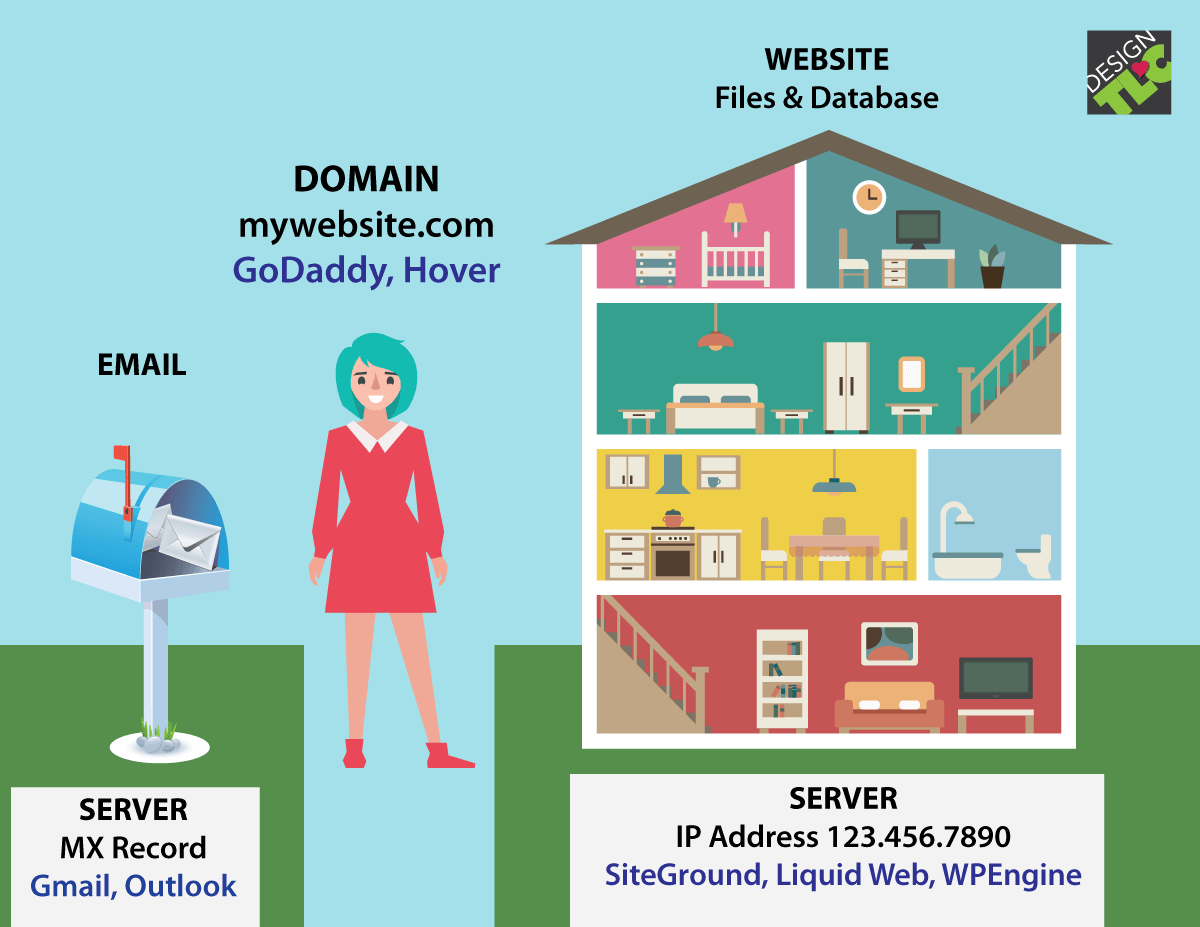
Credit: designtlc.com
Choosing The Right Domain
A domain should match your brand name. This helps people find you online. It should be short and easy to spell. Avoid numbers or special characters. They can confuse users. A good domain sticks in the mind. It tells what your website is about.
SEO considerations are also important. Use keywords related to your business. This helps your site rank better on search engines. A good domain boosts your online presence. It helps in building trust and credibility.
Always check if a domain is already used. Pick a unique one that stands out. Think about your future plans. The domain should still fit if your business grows.
Selecting Suitable Web Hosting
Performance needs are crucial when choosing a web hosting plan. Websites with many visitors need fast servers. This ensures pages load quickly. Slow websites can lose visitors. It’s important to check the server’s speed. Some hosts offer different plans for different needs. Always choose a plan that matches your website’s traffic.
Scalability options are important for growing websites. As websites grow, they may need more resources. Some hosts allow easy upgrades. This means you can start small and grow later. Make sure the host offers flexible plans. This helps your site grow without problems. Choose a host that offers room to expand.
Domain And Hosting Providers
Many companies help you get a domain name. Some are very famous. GoDaddy, Namecheap, and Bluehost are common choices. Each offers different prices and features. It’s important to pick the right one. They help you find the perfect name for your website. Choosing a good registrar makes your life easier. They also offer helpful support. But, you must make sure your domain is unique. Only one person can have it. So, act fast if you like a name.
Hosting providers keep your site online. They make sure it works well. Bluehost, HostGator, and SiteGround are popular choices. Each offers different plans. Some are cheap, others are costly. Your choice depends on your needs. They offer space for your site to live. You must choose wisely. Good hosting makes your site fast. It also keeps it safe. Many people trust these providers. They offer great support and help.
Common Misconceptions
Many people mix up domain names and web hosting. A domain is like your website’s address. It helps people find your site. Web hosting is the space where your website lives. Think of hosting as your website’s home. Both are needed to have a working site.
Good hosting affects how fast your website loads. A slow site can annoy visitors. Fast hosting makes sure everyone has a good experience. Domains do not affect speed. They are just the name of your site. Choose hosting wisely to keep visitors happy.
Future Trends
Domain names are getting more popular. People want unique names. New extensions like .tech and .shop are emerging. These extensions help businesses stand out. Short domains are in demand. They are easy to remember. Domain auctions are growing. People bid for premium names. Prices for these names are rising. Investors see potential in domain names. They buy and sell for profit.
Hosting technology is changing fast. Cloud hosting is popular. It offers flexibility and reliability. Security features are improving. They protect websites from threats. Speed enhancements are happening. Fast sites keep visitors happy. Green hosting is gaining interest. It uses renewable energy. User-friendly tools are available. They help manage websites easily.

Credit: www.want2host.com
Frequently Asked Questions
Do You Need Hosting If You Have A Domain Name?
Yes, hosting is necessary to make your website accessible online. A domain name alone doesn’t store website files. Hosting provides server space where your site’s data resides. Without hosting, your domain won’t display any content to visitors. Choose a reliable hosting provider to ensure website functionality and speed.
Are Domain And Host The Same Thing?
Domain and host are not the same. A domain is your website’s address, while hosting is the server space storing your website’s files. You need both for a fully functioning website. Domains direct users to your site, and hosting makes it accessible on the internet.
Is Godaddy A Host Or Domain?
GoDaddy offers both domain registration and web hosting services. It’s a popular choice for buying domains and hosting websites. Users can manage domain names, build websites, and access various online tools through GoDaddy’s platform, making it versatile for online presence needs.
Can A Domain Work Without Hosting?
A domain can exist without hosting, but it won’t display a website. Hosting is needed to store and serve website files. You can use a domain for email services or redirects without hosting. Register a domain and connect it to hosting to make it fully functional for a website.
Conclusion
Understanding domain and web hosting is essential for building websites. Domains act like addresses, directing users to your site. Web hosting provides space for storing website files. Both work together but serve different purposes. Choosing the right domain and hosting plan is crucial.
It impacts your site’s performance and accessibility. Always research and compare options. This ensures the best fit for your needs. With this knowledge, creating and managing a website becomes simpler. You’re now ready to start your online journey with confidence.


