
Are you planning to launch your own website? One of the first questions you might be asking is, “How much should hosting for a website be?” It’s a crucial decision that can impact your online presence and budget.
The right hosting service can make all the difference in how your site performs and is perceived by visitors. You want to ensure you’re getting the best deal without sacrificing quality. You’ll discover the factors that influence hosting costs and learn how to determine the best option for your needs.
Stick around to unlock the secrets of choosing the perfect hosting plan that balances cost and performance.

Credit: www.hostinger.com
Factors Affecting Hosting Costs
Different hosting types have different prices. Shared hosting is cheaper than dedicated hosting. VPS hosting costs more than shared hosting but less than dedicated. Cloud hosting is flexible. It can be cheap or costly. Managed hosting is often more expensive. The right type depends on needs.
More bandwidth means more cost. High traffic sites need more bandwidth. Large storage needs increase costs too. Sites with many images or videos need more space. Basic websites need less storage. Choosing the right plan saves money.
Strong security can cost more. SSL certificates add to the price. Some hosts offer advanced security options. These can include firewalls and backups. Security is vital for sensitive data. Pay attention to what is offered.
Scalability allows growth. Flexible plans can be pricier. Growing sites benefit from scalability. Fixed plans may cost less initially. Consider future needs when choosing a plan. Scaling up can avoid switching hosts later.
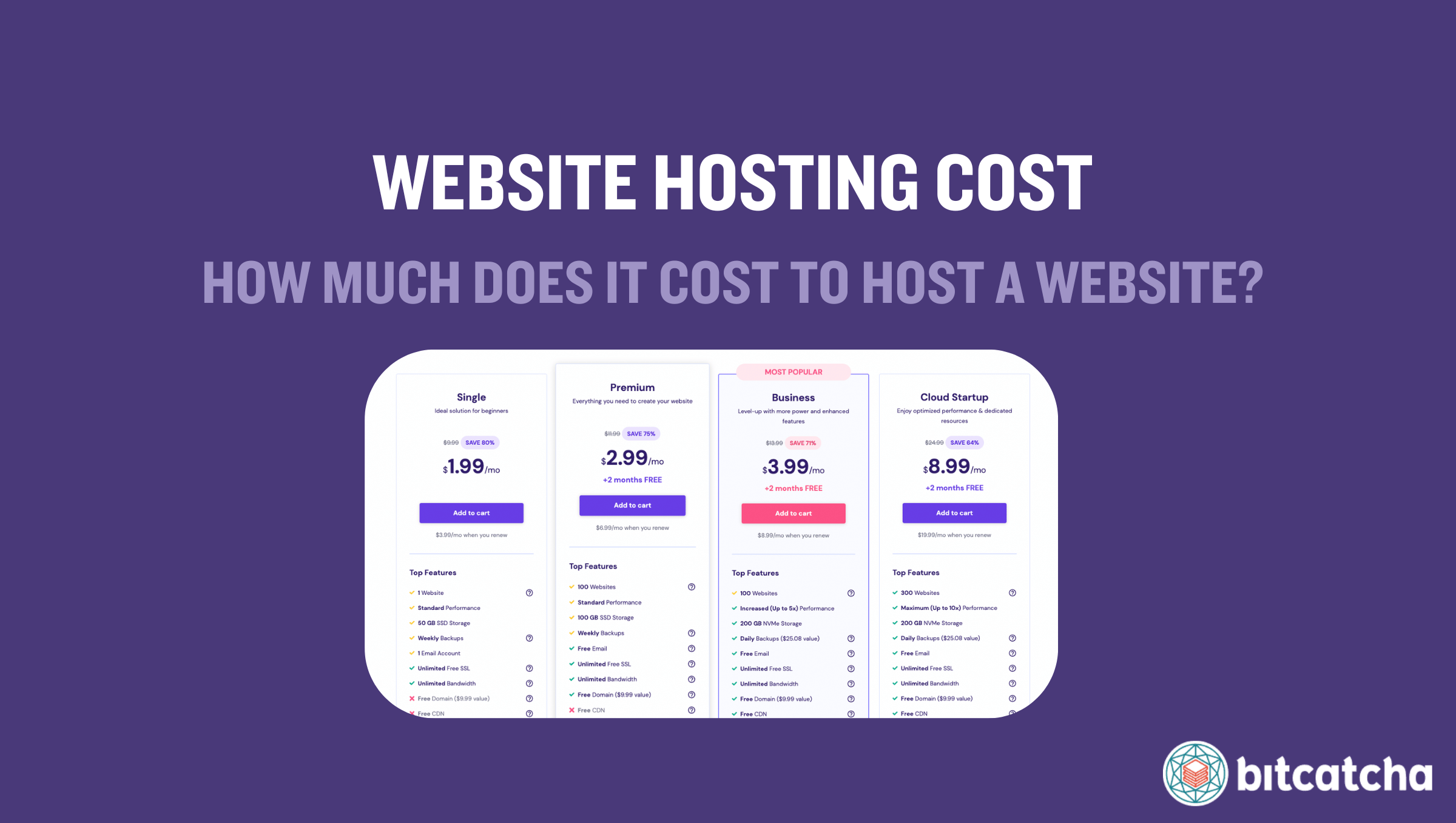
Credit: www.bitcatcha.com
Types Of Hosting Plans
Shared hosting means many websites share one server. This option is very cheap. Prices usually start at around $3 per month. It is good for small sites. But, it can be slow if the server is busy. You may not have much control over settings.
VPS stands for Virtual Private Server. It offers more flexibility than shared hosting. You have your own space on a server. Prices start at about $20 per month. It is faster and gives more control. Good for growing websites.
Dedicated server hosting means you get the whole server. It is very powerful and secure. Prices can start at $80 per month. Ideal for big websites. It offers full control. Requires some technical knowledge.
Cloud hosting uses many servers. It helps keep sites fast. Costs start around $10 per month. It is very reliable and scalable. Good for sites that grow quickly. Offers flexibility and strong performance.
Budget Considerations
Setting up a website needs some money. Domain names cost around $10-$15 each year. Hosting services might ask for $2-$10 each month. SSL certificates are important for safety. They can be free or cost $50. Setting up fees can be different. Some companies offer deals with lower prices. Always check what’s included in the setup costs.
Hosting companies have different plans. Monthly fees can be $5 to $30. Buying a yearly plan can save money. Some plans are cheaper yearly. Always read what each plan offers. More money often means better service. Customer support, speed, and storage are important. Choose a plan that fits your needs.
Hosting providers offer extra features. Email accounts are useful for businesses. Some plans include them for free. Backups keep your data safe. They can be free or cost extra. Security features protect your site from threats. Check if they are included in your plan. Extra storage or bandwidth might cost more. Always decide based on what you need.
Comparing Hosting Providers
Choosing the right hosting provider involves balancing cost and features. Prices can vary from a few dollars to hundreds monthly. Consider your website’s needs to decide how much to spend.
Price Vs. Value
Choosing the right hosting provider is important. Prices can vary widely. Some hosting services are cheap but offer fewer features. Others may cost more but provide better value. It’s crucial to assess what each provider offers. Look for included services like free domains or SSL certificates. Sometimes, paying a bit more means you get better resources. This can make your website run smoothly. Always check what you get for your money. Value is not just about cost, but also about quality.
Customer Support Quality
Good customer support is essential for hosting. Quick response times can be very helpful. Some providers offer 24/7 support. Others may have limited hours. Consider the support channels available. Live chat and phone support are usually faster than email. Read reviews to see what others say about their experience. Reliable support can save you time and stress. It can also help fix issues fast. Always choose a provider with high-quality support.
Performance And Reliability
Website performance affects user experience. Reliable hosting keeps your site online. Check the uptime guarantee of each provider. Good hosts offer 99.9% uptime or better. This means fewer chances of your site going down. Speed is also important. Fast servers improve loading times. This can lead to happier visitors. Look for hosts with performance enhancements like caching. A reliable host ensures your site runs well and stays available.
Tips For Cost-effective Hosting
Web hosting costs can vary. Understanding the basics can help you negotiate. Ask for discounts when you contact hosting companies. Compare prices from multiple providers. This can help you find better deals. Don’t settle for the first offer. Negotiate terms that suit your budget. Check for extra features that might be free. Always read the terms and conditions.
Discounts can save you money. Look for promotions during holidays or events. Sign up for newsletters from hosting companies. They often send special offers. Consider annual plans for better rates. New customers may get introductory discounts. Referral programs might offer savings too. Use these to reduce hosting costs.
Think about the future of your website. Predict growth to choose the right plan. Avoid overpaying for features you don’t need. Upgrade plans only when necessary. Scalability should be a key factor. Regular reviews can help decide if changes are needed. Plan ahead to prevent unexpected costs.
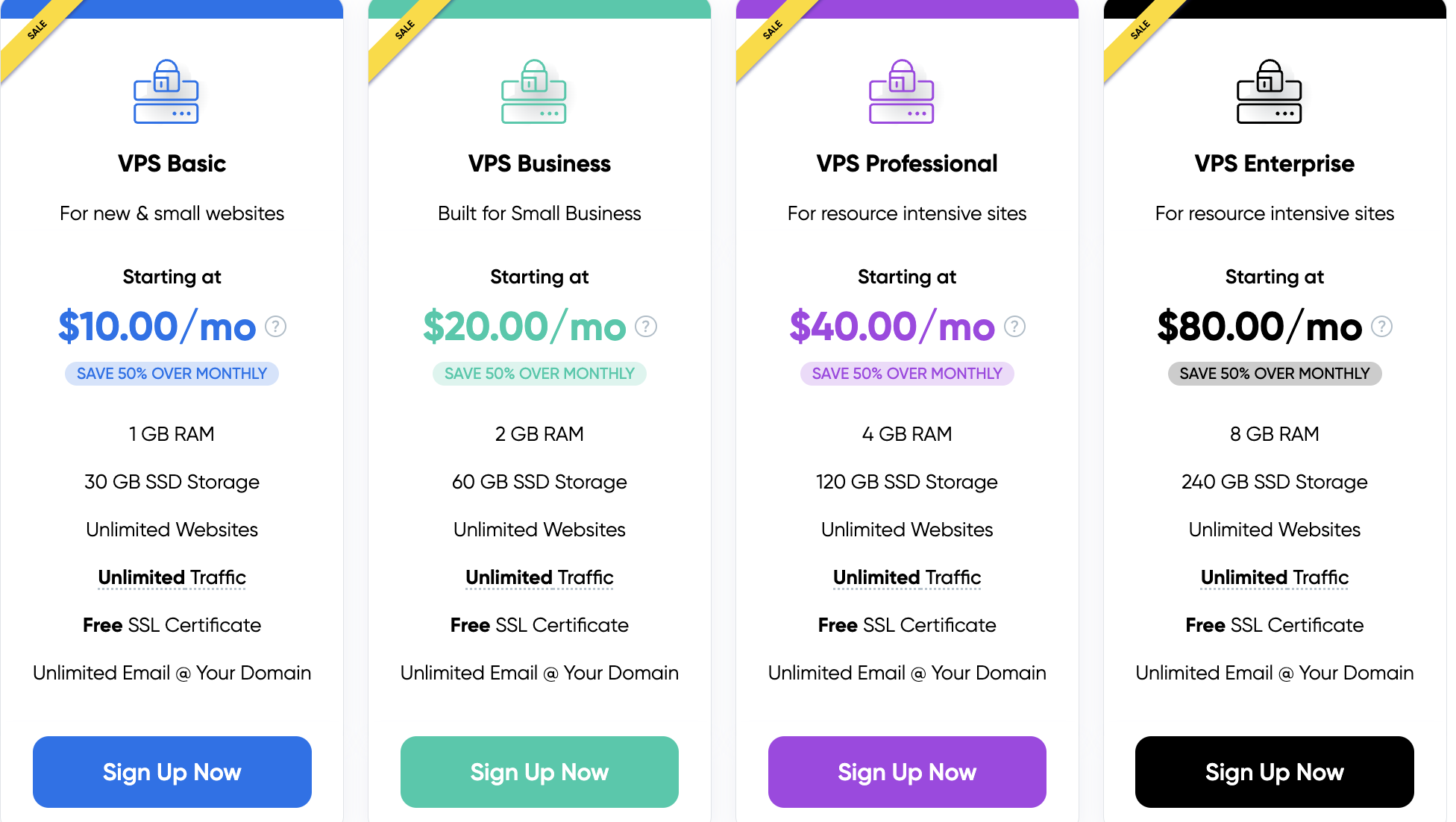
Credit: www.ryrob.com
Frequently Asked Questions
How Much Should I Pay For Website Hosting?
Website hosting costs vary from $2 to $300 monthly. Shared hosting is cheaper, starting at $2-$10 monthly. VPS hosting ranges from $20-$100 monthly. Dedicated hosting can cost $80-$300 monthly. Choose based on budget and website needs.
How Much Money Is Required To Host A Website?
Hosting a website typically costs between $3 to $25 per month. Prices vary based on hosting types like shared, VPS, or dedicated. Choose a plan that suits your needs and budget. Some hosts offer discounts for annual payments. Consider factors like storage, bandwidth, and support when selecting a provider.
How Much Should You Spend On Hosting?
Hosting costs vary based on needs. Shared hosting can cost $2-$10 monthly. VPS hosting ranges from $20-$100. Dedicated hosting may exceed $100. Choose based on website size, traffic, and budget. Consider reliability, support, and features when deciding. Investing in quality hosting boosts performance and user experience.
How Much Should A 20 Page Website Cost?
A 20-page website typically costs between $1,500 and $5,000. Prices depend on design complexity and features. Custom designs and advanced functionality increase costs. Always compare quotes from multiple developers for better pricing.
Conclusion
Choosing the right hosting plan is crucial for your website’s success. Costs vary, but consider your needs and budget. Shared hosting is affordable. Ideal for beginners. VPS hosting offers more resources. Perfect for growing sites. Dedicated hosting provides maximum control.
Best for large businesses. Remember, price isn’t everything. Look for reliable support. Good uptime and security. Read reviews. Compare features. Don’t rush your decision. Research thoroughly. Find the balance between cost and quality. Your website deserves a solid foundation. Hosting impacts performance.
Choose wisely for long-term benefits. Make informed choices for lasting success.


