
Have you ever wondered how websites appear magically when you type a URL into your browser? The secret lies in web hosting, a crucial piece of the internet puzzle.
Understanding how web hosting works can seem complex, but we’ve simplified it for you with a clear, easy-to-follow infograph. This visual guide is designed to demystify web hosting, making it accessible and straightforward. You’ll discover what happens behind the scenes, why hosting matters, and how it affects your online experience.
Our infograph breaks down the process, so you can grasp the essentials without getting lost in technical jargon. Your curiosity is about to be satisfied, and you’ll gain insights that could empower you to make informed decisions about your own online presence. Dive in, and let us show you how web hosting works in a way that’s engaging and easy to understand. You’ll be glad you did!
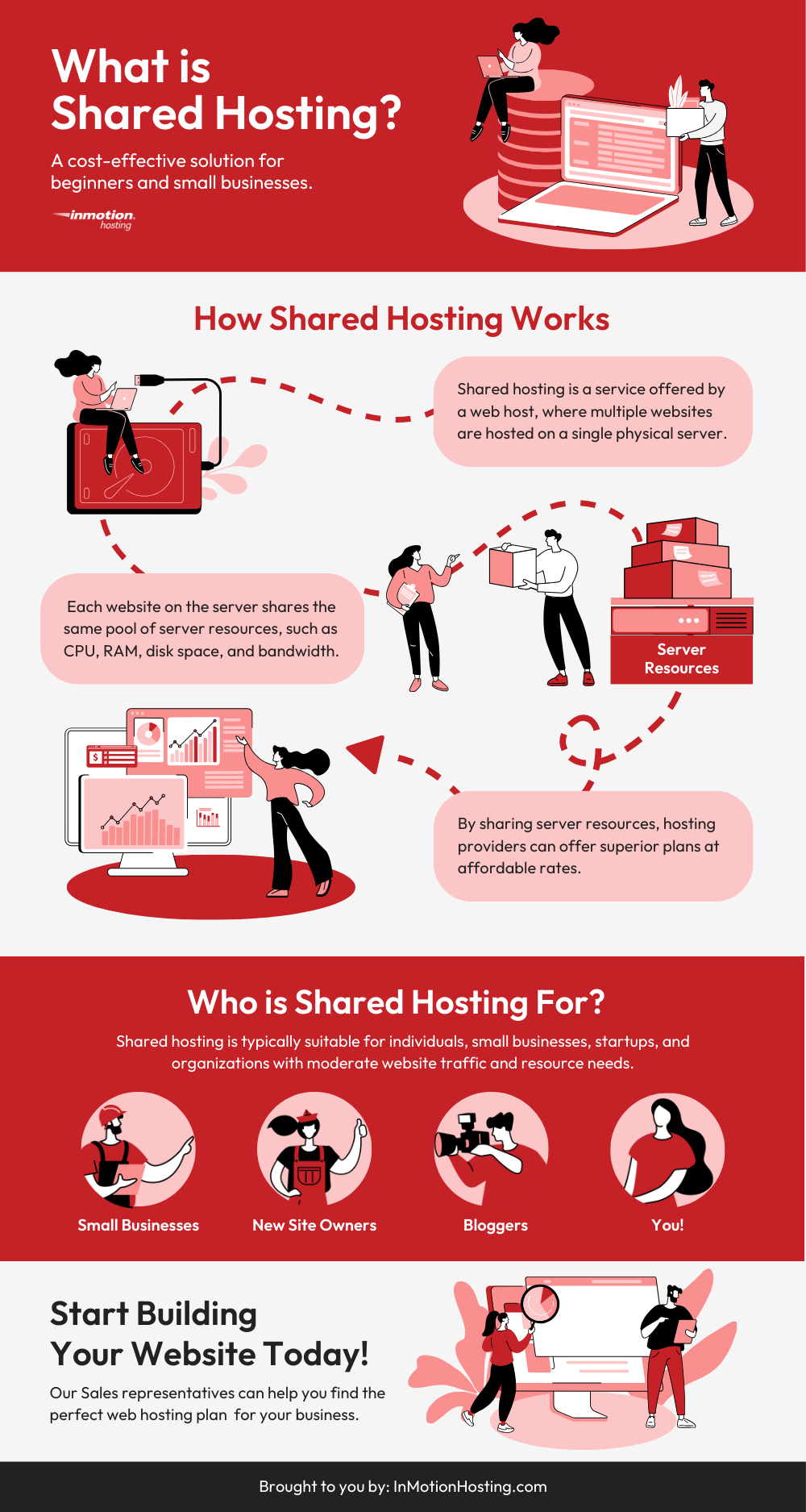
Credit: www.inmotionhosting.com
Basics Of Web Hosting
Web hosting keeps websites online. It stores data on special computers. These are called servers. Websites have files and images. Servers host these so people can see them. Every website needs a host. Without hosting, websites cannot be seen.
Hosting companies provide space and support. They make sure websites run smoothly. People can choose different types of hosting. Some are shared hosting. Others are dedicated hosting. Shared hosting is cheaper. Many websites use the same server. Dedicated hosting is for big websites. It uses one server for one site.
Choosing the right host is important. It affects website speed. It also affects security and uptime. Always pick a host that meets your needs.
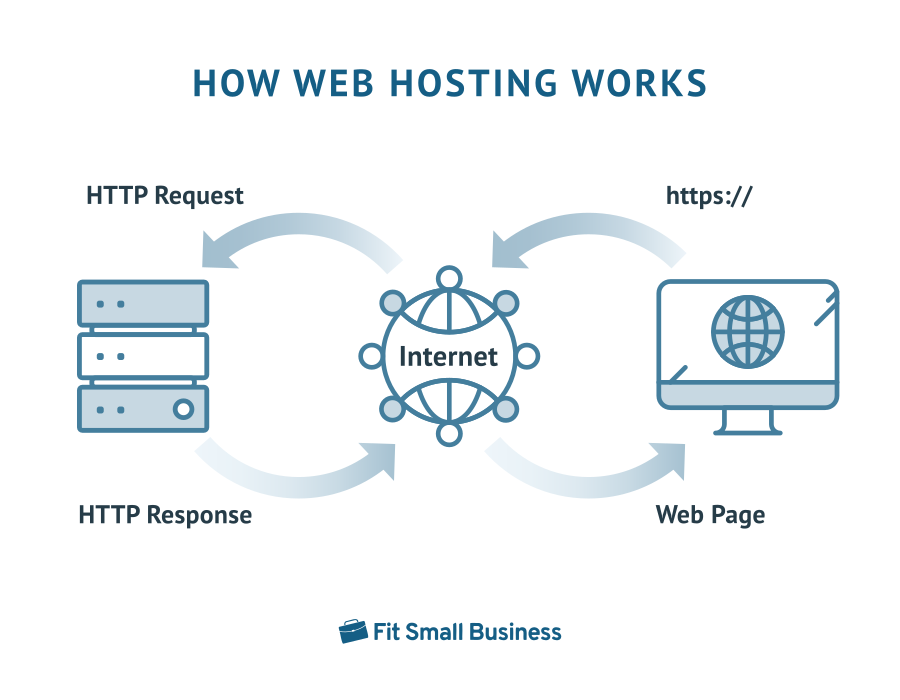
Credit: fitsmallbusiness.com
Types Of Web Hosting
Shared hosting means many websites use one server. It is like sharing a big house. Each website has its own room. This type is cheap and easy to use. Perfect for small sites. Performance can slow down if many sites get busy. Security is shared too, so risks are higher. Good for beginners.
VPS hosting gives more control. Think of it as an apartment in a building. Each site has its own space. More secure and faster than shared hosting. Costs more but offers better performance. It’s suitable for growing sites. You can customize more settings. Good for developers.
Dedicated hosting means one server for one site. Like owning a big house alone. Offers the best performance and security. It’s expensive but worth it for large sites. Full control over settings and resources. No sharing with others. It’s ideal for big businesses.
Cloud hosting uses many servers at once. It is like living in many houses. It grows with your site. If one server fails, others help. It is reliable and flexible. Costs depend on usage. It’s great for sites with changing needs. Perfect for businesses of all sizes.
Key Components
Servers are like big computers. They store your website data. When people visit your site, they connect to these servers. Servers work all the time. They make sure your site is always online. Without them, websites can’t exist.
Data Centers house many servers. They keep servers safe and cool. Data centers have strong power sources. This ensures websites do not go offline. They also have fast internet connections. This helps websites load quickly for users.
Domain Names are your website’s address. They are easy words people type in browsers. Without domain names, we’d use numbers to find sites. Domain names make browsing simple. They are unique to each website.
Bandwidth is like a road. It lets data move fast or slow. Storage is where your site’s files live. More storage means more space for files. Enough bandwidth and storage keep websites running well. They help websites handle many visitors.
Choosing A Web Host
Picking the right web host is important. Know what your website needs. Does it need a lot of space? Or is it a small site? Understand your needs first. This helps find the best host.
Money matters when selecting a host. Some hosts are very cheap. Others cost more. Set a budget. This helps in making a choice. Do not spend more than you can afford.
Help is needed when things go wrong. Good hosts offer support. They have people ready to help. Some are available all the time. Ensure your host has good support. This keeps your site running smoothly.
Setting Up A Website
Choose a name for your website. This is called a domain name. It should be unique and easy to remember. Visit a domain registrar online. Search for your chosen name. If it is available, you can buy it. Now, the domain is yours.
Web hosting is like renting space for your website. There are many hosting companies. Each offers different plans. Some plans are cheap, some are costly. Pick a plan that fits your needs. Check the features of the plan. Make sure it has good support.
Your website files need to be uploaded. Use a tool called FTP for this. Connect your computer to the hosting server. Transfer files from your computer to the server. Now, your website is live for the world to see.

Credit: www.hostinger.com
Common Challenges
Websites can face downtime. This means the site is not working. Visitors can’t see the website. This can upset users. It can also hurt businesses. Web hosting companies work hard to fix this. They use strong tools. These tools keep the site up. But sometimes, downtime still happens.
Online security is very important. Hackers can attack websites. They steal information. This can be dangerous. Web hosting services use security measures. They protect websites from attacks. Firewalls and encryption are common tools. They help keep data safe. Yet, no system is perfect.
A website may grow big. It will need more resources. This is called scaling. Some hosts can’t handle big sites. They might slow down. Or even crash. Good web hosts offer scalability. They let the site grow smoothly. But some hosts struggle with this.
Future Of Web Hosting
New technologies change web hosting. Cloud hosting is popular. It is reliable and scalable. AI helps in managing servers. It predicts issues before they happen. Blockchain offers a new way to store data. It is secure and transparent.
Green hosting cares for our planet. It uses renewable energy. Solar and wind power are common. Green hosting also reduces carbon footprint. Servers use less electricity. This helps nature stay healthy.
Security is very important. Firewalls protect data. Encryption makes information safe. Backup systems save copies of data. Updates keep systems strong. These measures keep websites safe from hackers.
Frequently Asked Questions
How Does The Web Hosting Work?
Web hosting stores website files on servers, making them accessible online. Users enter a domain name, and the server delivers the website content to their browser. It ensures fast loading times and uptime, providing technical support and security features.
How To Web Hosting Step By Step?
Choose a reliable web hosting provider. Register a domain name. Select a hosting plan. Set up your account. Upload website files. Configure DNS settings. Test your website.
How Does Web App Hosting Work?
Web app hosting involves storing and serving web applications on a server. Users access the app via the internet. Hosting providers manage server resources, security, and uptime. This ensures the web app runs efficiently and remains accessible to users globally.
What Are The Three Types Of Web Hosting?
The three types of web hosting are shared hosting, VPS hosting, and dedicated hosting. Shared hosting is cost-effective. VPS hosting offers better control and resources. Dedicated hosting provides maximum performance and security, suitable for large websites.
Conclusion
Web hosting is essential for every website. It stores your site’s data. Access to your site depends on reliable hosting. Choose wisely. Good hosting ensures fast loading. It affects user experience and SEO. Understand different hosting types. Shared, VPS, and dedicated options exist.
Each offers unique features. Costs vary. Balance between price and performance matters. Use infographics to simplify complex ideas. They help visualize hosting processes. Grasping web hosting basics boosts online success. Make informed decisions. Keep learning and exploring web hosting. Stay updated with trends.


