Are you looking to customize your WordPress site without risking any updates to your main theme? Enter the world of WordPress child themes—a powerful yet simple solution that empowers you to make changes without fear.
Imagine having the freedom to tweak, adjust, and personalize your website, all while maintaining a safety net. By the end of this article, you’ll not only understand what a child theme is but also why it could be the game-changer you’ve been searching for.
Ready to unlock the secrets to a more flexible WordPress experience? Let’s dive in!
WordPress Themes Basics
WordPress themes change the look of a website. They give sites a unique style. Themes can be simple or fancy. They help a site match the brand or purpose. Easy to install and change. Themes make a site look good without coding. They can be used by anyone. Themes are important for branding. People choose themes based on their needs. They make sites attractive and user-friendly.
Themes have files that control the design. They affect colors, fonts, and layout. These files are like instructions. Themes use templates to build pages. Templates show where things go. Every page can look different. Themes use stylesheets for design. They make a site look nice. Themes are easy to update. They work with plugins and widgets. Themes make sites flexible. People love themes for this reason.
Introduction To Child Themes
Child themes are like mini versions of WordPress themes. They let you make changes without touching the main theme. This is helpful. It keeps the main theme safe. You can update it easily. The child theme gets all its looks from the parent theme. You can add your own style. Make it unique and fun.
Think of a child theme as a helper. It works with the parent theme. It does not change the main theme. This keeps your website safe. You can change parts you like. The child theme helps make changes without trouble. It is simple to use. Just install it like a regular theme. All the magic happens inside.
Using child themes helps keep your website safe. Updates are easy. You do not lose changes. It is good for beginners. You can test new ideas without worry. If you make a mistake, the main theme stays safe. This is important. You can learn and grow.
Creating A Child Theme
A WordPress child theme lets you change your website’s design without altering the main theme. This ensures updates won’t erase your customizations. It’s a safe way to tweak features and styles.
Essential Files For A Child Theme
A child theme needs two main files. The first file is style.css. This file controls the look of the website. The second file is functions.php. This file adds extra features to your site. Both files should be in a new folder. Name this folder after your child theme. Be careful with file names. They must be correct for the child theme to work.
Steps To Set Up A Child Theme
- Create a new folder for the child theme.
- Add a style.css file to the folder.
- Add a functions.php file to the folder.
- Use the right code in both files.
- Go to your WordPress dashboard.
- Activate the child theme in the dashboard.
This setup keeps your site safe during updates. You can change the child theme without losing changes. Always test changes on a small site first. This ensures everything works well.
Advantages Of Using Child Themes
Child themes in WordPress offer flexibility and safety. They allow you to customize without losing updates. Easy to maintain and modify, they preserve original theme integrity.
Customization Without Risk
Child themes allow safe customization of your website. You can change styles and features without altering the main theme. This means your changes remain even if the main theme updates. It’s like painting your room without changing the house structure.
Easy Updates And Maintenance
Updates are simple with child themes. Main themes get updates, and your changes stay intact. This makes maintenance easier and less stressful. You get new features without losing your custom work. It’s like updating your phone while keeping all your apps.
Common Mistakes To Avoid
Mistakes in creating a WordPress child theme can affect your site’s functionality. Ensure proper setup to maintain your customizations. Always test changes in a safe environment before applying them to your live site.
Ignoring Parent Theme Updates
Many people forget to update their parent theme. This is a big mistake. Updates keep your site safe. They also fix bugs. Missing updates can break your site. Always check for updates. Keep your theme up-to-date.
Overloading Functions And Styles
Adding too many functions can slow your site. Too many styles can make it hard to read. Keep it simple. Only add what you need. Think about your site’s speed. Fast sites make visitors happy. A simple site is a good site.

Credit: meancreative.com
Popular Use Cases
A WordPress child theme is an essential tool for customizing websites without altering the main theme. It helps preserve original settings during updates. Ideal for beginners wanting to tweak design while maintaining stability.
Personalizing Design
A child theme lets you change how your website looks. You can choose different colors and fonts. Make your site unique without changing the main theme. It’s safe and easy. If the main theme updates, your changes stay the same. This is helpful for keeping your site looking good. You can add your own styles and layouts. This makes your site special and fits your needs.
Adding Custom Functionality
Child themes can add special features to your website. You can create new widgets or shortcodes. These help your site do more things. You can add new buttons or links. This makes your site more useful for visitors. It’s like building with blocks. You can make your site do what you want. Without breaking the main theme, you have freedom to explore. You can learn and try new things.
Tools And Resources
A WordPress child theme lets you modify a website without changing the main theme. It inherits features from the parent theme while allowing custom changes safely. This approach ensures updates don’t affect your personalized settings, offering flexibility and security for your site’s design.
Recommended Plugins
Plugins help extend the features of your WordPress Child Theme. Yoast SEO is great for improving your site’s SEO. Contact Form 7 lets you add forms easily. Use WooCommerce for selling products. Jetpack offers security and backups. Elementor is useful for designing pages. Plugins can be installed through the WordPress dashboard.
Useful Online Guides
Online guides provide step-by-step help. The official WordPress site has many helpful articles. Check WPBeginner for easy tutorials. WPMU DEV offers tips for advanced users. YouTube has many videos on child themes. Smashing Magazine covers web design topics. Reading guides can make learning faster and easier.
Credit: www.wpbeginner.com
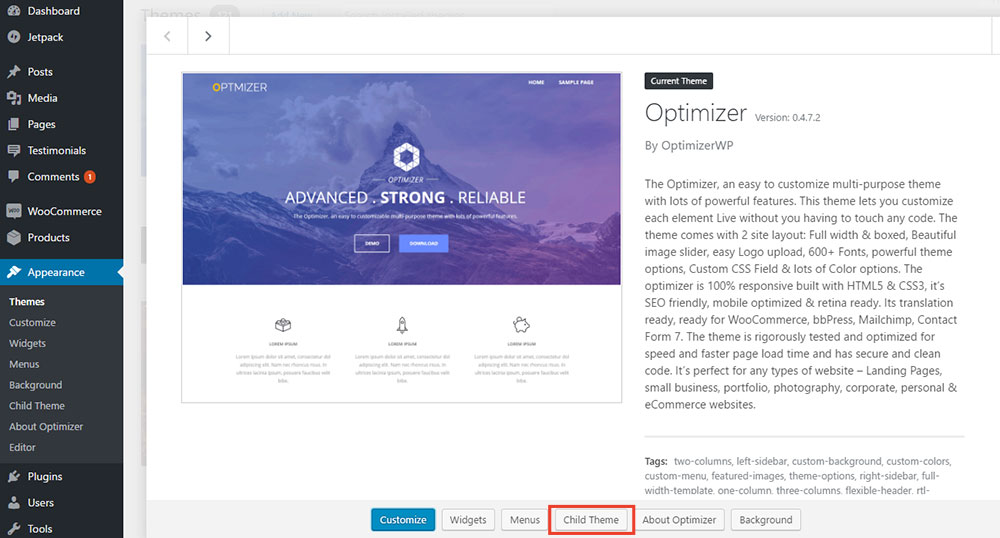
Credit: optimizerwp.com
Frequently Asked Questions
What Is A WordPress Child Theme?
A WordPress child theme is a sub-theme that inherits functionalities from a parent theme. It allows customization without altering the parent theme. This ensures that updates to the parent theme don’t overwrite your modifications. Child themes are ideal for preserving changes while benefiting from ongoing enhancements to the parent theme.
Why Use A Child Theme In WordPress?
Using a child theme ensures safe customization of your website. It prevents loss of changes during parent theme updates. You can add new features or modify styles without affecting the main theme. This keeps your site secure and updates manageable, providing flexibility and control.
How To Create A WordPress Child Theme?
Creating a child theme involves two main steps. First, create a folder in the themes directory. Then, add a style. css file and functions. php. Link the child theme to the parent theme using the appropriate tags. This setup allows seamless integration and customization of your website.
Can A Child Theme Slow Down A Website?
A child theme typically does not slow down a website. It inherits the parent’s functionalities, ensuring efficient performance. Properly coded child themes maintain speed and functionality. It’s crucial to avoid excessive scripts or poorly written code to ensure optimal website speed and performance.
Conclusion
A WordPress child theme is a smart choice for customization. It protects your main theme while allowing changes. This means you can update the parent theme without worries. Child themes offer flexibility and safety. You can experiment and learn without fear.
They are perfect for beginners and developers alike. Creating a child theme is simple and rewarding. It enhances your site’s uniqueness. Remember to keep backups and stay organized. With a child theme, you can control your site’s look and feel.
Enjoy a personalized WordPress experience with ease.