Have you ever wondered what keeps your favorite websites running smoothly day and night? The answer is web hosting.
It’s the backbone that supports every website you visit, enabling them to be accessible to anyone, anywhere. Understanding web hosting is crucial, especially if you’re venturing into the online world with your own website. It’s not just about finding a space on the internet; it’s about choosing the right type of hosting that suits your needs.
Imagine having the perfect website but missing out on its potential because of poor hosting choices. You deserve to know the best options available to make informed decisions that could be the difference between a thriving site and one that struggles. You’ll discover what web hosting truly is and explore the different types available, ensuring your website is not only visible but performs optimally. Dive in to unlock the secrets that could transform your online presence.
Credit: medium.com
Web Hosting Basics
Web hosting lets your website live online. It stores your website’s files on a server. This server is connected to the internet. People access your site by typing your domain name. Hosting is essential for your website’s visibility.
Good web hosting ensures your site runs smoothly. It affects speed and security. Fast loading sites keep visitors happy. Secure sites protect data. Choosing reliable hosting is important for your site’s success. It can impact your site’s rank in search engines.
Credit: community.aws
Shared Hosting
Shared hosting is a popular choice for beginners. It is affordable and easy to use. Many websites share one server. This means they share the same resources. It includes bandwidth, storage, and memory. Most hosting companies offer 24/7 support. They also provide free domain names. Users get access to control panels. These are easy to navigate.
| Pros | Cons |
|---|---|
| Cost-effective | Limited resources |
| Easy setup | Slower speeds |
| Beginner-friendly | Less control |
Vps Hosting
VPS stands for Virtual Private Server. It is a type of web hosting. It gives you a dedicated part of a server. This means you have your own space. You share the server with others, but your area is private. It acts like a small, private server. You get your own resources like CPU, RAM, and storage. So, your website runs smoothly without interruptions.
VPS hosting offers more control than shared hosting. You can install software and customize settings. It is secure because your space is private. Your neighbors on the server can’t affect your site. You get better performance since resources are not shared. It is also scalable. You can easily upgrade resources as your website grows.
Dedicated Hosting
Dedicated hosting offers a server just for you. It ensures maximum performance and security. You get full control over the server. This means you can customize it as needed. There are no neighbors to share resources. This leads to faster speeds and better uptime. Dedicated hosting is often more reliable. It can handle high traffic without slowing down. You pay more, but the benefits are worth it.
Benefits Of Dedicated Hosting
With dedicated hosting, you get full control. It allows for custom software installs. You can optimize settings for your needs. Security is top-notch with dedicated servers. Only your data is stored there. Resources are not shared with others. This means better speed and performance. Dedicated hosting ensures reliable uptime. Your site stays online even during busy times.
Who Should Use Dedicated Hosting?
Large businesses often choose dedicated hosting. They need high performance and security. Websites with a lot of visitors benefit from it. They require stable and fast service. Dedicated hosting is ideal for sites with special software needs. Sites that handle sensitive data use it too. They need the best security available. Dedicated hosting suits those who need control over server settings.
Cloud Hosting
Cloud Hosting uses many servers to host websites. It is different from traditional hosting. Instead of one server, many servers work together. This makes it reliable and efficient.
Cloud hosting splits tasks among servers. This means if one server fails, others help. This keeps websites running smoothly. Users can add or remove resources easily. They can do this based on their needs. This makes it scalable and flexible.
Users pay only for what they use. This saves money. If a website grows fast, it gets more space quickly. This is called scalability. Users can adjust resources fast. This is called flexibility. Cloud hosting adapts to changes well.

Credit: www.siteground.com
Managed Hosting
Managed Hosting is a type of web hosting. Here, the provider takes care of most tasks. They handle server setup, maintenance, and security. This lets users focus on their websites. Managed Hosting includes regular updates and backups. It ensures the server is fast and secure. This service offers 24/7 support. It helps if problems arise. Managed Hosting can be more costly. But it saves time and reduces hassle.
Features Of Managed Hosting
| Feature | Description |
|---|---|
| Server Management | Provider handles server tasks. |
| Security | Includes security updates and monitoring. |
| 24/7 Support | Help is available any time of day. |
| Backup | Automatic backups for data safety. |
Ideal Users For Managed Hosting
This hosting suits beginners and busy professionals. Those without tech skills benefit. It is great for businesses with little time. Managed Hosting is perfect for websites needing reliability. It helps those who want to focus on content. Users can trust their site is in good hands. Managed Hosting is a smart choice for many.
Colocation Hosting
In colocation hosting, you own the server. You place it in a data center. The data center offers power, cooling, and internet. You manage your own server hardware. The data center provides a secure environment. You get 24/7 support and monitoring. This setup keeps your server safe and running smoothly.
Colocation offers many benefits. It provides better bandwidth at a lower cost. You get enhanced security for your server. Reliable power backup is available. It allows greater control over your hardware. Technical support is always there. Colocation ensures optimal server performance.
Choosing The Right Type
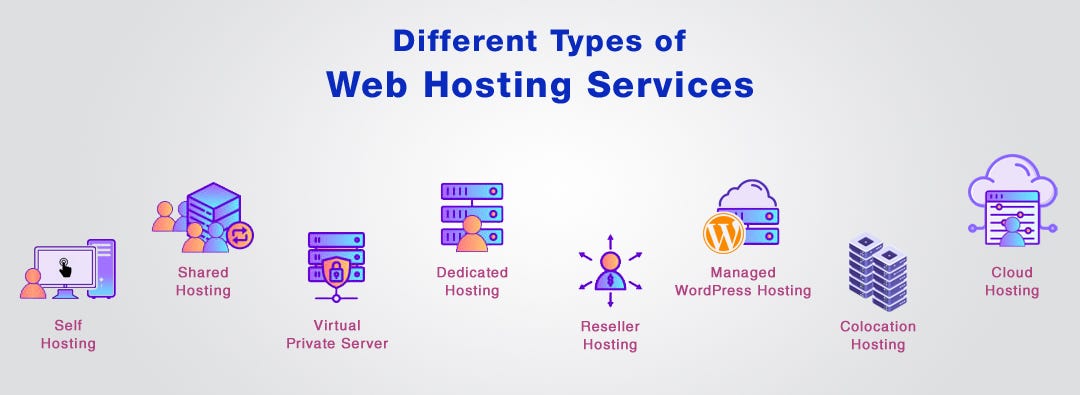
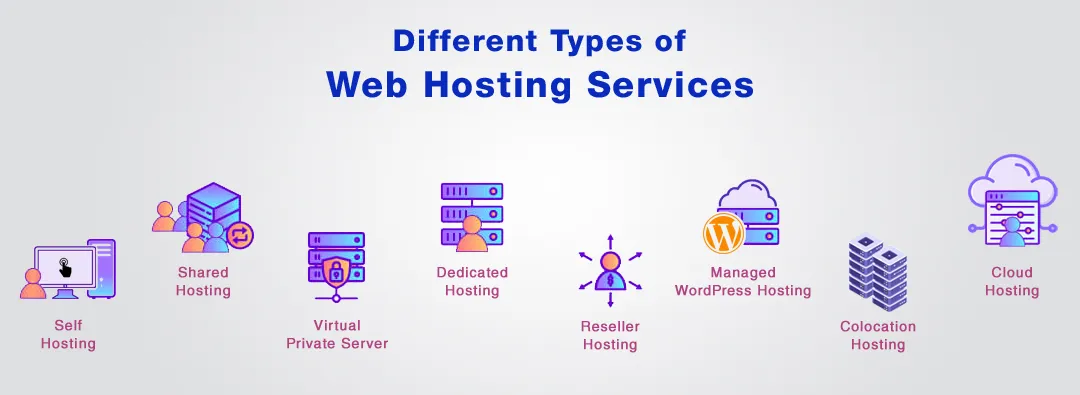
Choosing the right web hosting type is crucial for your website’s performance and security. Options include shared, VPS, dedicated, and cloud hosting. Each offers unique benefits, tailored to different needs and budgets.
Factors To Consider
Picking the right web hosting is crucial. Start by assessing your budget. Some hosts are cheap but limited. Others cost more but offer extra features. Think about the amount of traffic your site gets. A busy site needs more resources. Check the level of support provided. Some hosts offer 24/7 help. Others might not. Consider the scalability options. Your business might grow. Will your host grow with you? Review the security features they offer. Keeping your data safe is key. Backup services are also important. If something goes wrong, backups can save you. Finally, think about server location. A server close to your audience means faster load times.
Matching Hosting To Business Needs
Different businesses have different needs. A small blog might need shared hosting. It’s cheap and simple. A large e-commerce site might need dedicated hosting. It offers more power and security. Startups might prefer cloud hosting. It’s flexible and scalable. Tech-savvy users might opt for VPS hosting. It provides more control. Always match the host type to your business size and goals. This ensures your site runs smoothly. Picking the right host helps your business grow.
Frequently Asked Questions
What Are The Types Of Web Hosting?
Web hosting types include shared, VPS, dedicated, cloud, and managed hosting. Shared hosting is budget-friendly. VPS offers more control. Dedicated hosting provides exclusive server access. Cloud hosting is scalable and reliable. Managed hosting simplifies maintenance. Choose based on your needs and budget.
What Is Meant By Web Hosting?
Web hosting is a service that stores and serves website files on a server, making them accessible online. Hosting providers offer server space, bandwidth, and technical support. This ensures websites run smoothly and are available to visitors 24/7.
What Is A Web Host Example?
A web host example is Bluehost. It provides server space for storing website files and offers various hosting plans.
What Is Basic Web Hosting?
Basic web hosting provides online storage and resources for websites. It includes server space, bandwidth, and essential services. Ideal for small businesses or personal sites, it ensures a web presence. Hosting providers manage maintenance, security, and support, making it user-friendly.
It’s an affordable option for establishing a website online.
Conclusion
Web hosting is crucial for your online presence. It stores your website data. Various types cater to different needs. Shared hosting suits beginners. It’s cost-effective. Dedicated hosting offers more control. VPS hosting balances cost and performance. Cloud hosting ensures scalability.
Choose based on your website’s needs. Think about traffic, budget, and security. Understanding these types helps you make the right decision. A well-chosen host can enhance your site’s performance. Keep learning and exploring options. Your website’s success depends on it.